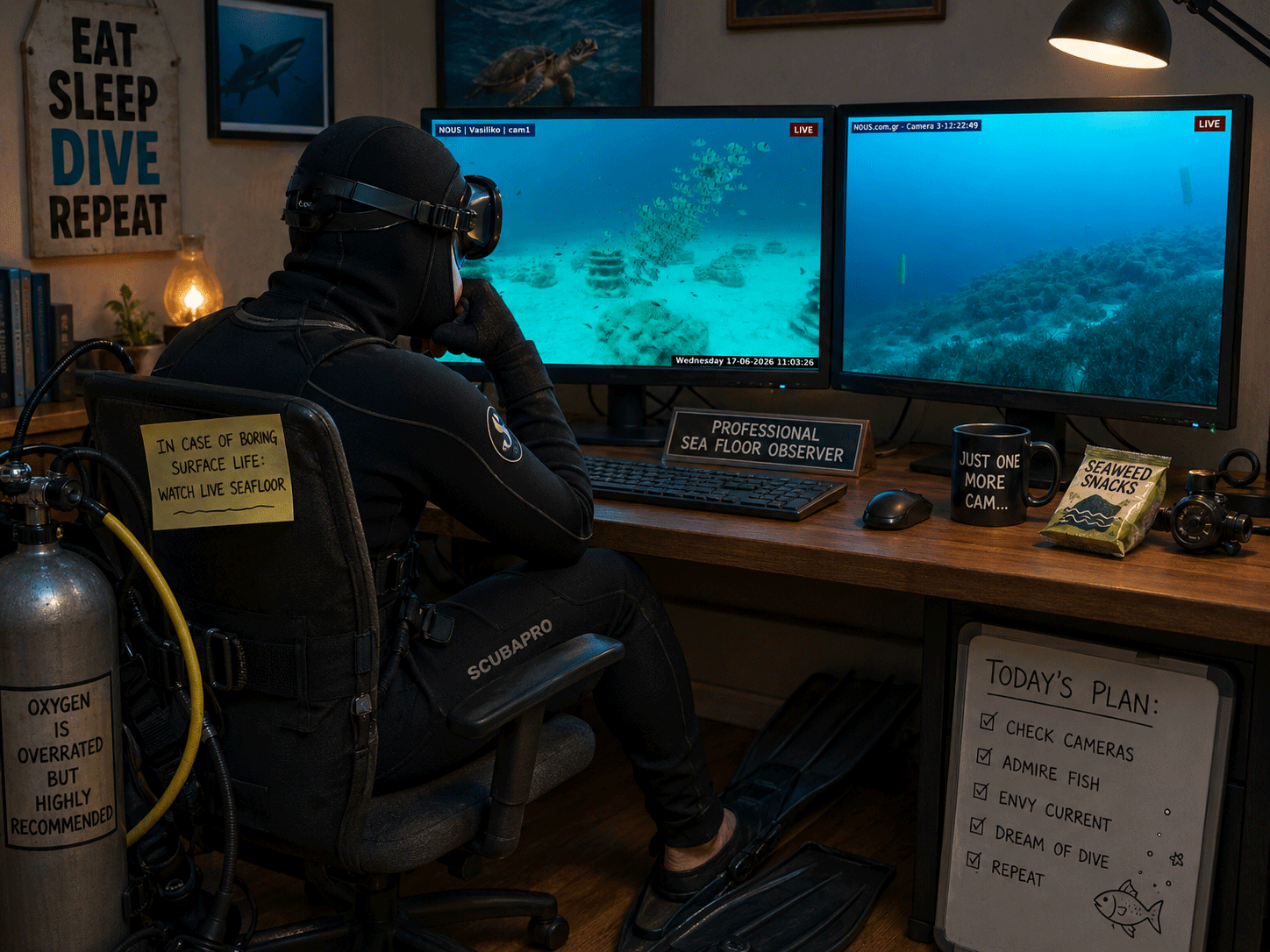
For most people, an ancient shipwreck lying on the seabed is something they will never see with their own eyes.
Some wrecks are too deep. Others are inside protected archaeological zones. Many can only be visited by certified divers, under specific rules and usually with the guidance of authorised dive centres. And for good reason: underwater cultural heritage is fragile. A careless fin kick, an anchor, a souvenir hunter or even repeated uncontrolled visits can damage a site that has survived for thousands of years.
But what if people could see these places without touching them?
That is exactly what a new generation of live underwater camera systems is trying to achieve. In Greece, underwater cameras are now being used not only to stream real-time images from the seabed, but also to help monitor and protect archaeological sites and marine areas.
One of the most important examples is the ancient shipwreck of peristera-wreck-dive-site-alonissos/">Peristera, near Alonissos.
The Peristera Shipwreck: A Museum Beneath the Surface
The Peristera shipwreck lies near the islet of Peristera, close to Alonissos, inside the National Marine Park of Alonissos and Northern Sporades. The wreck dates back to the late 5th century BC and carried thousands of amphorae, mainly linked to the wine trade of the ancient Aegean. According to NOUS, the ship may have carried around 4,000 amphorae and had a displacement of about 120 tons.
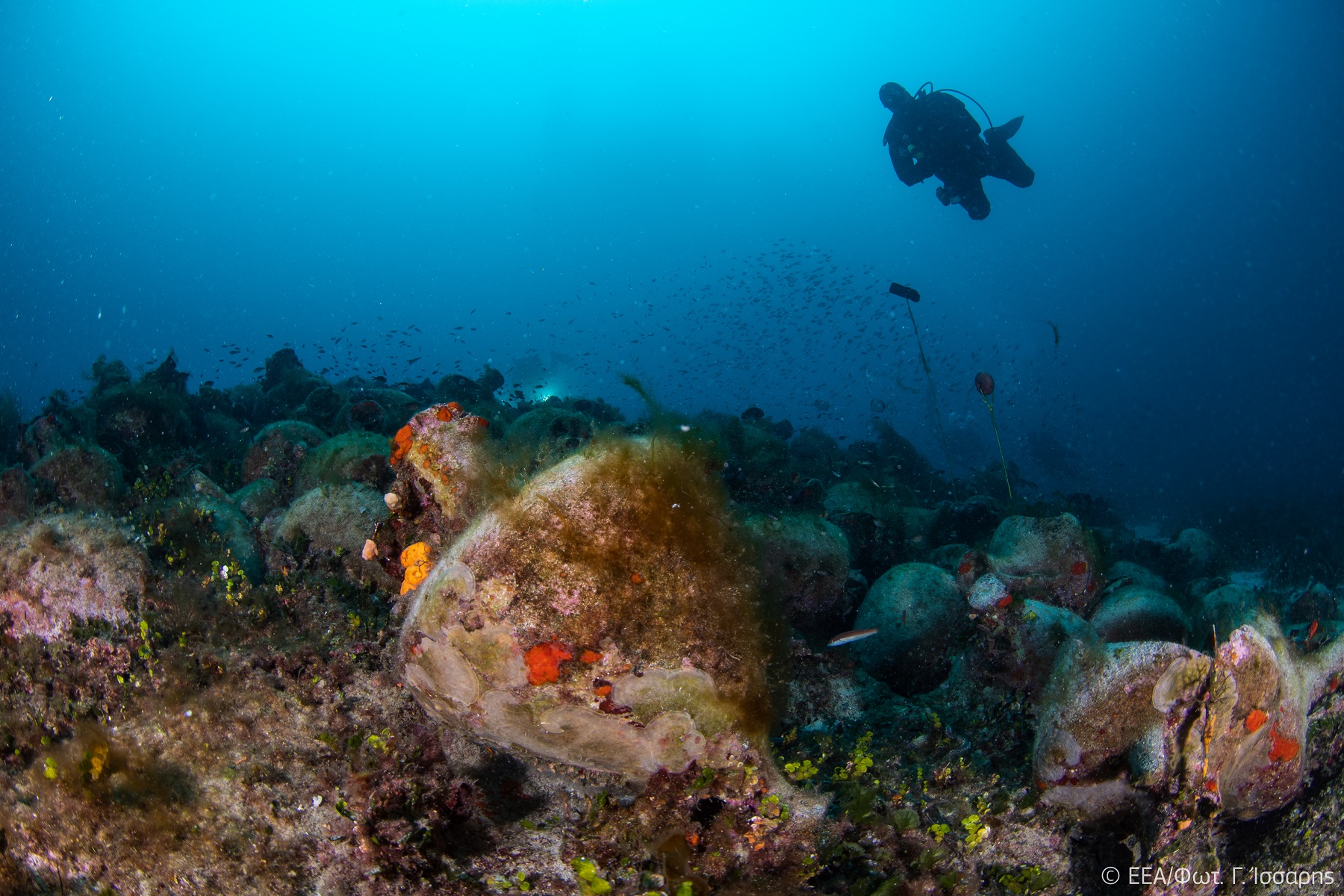
What makes Peristera so important is not only its age, but also its scale. The amphorae remain on the seabed in a large cargo pile, preserving the outline of what was once a wooden merchant ship. The wooden parts of the vessel have long disappeared, but its cargo still creates one of the most impressive underwater archaeological landscapes in the Mediterranean.
In 2020, the Peristera shipwreck opened to the public as Greece’s first underwater archaeological museum, allowing certified divers to visit the site under controlled conditions. NOUS describes it as the first underwater ancient archaeological museum in Greece and the world.
But the real innovation is not only that divers can now visit. It is that the site can also be watched remotely.
Five Cameras on an Ancient Wreck
The Peristera site uses the NOUS system, short for uNdersea visiOn sUrveillance System. NOUS describes itself as an underwater monitoring system that can provide continuous video surveillance at depths down to 150 metres, using real-time video, image processing and artificial intelligence.
At Peristera, the system includes five underwater units equipped with cameras and lens wipers. These cameras are connected to an underwater hub and powered through a cable running from a solar power station on the shore. The system also includes a weather station and a remotely controlled 360-degree camera for sea and land monitoring.
This is not just a webcam placed underwater for entertainment. The cameras help transmit real-time images of the wreck, while the system can also detect activity in the protected area. The Visit Thessaly article explains that the system sends live images from the underwater archaeological site and the sea surface to computers used by the Ephorate of Underwater Antiquities, helping with year-round supervision and remote monitoring of dives when the site is open to visitors.
In practice, this means that the wreck can be both visited and protected. Supervisors can observe activity at the site, document possible violations with screenshots and receive alerts when the system detects changes or activity that may require attention.
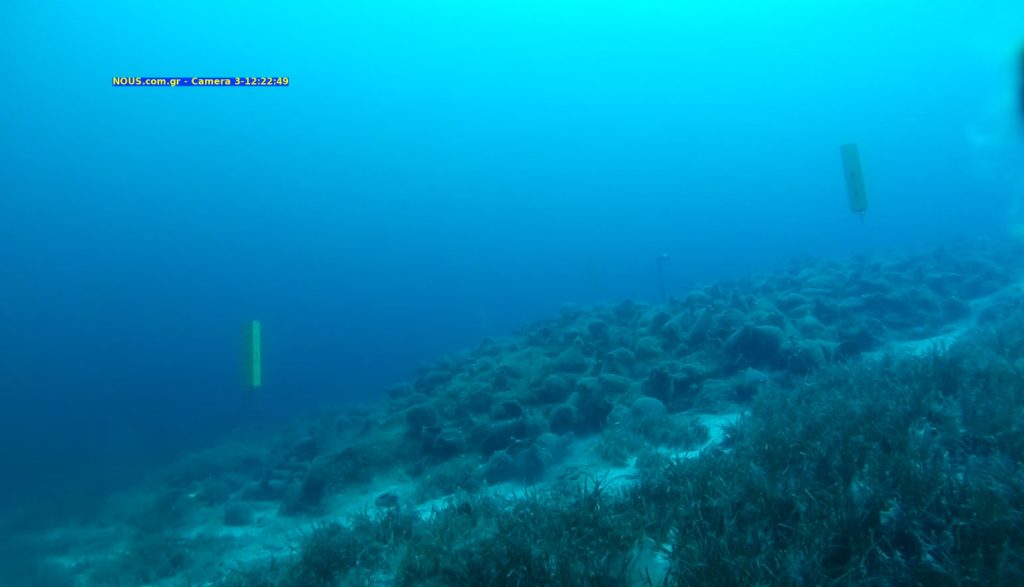
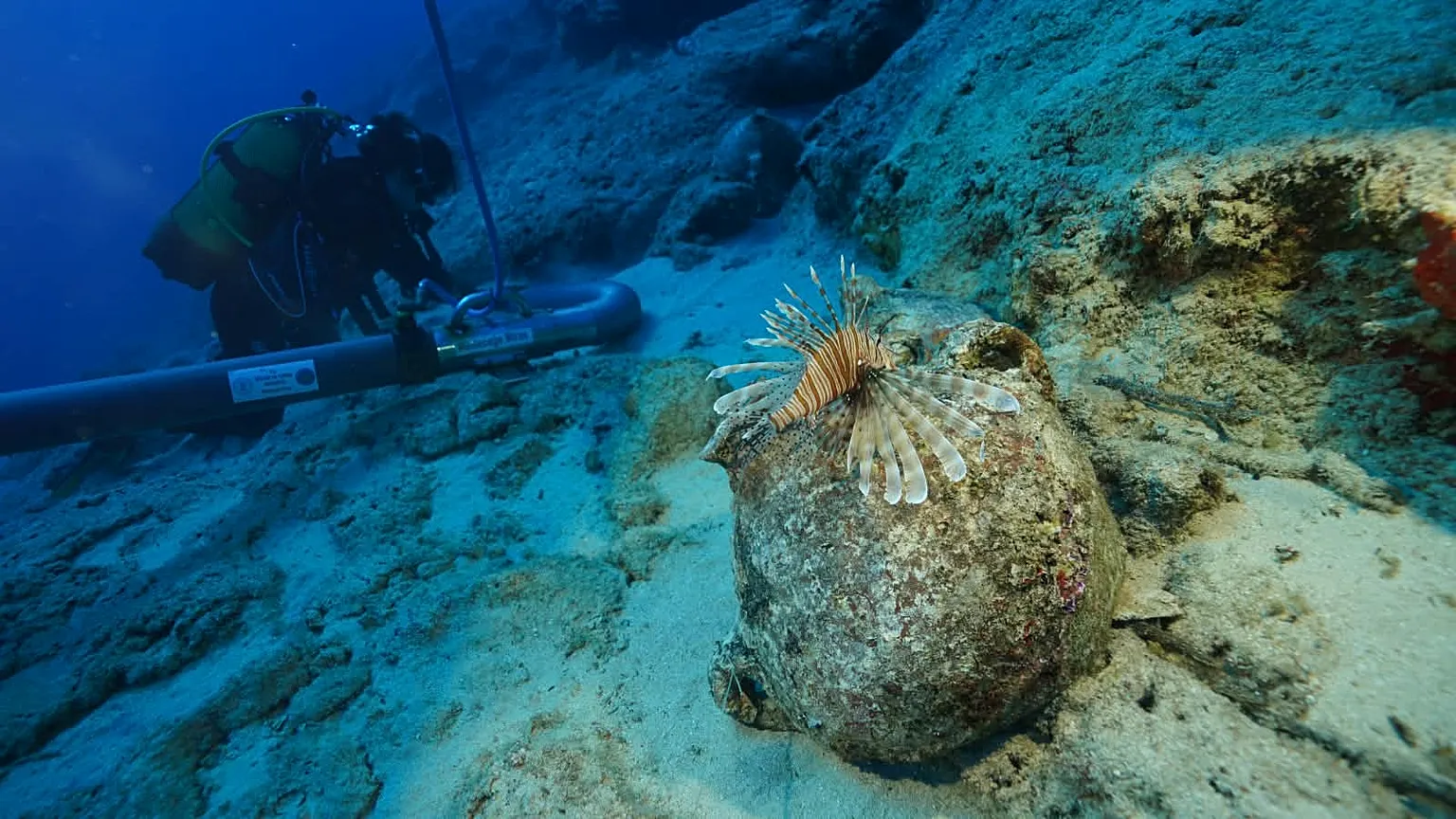
View from one of the cameras installed at the Peristera Wreck.
Artificial Intelligence Underwater
The most interesting part of this technology is that it does not rely only on a person watching a screen.
NOUS uses machine learning and image processing to recognise activity in the area of interest. According to Visit Thessaly, the system can detect divers, ROVs, light sources in darkness and possible changes in the monitored area. It was trained using real conditions from the Peristera site, including calm seas, rough seas, daytime and nighttime dives, ROV movement, different levels of water clarity, lens fouling and passing vessels.
This is a major step for underwater cultural heritage. Instead of simply closing archaeological sites to protect them, technology can help create a new balance: controlled access for divers, remote access for the public and continuous monitoring for the authorities.
It is the idea of “watch, learn, protect”.
Why Live Underwater Cameras Matter
Live underwater cameras can change the way people connect with the sea.
For divers, they offer a preview of sites that may one day become part of a travel plan. For non-divers, they create access to places that would otherwise remain invisible. For schools, museums and cultural institutions, they can become educational tools. And for scientists and archaeologists, they provide continuous visual data from environments that are difficult and expensive to monitor in person.
The Raspberry Pi Foundation, which has covered the NOUS project, describes the system as a way to watch marine life and ancient sites in real time from a desk, while also supporting 24/7 surveillance of underwater areas.
This matters because the sea hides a huge part of human history. Ancient trade routes, shipwrecks, cargoes, anchors and submerged structures are not only archaeological objects. They are stories of travel, commerce, technology, risk and connection between cultures.
Live cameras make these stories visible.
Beyond Alonissos: Fourni and Other Marine Sites
The idea is already expanding beyond Peristera.
The Fourni archipelago in the eastern Aegean has become one of the most important underwater archaeological areas in the Mediterranean. Greece’s Ministry of Culture has announced the creation of two new visitable underwater archaeological sites in Fourni, highlighting the area’s many shipwrecks, which range from the 6th century BC to modern times. According to the Ministry, research from 2015 to 2025 documented 62 shipwrecks in the area.
NOUS also lists underwater camera projects for the visitable underwater archaeological sites of Aspros Kavos and Vathilakas in Fourni, with real-time underwater video streaming planned for these archaeological sites.
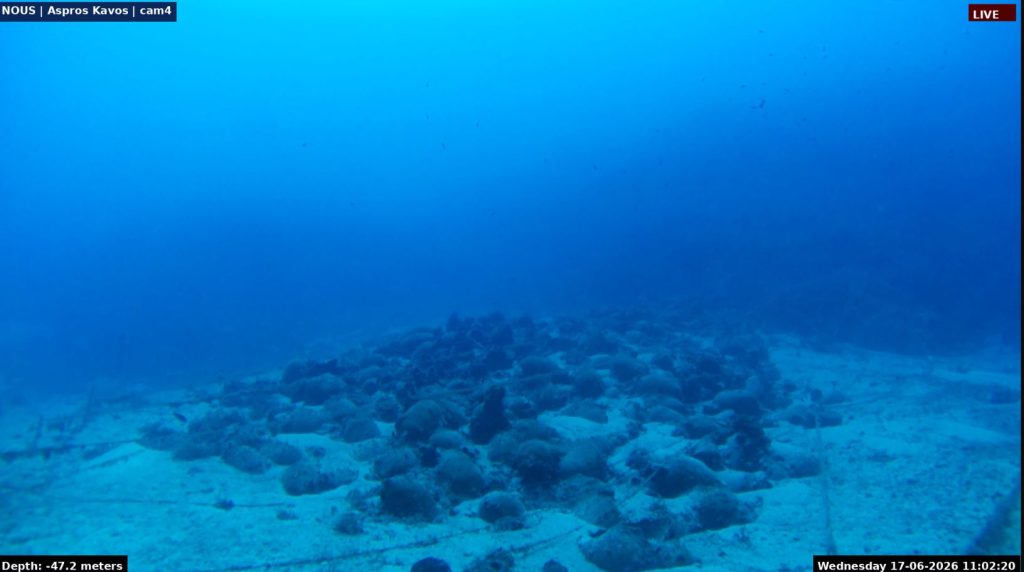
The Aspros Kavos dive site is located in the Fourni Korseon archipelago
The same approach can also be used outside archaeology. At Blutopia Marine Park, NOUS describes a system with two underwater cameras monitoring the marine park and a special construction providing 24/7 video from inside a fish cage, supporting environmental education and observation of fish behaviour.
This shows that live underwater cameras are not limited to shipwrecks. They can be used for marine parks, conservation projects, aquaculture, biodiversity monitoring and environmental education.

The Future of Underwater Museums
The concept of an underwater museum is changing.
In the past, an underwater archaeological site was either closed for protection or accessible only to a very small number of qualified divers. Today, technology creates a third option. A site can remain protected, divers can visit it in a controlled way, and the rest of the world can still experience part of it through live underwater video.
This does not replace diving. Nothing can truly replace the feeling of descending through the water column and seeing an ancient cargo appear slowly out of the blue.
But live underwater cameras can make these places part of everyday cultural life. They can bring the seabed into classrooms, museums, homes and visitor centres. They can help people understand why underwater heritage matters before they ever put on a mask.
And perhaps most importantly, they can remind us that the sea is not empty space.
It is a museum, a habitat, a memory and a living world — and now, in some places, it is finally live.
Watch the cameras live (make sure its daytime in greece)
Peristera Ancient Wreck (requires email registration)
Vasiliko Artificial Reef Alonnisos