Yes, we know.
You saw an incredible nudibranch. The light was perfect. Your buddy looked like a National Geographic explorer. And of course, everyone on Instagram needs to know how amazing your dive was.
But here is the truth many new divers do not want to hear:
If you want better buoyancy, leave the camera behind for a while.
Not forever. Not because underwater photography is bad. Not because your dive memories do not matter.
But because trying to handle a camera before you have proper buoyancy control can slow down your progress, distract you from the basics, and sometimes turn a relaxed dive into a messy one.
A camera may look small and harmless on land. Underwater, it becomes one more thing your brain has to manage.
And when you are still learning how to control your depth, your breathing, your trim and your position in the water, one more thing can be too much.
Your Camera Is Not Just a Camera
A small action camera or compact underwater camera may feel simple. You turn it on, point it at something beautiful and press a button.
Easy, right?
Not exactly.
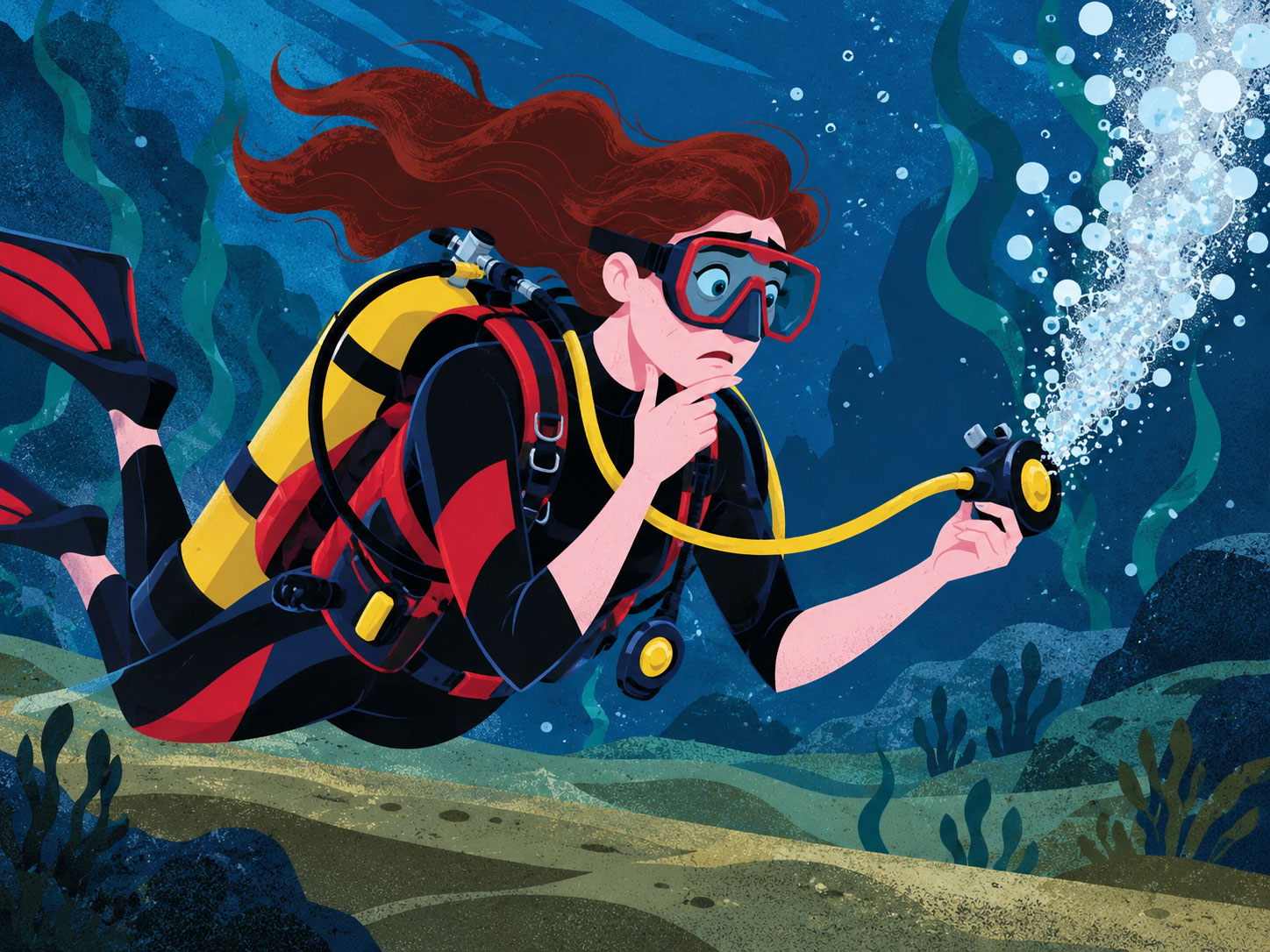
Underwater, taking a photo is never just taking a photo. You are also thinking about framing, distance, light, your subject, your screen, your angle, your buddy, your fins, your air, your depth and whether that tiny fish will please stop moving for two seconds.
That is a lot.
This is often called task loading: trying to manage too many things at the same time during a dive. Safety organizations and diving educators regularly warn that beginner underwater photographers should be ready for the extra mental workload that photography adds to a dive. DAN’s safety advice for underwater photographers specifically highlights the extra task loading involved, while PADI also recommends mastering buoyancy before focusing on underwater photography.
And this is exactly where the problem begins.
Instead of focusing on your buoyancy, you start chasing the shot.
Instead of breathing calmly, you hold your breath for a second to stay still.
Instead of checking your depth, you check your screen.
Instead of noticing your buddy, you notice that the turtle is finally turning toward you.
Instead of staying horizontal, you slowly sink toward the bottom, the reef or the sand.
And suddenly, the camera is no longer helping you enjoy the dive. It is controlling the dive.
Buoyancy Comes Before Photography
Good underwater photographers are usually good divers first.
Before they worry about camera settings, composition or lighting, they can hover calmly. They know where their fins are. They can stay horizontal. They can move closer to a subject without touching anything. They can use small breathing changes to rise or sink gently.
That is what makes a good underwater photo possible.
Because the best camera in the world will not help much if you are kicking up sand, bouncing up and down, scaring away marine life or crashing into the bottom.
DAN’s Alert Diver notes that proper buoyancy is essential not only for comfort and safety, but also to avoid contact with fragile coral, especially because underwater photography often requires getting close to the reef.
In other words:
Better buoyancy creates better photos later.
But if you bring the camera too early, you may delay the exact skill that would make your future photos better.
Give Yourself 30–40 Dives Without the Camera
Here is a simple rule that can help many new divers:
Spend your first 30–40 dives focusing on your diving, not your content.
This does not mean you are forbidden from ever taking a camera underwater before dive number 40. It is not a law. It is a practical guideline.
But for many beginner divers, those first 30–40 dives are where the real learning happens.
Use that time to improve the fundamentals:
Learn how your breathing affects your depth.
Practise hovering without moving your hands.
Check if you are properly weighted.
Work on your trim, so you are not swimming upright like a confused seahorse.
Practise slow, controlled fin kicks.
Learn how to move without stirring the bottom.
Build the habit of checking your air, your depth and your buddy without thinking too much about it.
Get comfortable being still underwater.
These skills may not look exciting on social media, but they are what make you a better diver.
And once they become natural, everything else becomes easier.
Including photography.
“But I Saw an Amazing Nudibranch!”
We know. We really do.
You saw the most beautiful nudibranch of your life. It was tiny, colorful and sitting perfectly still, almost like it was waiting for its modeling career to begin.
You wanted the photo.
You wanted the story.
You wanted to show your friends that diving is magical and that yes, you are officially living your best underwater life.
But sometimes, the best thing you can do is simply look.
Watch it.
Enjoy it.
Remember it.
Not every beautiful underwater moment needs proof. Not every dive has to become content. And not every creature needs a close-up before you have learned how to approach it without disturbing the environment.
The ocean was beautiful before your camera entered the water.
It will still be beautiful when you are ready to photograph it properly.
The Camera Can Make Bad Habits Worse
A camera does not create every buoyancy problem, but it can make existing problems more obvious.
If you are slightly overweighted, you may sink faster when you stop to take a photo.
If your trim is poor, you may end up vertical every time you try to frame a subject.
If you use your hands too much, you may wave them around even more while trying to position yourself.
If you are not aware of your fins, you may accidentally kick the bottom, coral, sponges or other divers.
If you are already nervous, the camera gives you one more thing to worry about.
This is why leaving the camera behind for a while is not a punishment. It is a shortcut.
You remove one distraction, so your brain can focus on the skills that matter most.
Better Buoyancy Means Better Photos Later
Here is the good news:
Waiting does not make you miss your chance to become an underwater photographer.
It makes you more ready.
When your buoyancy improves, your photos improve too.
You can hold your position without fighting the water.
You can approach marine life more slowly and respectfully.
You can avoid kicking up sand.
You can keep your camera steady.
You can protect fragile environments.
You can use less energy.
You may even use less air because you are calmer and more controlled.
We need to also point out that cameras can affect trim and buoyancy depending on the setup, and recommends planning camera buoyancy carefully to avoid unintentional contact with the underwater environment.
So yes, the camera can wait.
Your buoyancy should not.
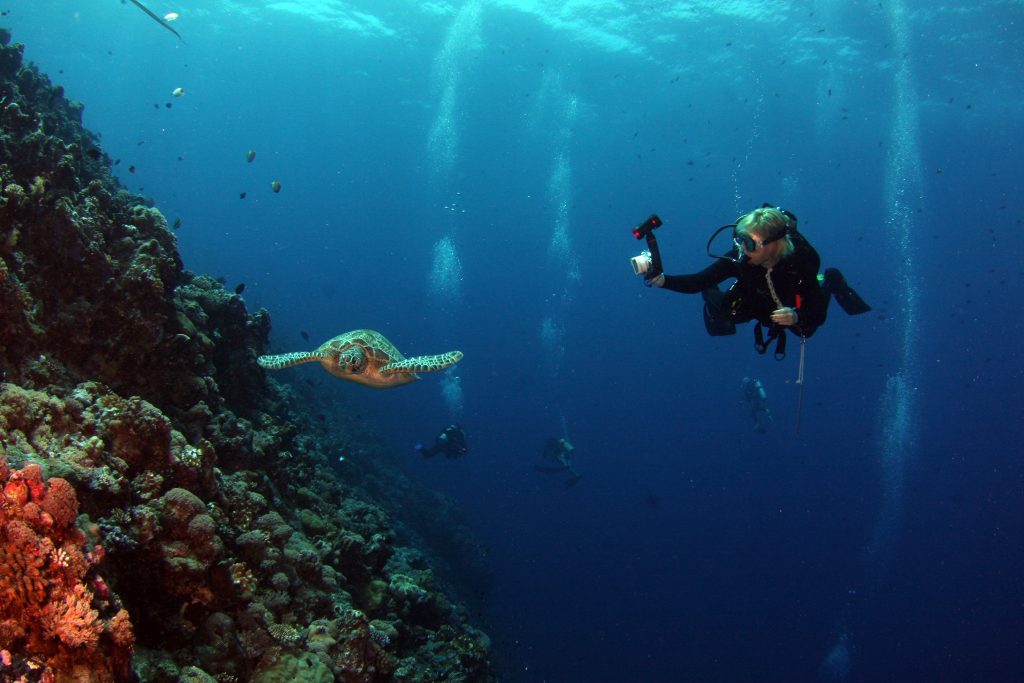
When You Bring the Camera Back, do not turn the whole dive into a photo mission. Choose an easy dive site and practise your diving skills while taking a couple of pictures. Your main goal is still good diving. © Graham Henderson
When You Bring the Camera Back, Start Small
Once you feel more comfortable underwater, you can start bringing the camera back gradually.
But do it the smart way.
Choose an easy dive site.
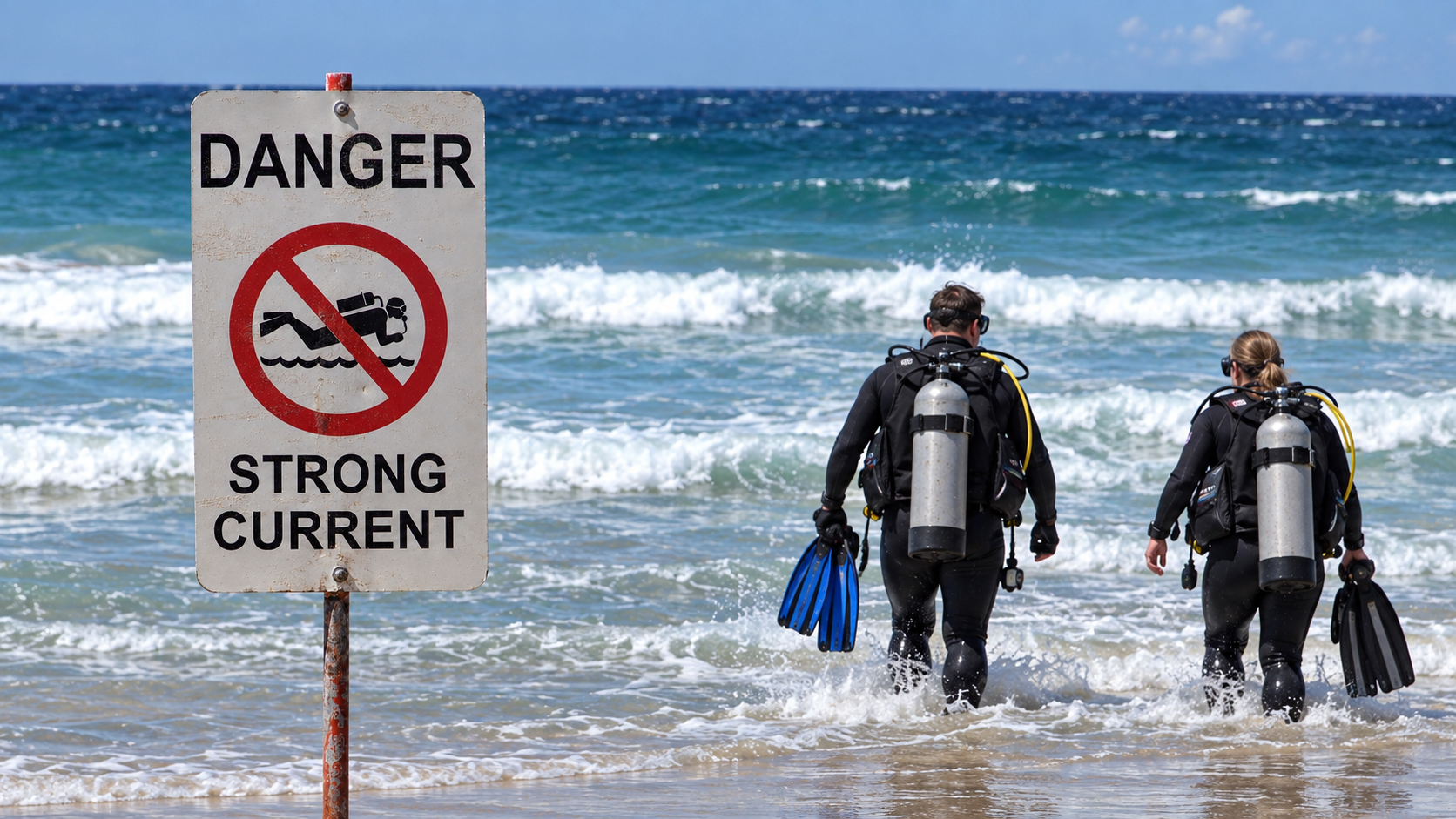
Avoid strong current, low visibility or deeper dives at first.
Use a simple camera setup.
Do not turn the whole dive into a photo mission.
Before the dive, decide that your main goal is still good diving.
Not 200 photos.
Not the perfect reel.
Not the ultimate nudibranch close-up.
Your goal is simple:
Take a few photos while keeping excellent buoyancy, trim and awareness.
If your buoyancy gets worse, stop shooting.
If you lose track of your buddy, stop shooting.
If you touch the bottom, stop shooting.
If you forget to check your air because you are staring at the screen, stop shooting.
The camera should add to the dive.
It should never take over the dive.
The Real Lesson
If you want better buoyancy, the answer is not always more gear, more gadgets or more complicated advice.
Sometimes, the best thing you can do is remove something.
Remove the camera.
Remove the pressure to create content.
Remove the distraction.
Give yourself 30–40 dives to become calmer, more controlled and more aware underwater.
The nudibranchs will still be there.
The turtles will still be there.
Your future photos will be better.
And most importantly, you will become a better diver first.
Want better buoyancy? Leave the camera behind.
At least for a while.