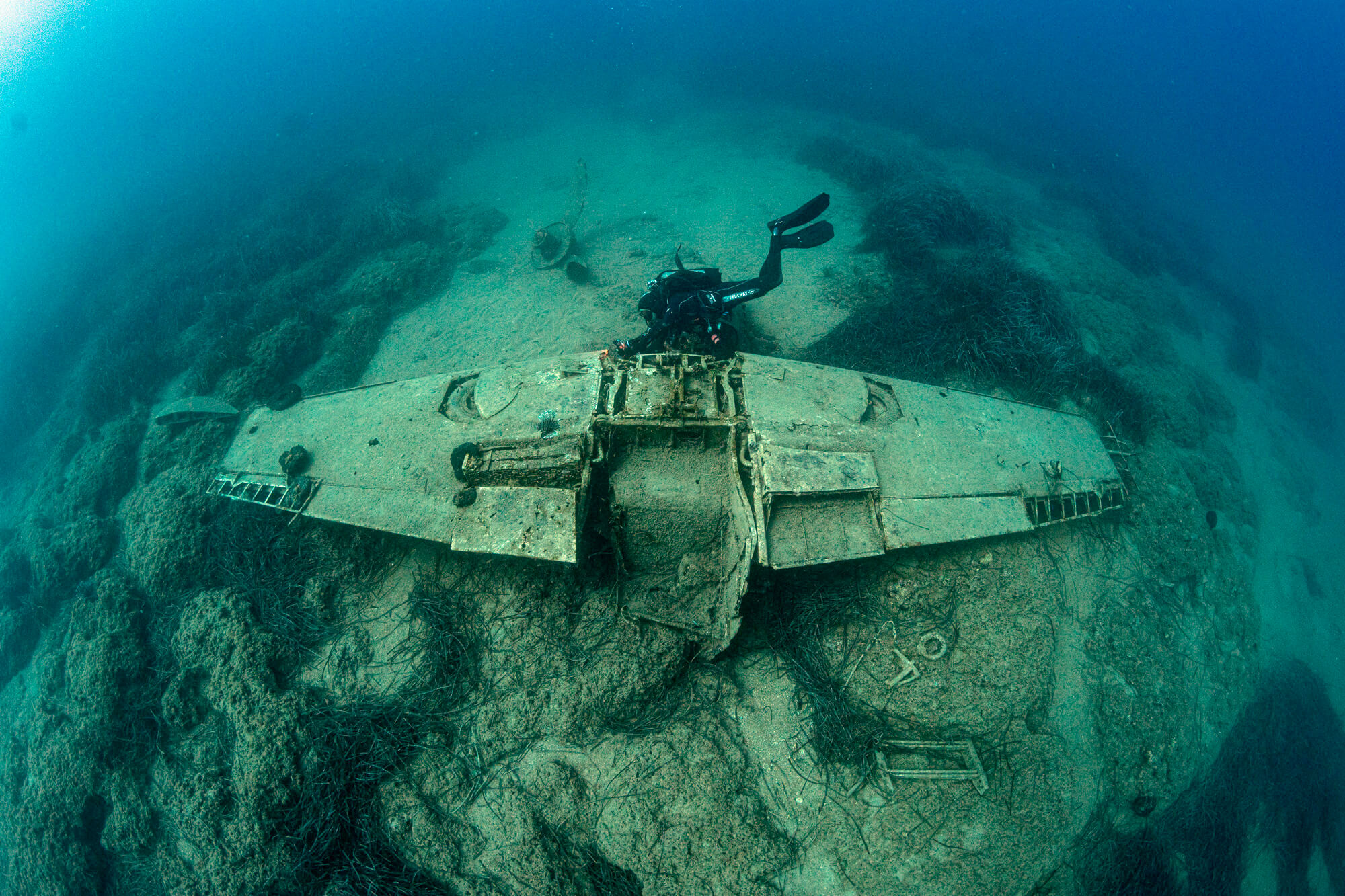
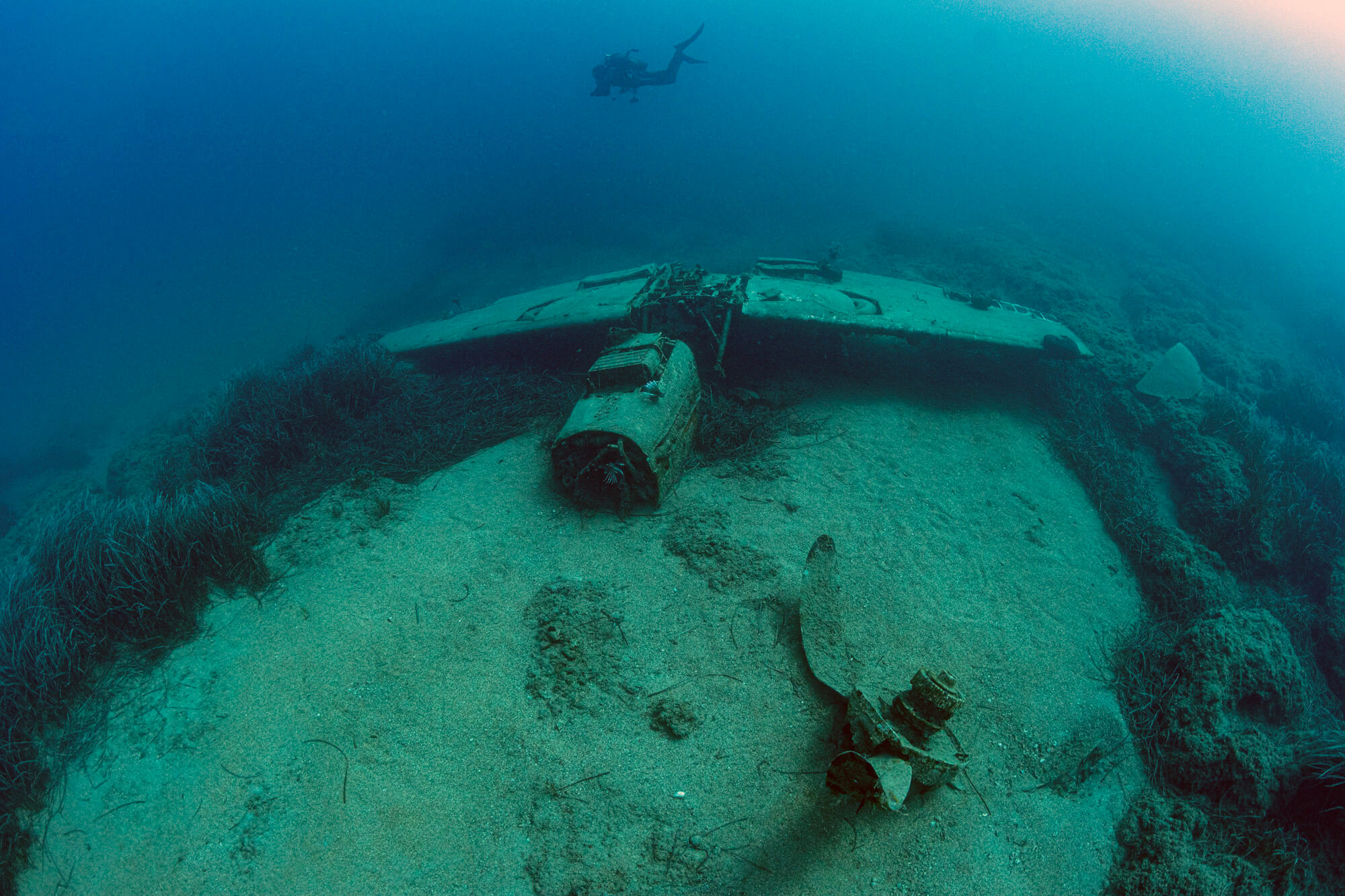
Resting beneath the waters off Hersonissos, Crete, this Messerschmitt Bf 109 is one of the most fascinating aircraft wreck dives in Greece. Surrounded by Posidonia seagrass meadows and sandy seabed, the wreck offers a unique opportunity to explore a piece of World War II aviation history.
Dive Overview
The Messerschmitt Bf 109 was one of the primary fighter aircraft used by the German Luftwaffe during World War II and remains the most-produced fighter aircraft in history.
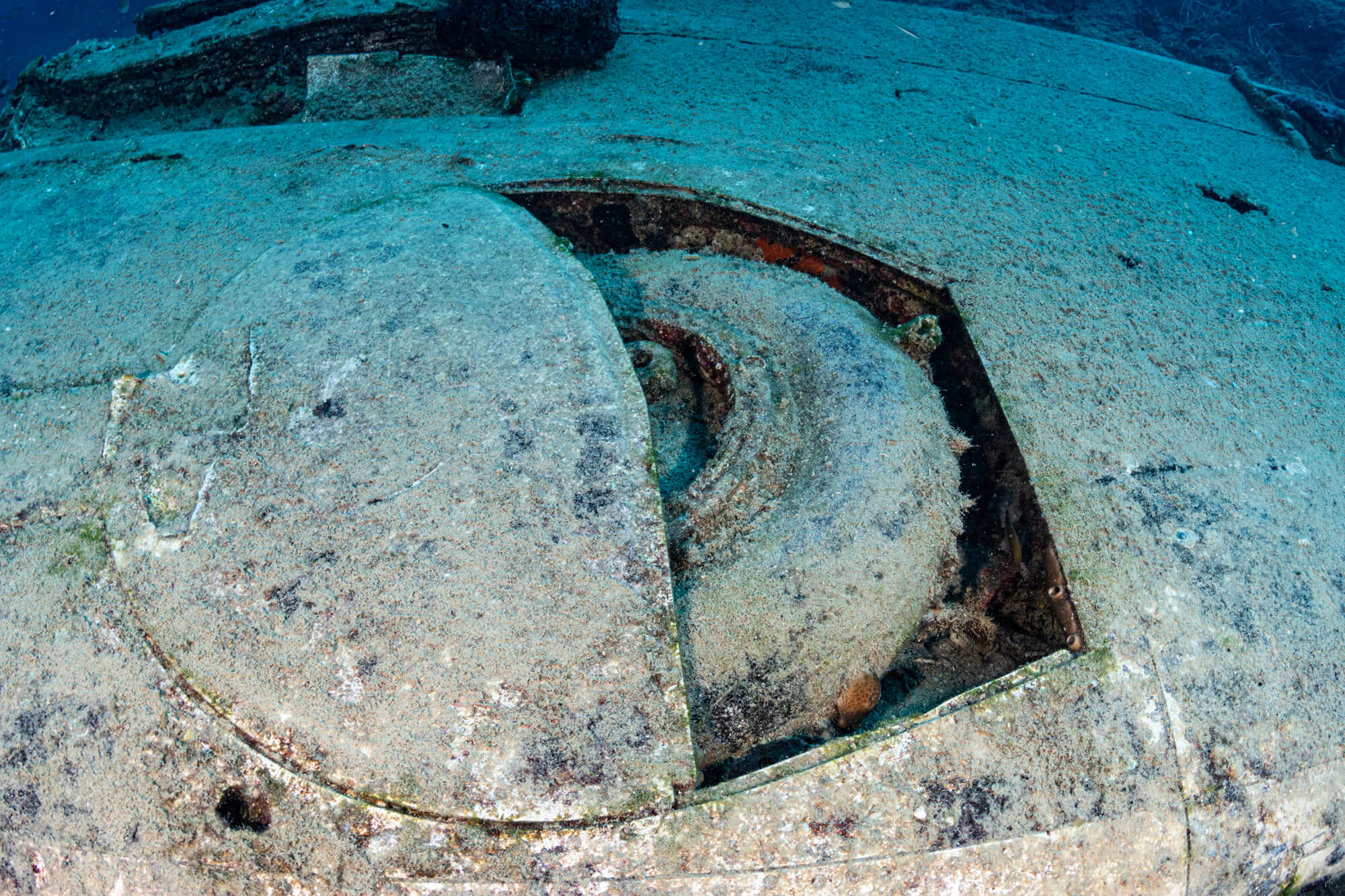
Today, one of these historic aircraft rests on the seabed near Sarantaris Beach, just outside Hersonissos. Although relatively small compared to shipwrecks, the aircraft is remarkably photogenic and attracts divers interested in both underwater history and marine life.
Entry & Conditions
The dive site is accessible only by boat.
The aircraft lies offshore in an area that typically enjoys good visibility and calm diving conditions during the diving season. After securing the boat and completing all pre-dive checks, divers can descend directly to the wreck.
What You’ll See
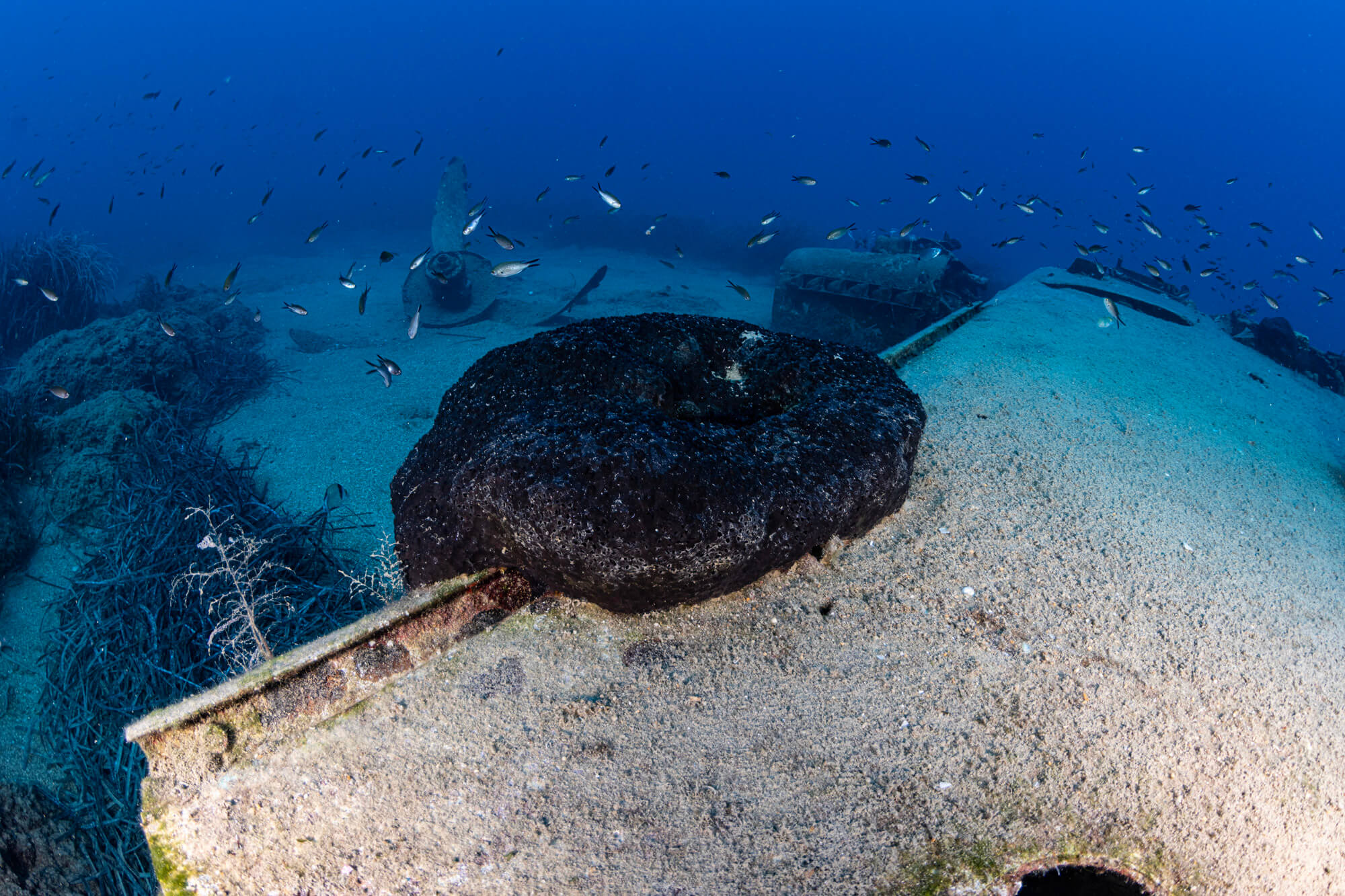
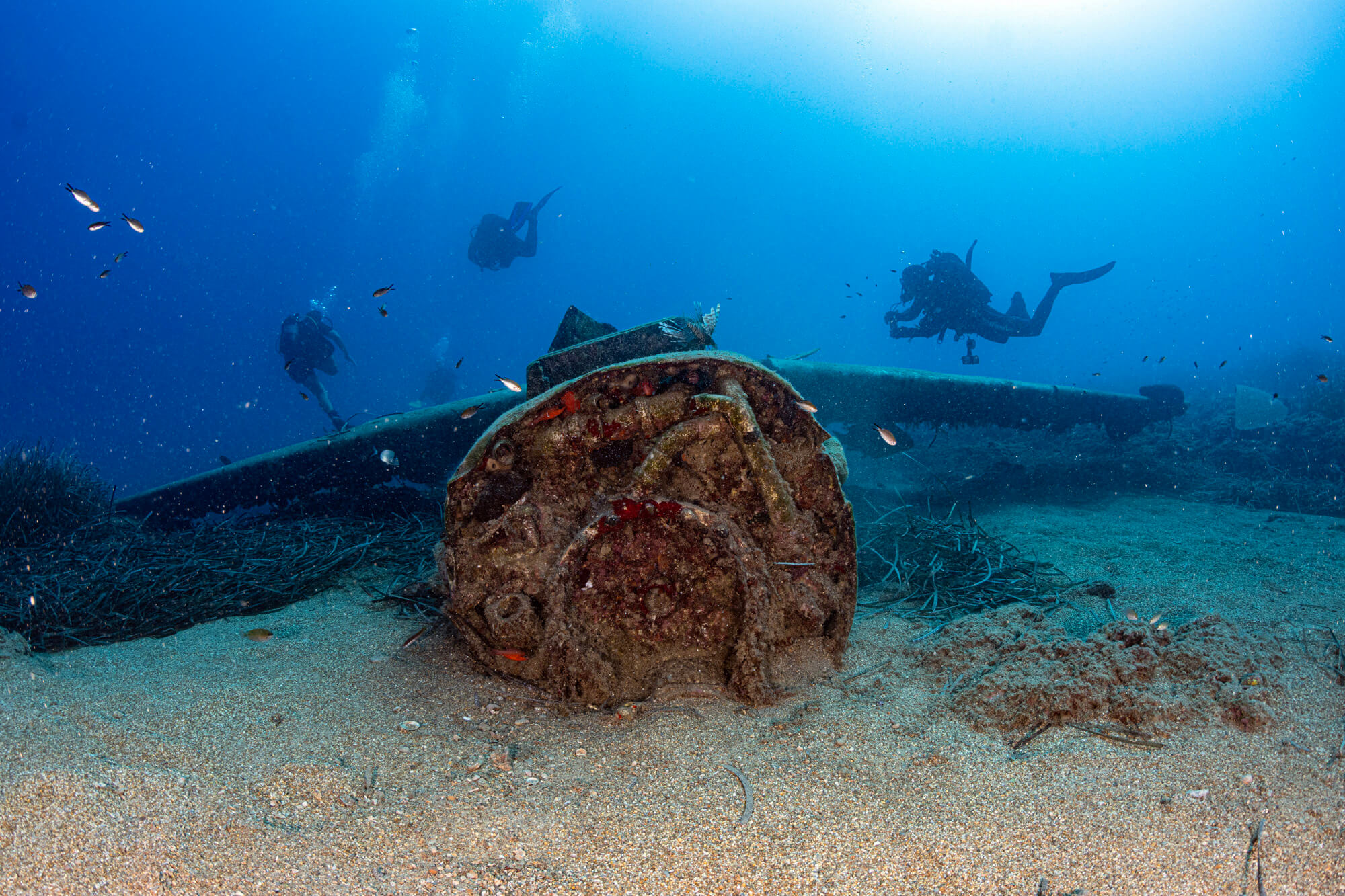
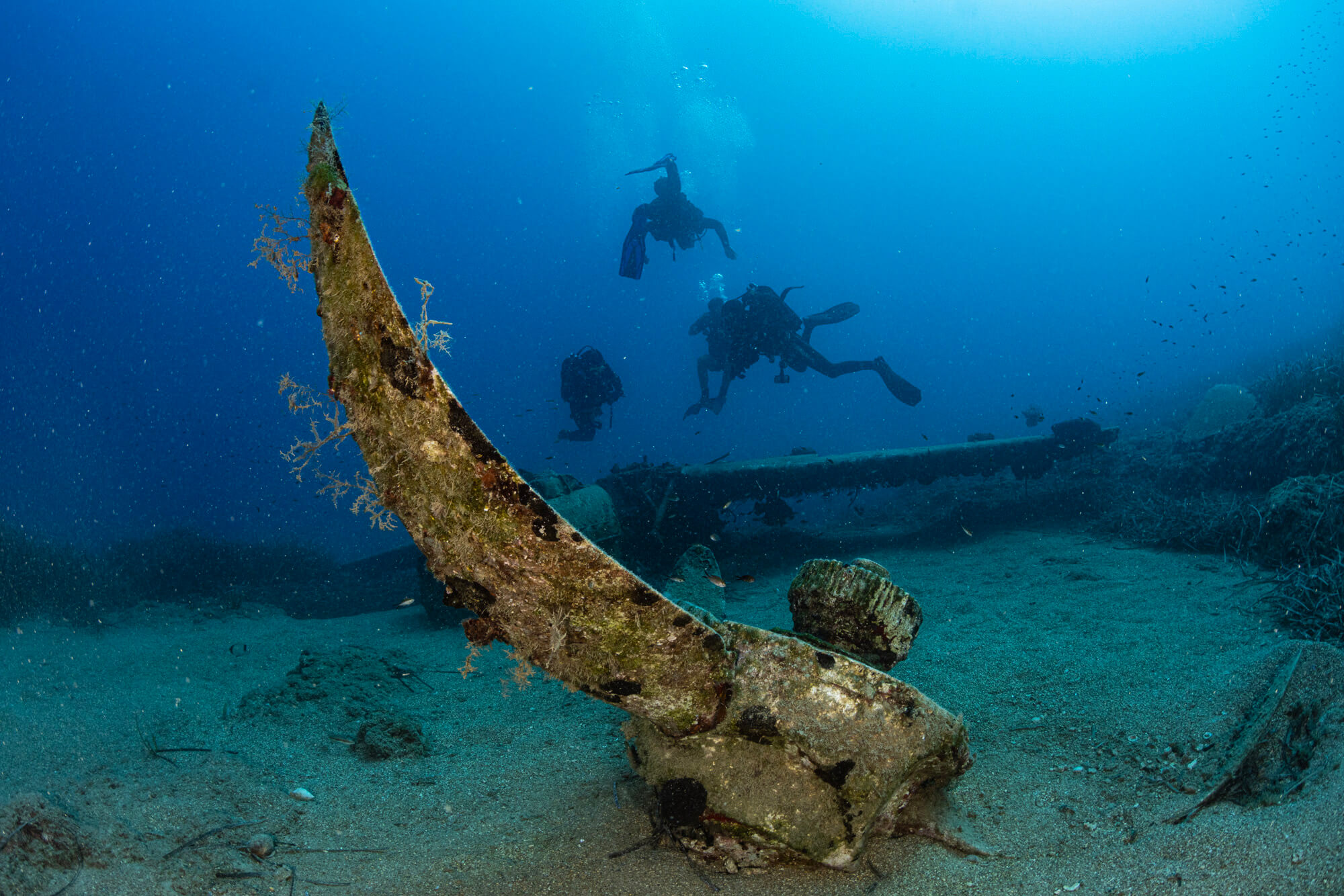
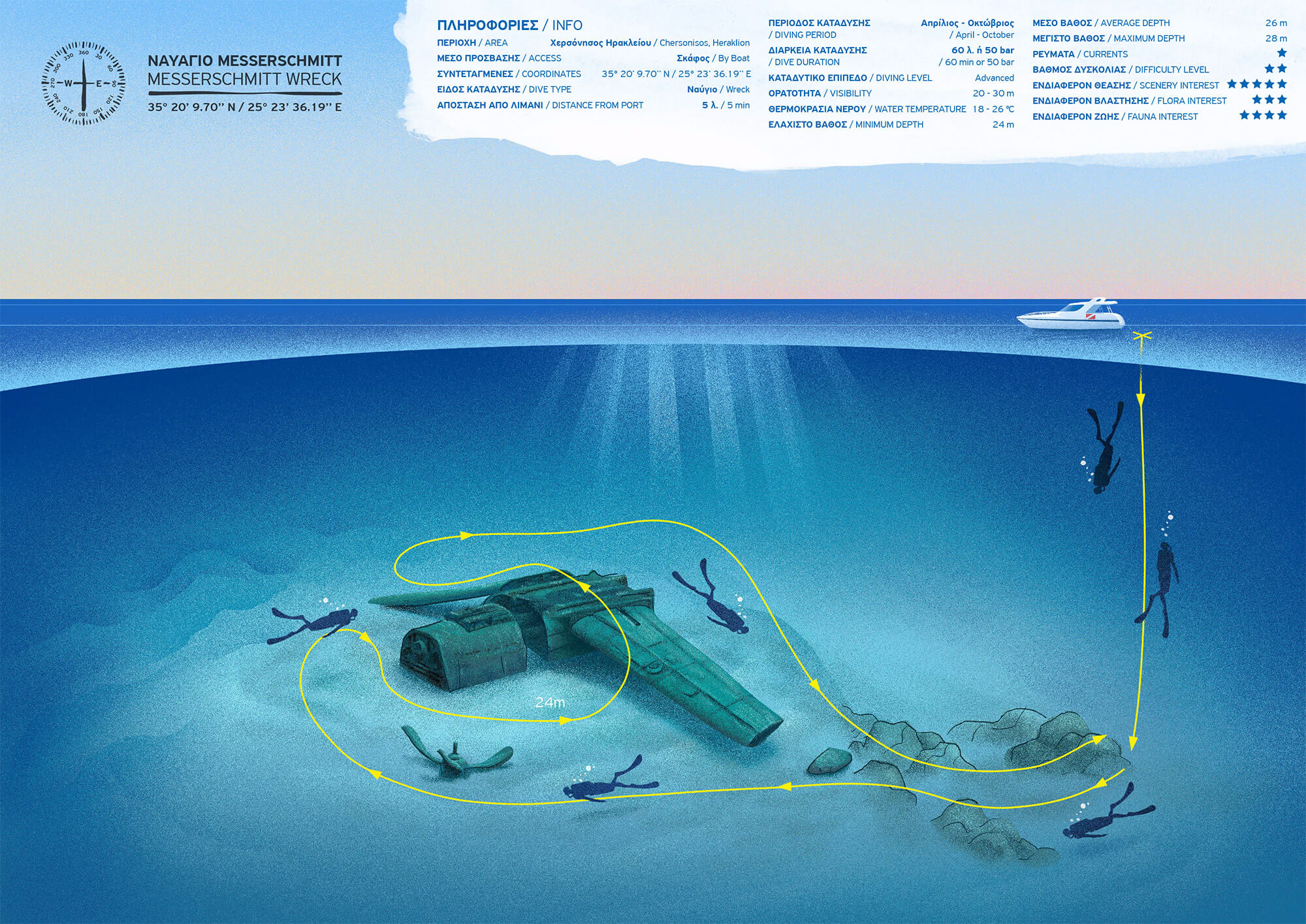
The aircraft rests at approximately 24 meters depth, while the propeller reaches down to around 30 meters.
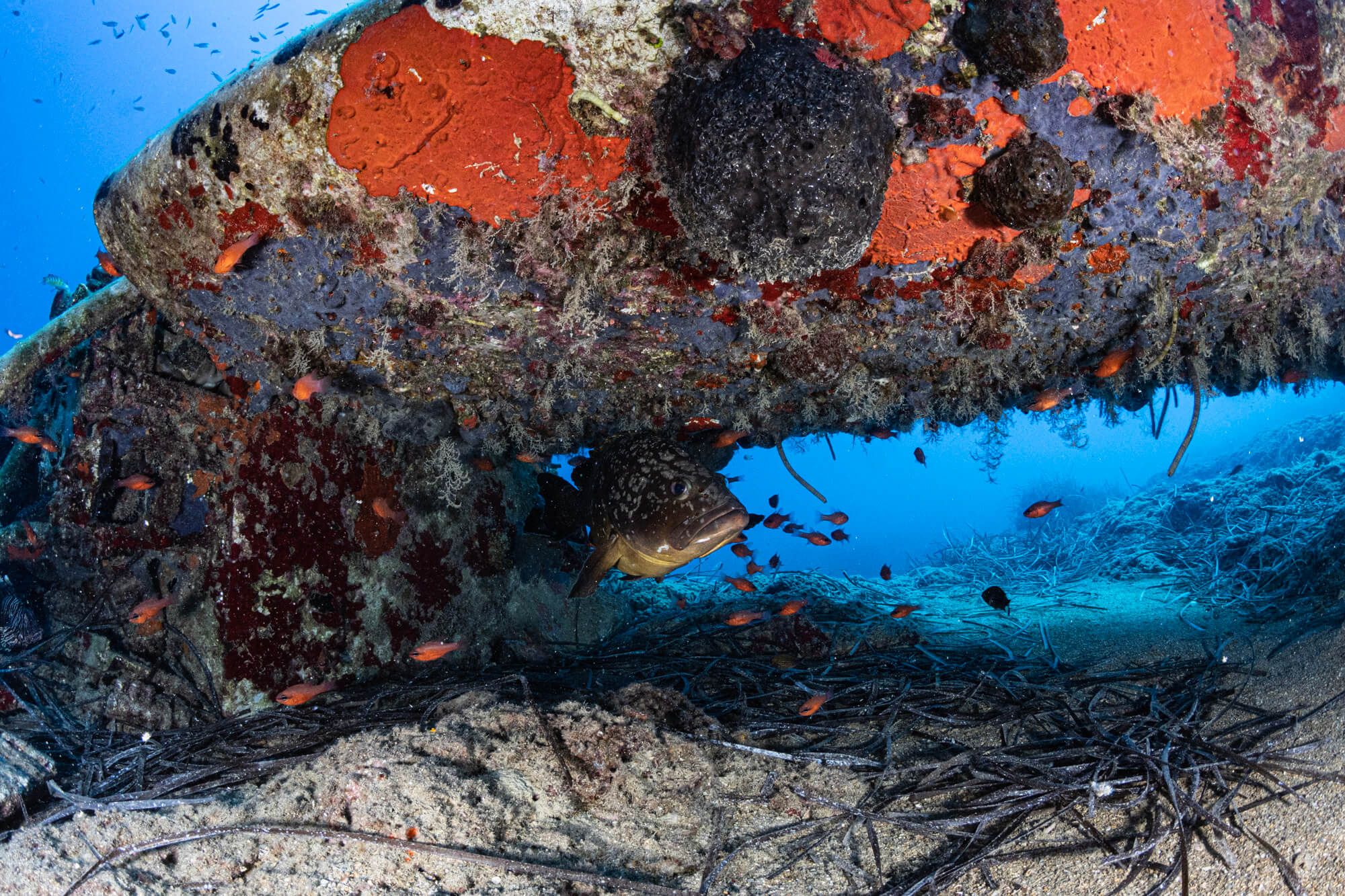
The wreck lies among Posidonia seagrass meadows and sandy seabed, creating a striking contrast between the dark aircraft structure and the surrounding environment. Despite its relatively small size, the aircraft remains instantly recognizable and provides excellent opportunities for underwater photography.
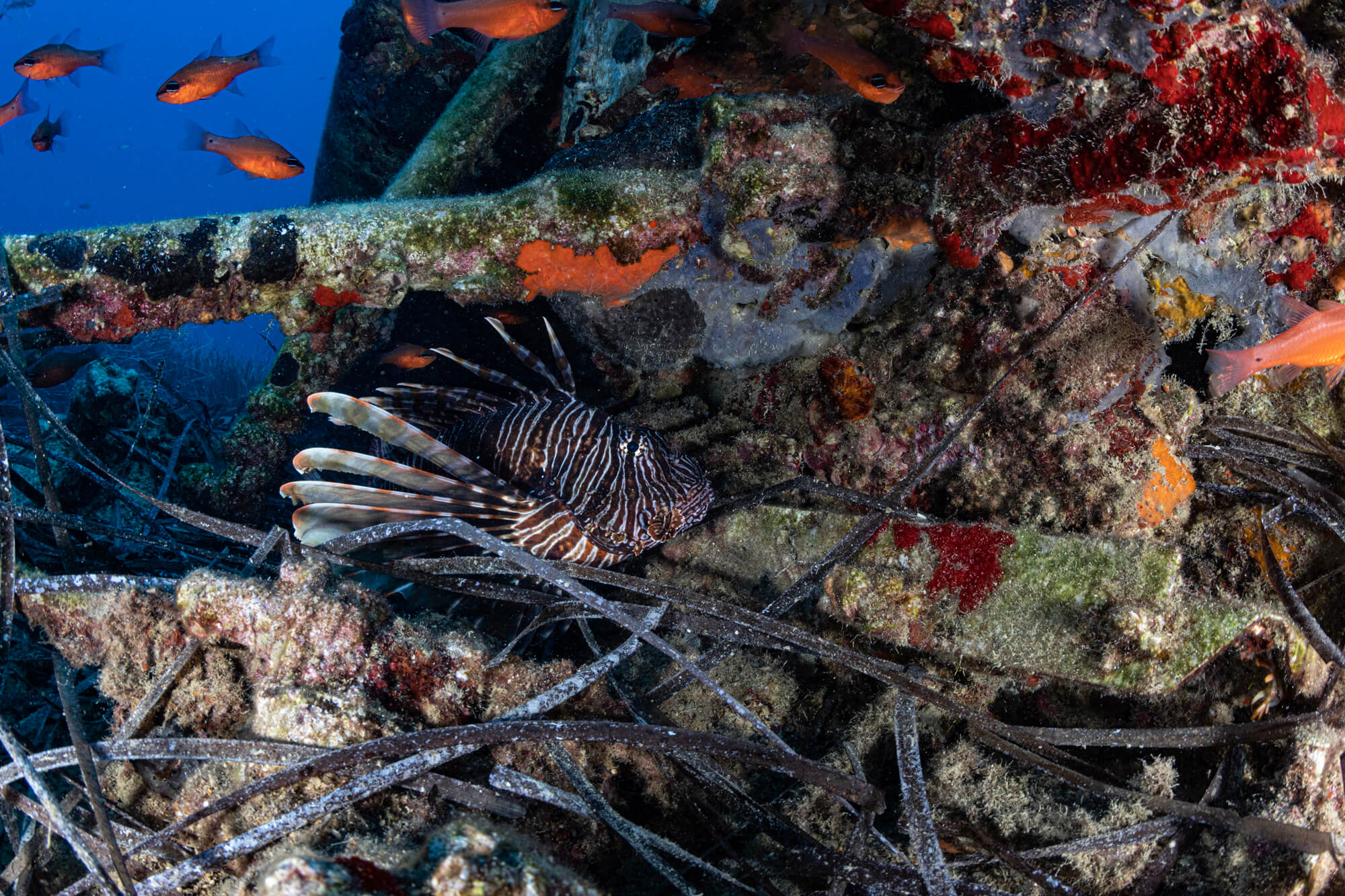
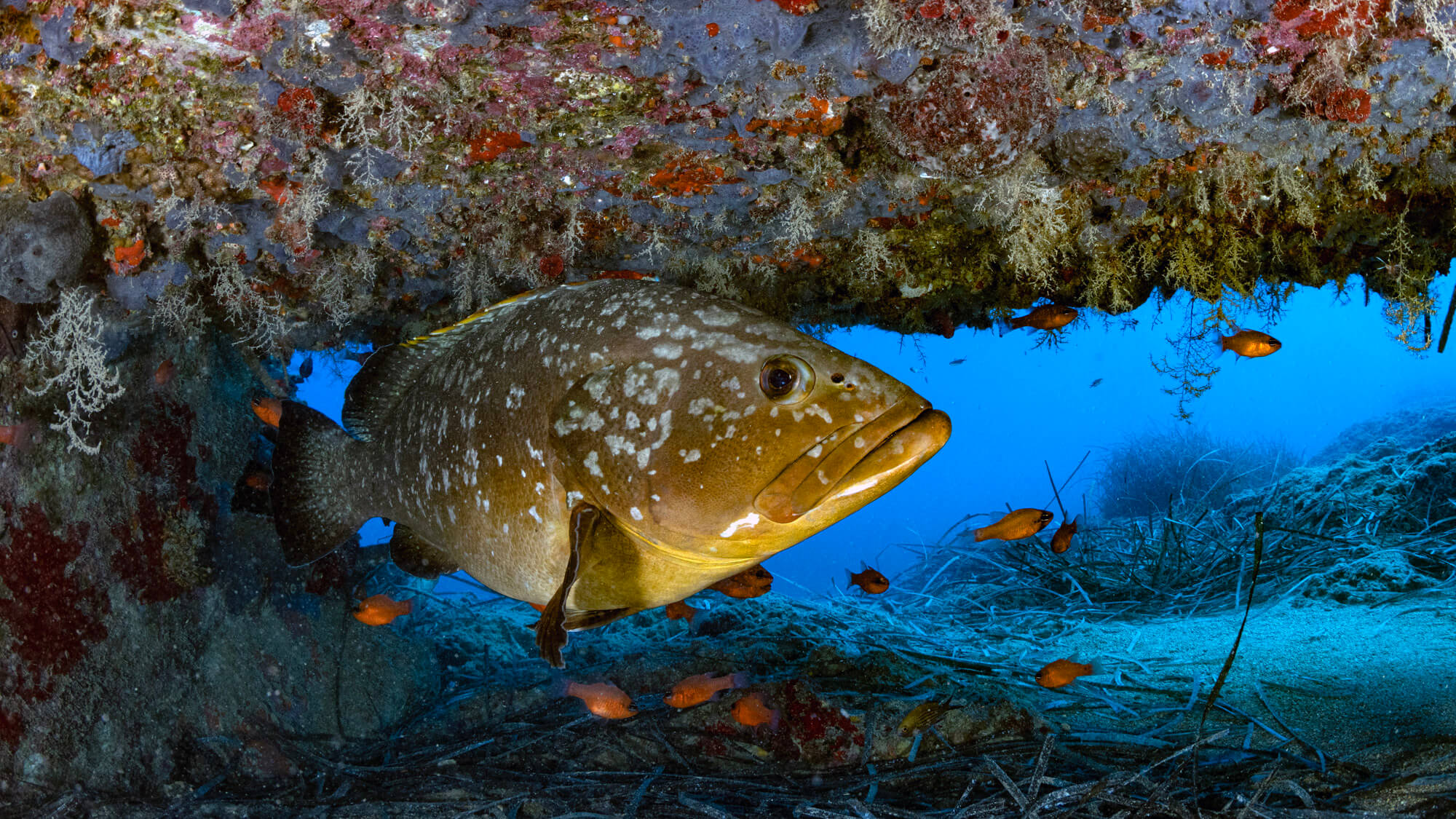
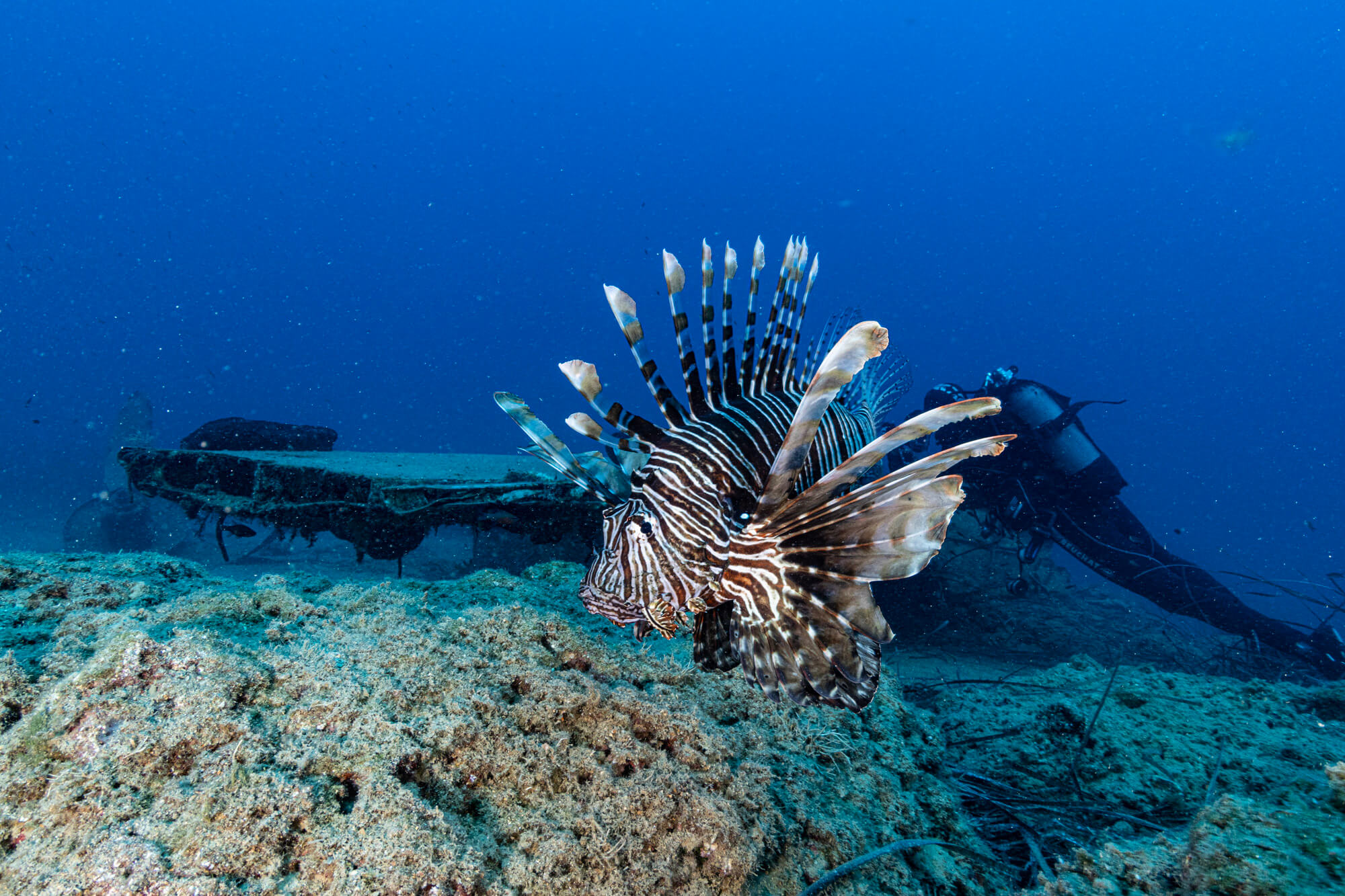
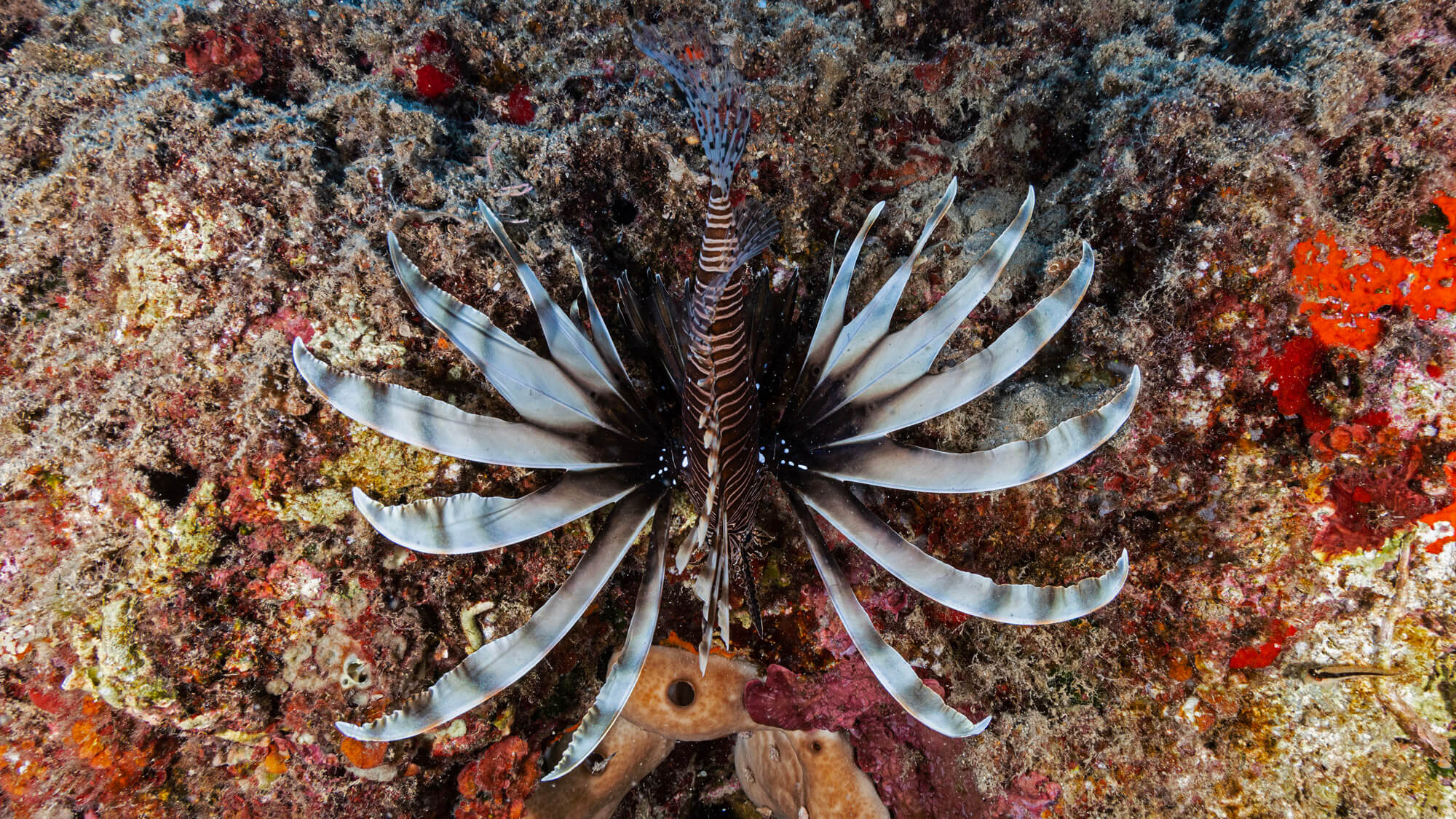
The area hosts abundant marine life, and it is not unusual to encounter larger pelagic fish passing through. Divers should also examine the propeller carefully, as nudibranchs and other small marine creatures are often found living on and around the structure.
Because the wreck occupies a compact area, divers usually have plenty of time to explore every section and photograph the site thoroughly.

Important Considerations
- Boat access only
- Good buoyancy control is recommended around the wreck
- Avoid touching the aircraft structure
- Do not damage the surrounding Posidonia seagrass meadows
- A dive torch may be useful for photography and close inspection
Depth Profile
The aircraft sits within recreational diving limits, with most of the wreck located around 24 meters and the deepest point reaching approximately 30 meters at the propeller. The profile allows for a relaxed exploration while still offering enough depth to appeal to experienced divers.
Tips for Divers
- Bring a camera, as the wreck is highly photogenic
- Take time to inspect the propeller for nudibranchs and macro life
- Monitor depth carefully when exploring the lower sections
- Visit during calm conditions for the best visibility
- Maintain neutral buoyancy to protect both the wreck and surrounding seagrass
Why This Dive Stands Out
Few dive sites allow divers to explore an authentic World War II fighter aircraft in such clear Mediterranean waters. Combined with healthy marine life, excellent visibility, and a manageable depth range, the Messerschmitt Bf 109 offers a memorable blend of history and diving.
Photo Credit / Source: diveinourislands.com | Dimitris Poursanidis / TerraSolutions Marine Environment Research.