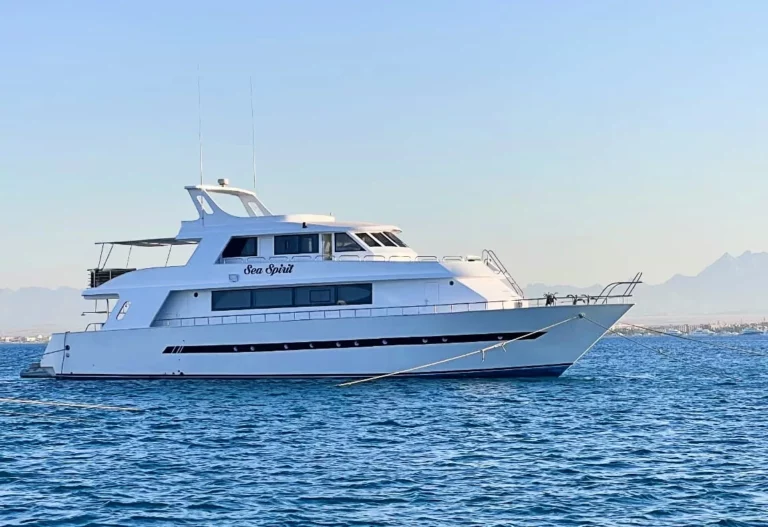
The Egyptian liveaboard Sea Spirit has sunk in the Gulf of Suez, becoming the latest vessel lost in a growing series of fires, capsizings and sinkings involving dive boats operating in the Red Sea.
The 27-metre vessel went down on Tuesday, 14 July 2026, near Gebel El Zeit, off Ras Ghareb. According to initial reports, the boat began taking on water before a distress call was issued.
There were no diving guests on board at the time. Five Egyptian crew members were reportedly sailing the vessel, four of whom were rescued.
A fifth crew member was initially reported to have died after suffering an electric shock during the emergency. However, some diving media have stressed that the death has not yet been independently confirmed by a detailed official statement. The exact cause of the sinking also remains unknown, and an investigation is reportedly underway.
What happened to Sea Spirit?
The incident occurred in the northern Red Sea, close to Jabal or Gebel El Zeit, an area located in the Gulf of Suez north of Hurghada.
Early accounts indicate that Sea Spirit began taking on water, although it is not yet clear whether this resulted from structural failure, damage to the hull, a mechanical issue, a failed pump or another cause.
There has also been no detailed public information regarding the vessel’s planned route, its maintenance history or whether it was travelling to or from a shipyard.
With no passengers aboard, the incident did not develop into a mass-casualty disaster. Nevertheless, the reported loss of a crew member and the complete sinking of another Egyptian liveaboard add to increasingly serious questions surrounding dive-boat safety in the region.
Until the authorities release their findings, speculation about the cause should be treated with caution.
Another vessel added to a disturbing timeline
The loss of Sea Spirit cannot be viewed entirely in isolation. Over the past three years, a succession of major incidents has involved liveaboards operating from Egyptian Red Sea ports.
Not all occurred under the same circumstances, and there is no evidence that all share a common technical cause. Some involved fires, others capsizing in poor weather, and several occurred while vessels were moored or undergoing maintenance.
Taken together, however, their frequency is becoming increasingly difficult to dismiss.
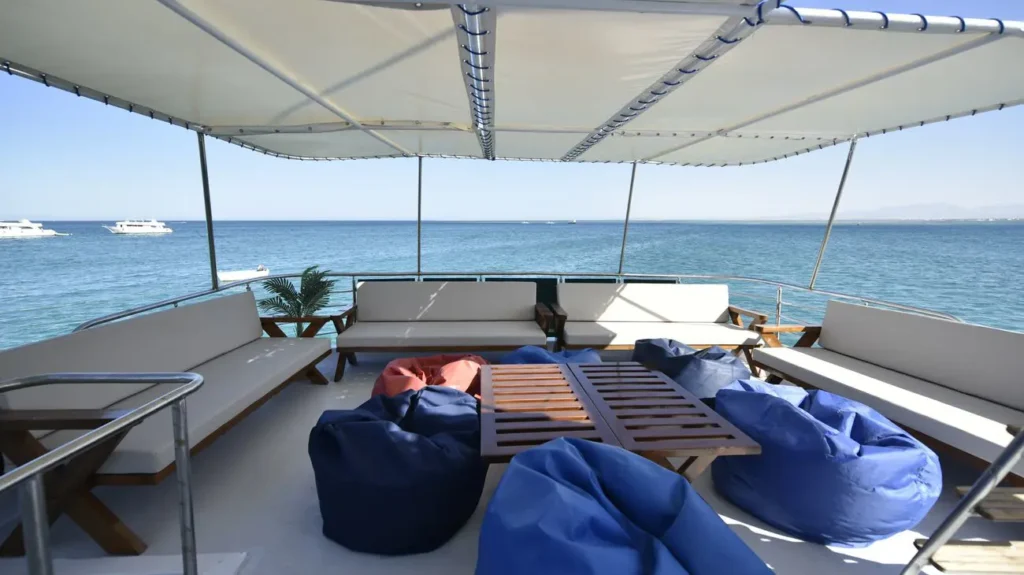
The 27-metre Sea Spirit could accommodate up to 15 divers.
June 2023 – Hurricane
On 11 June 2023, fire broke out aboard the liveaboard Hurricane near Elphinstone Reef.
Twenty-six people were rescued, but three British divers who were believed to have remained below deck did not survive. The vessel was abandoned and subsequently lost.
The UK Marine Accident Investigation Branch later included the Hurricane fire in a safety bulletin addressing concerns about Egyptian liveaboard dive boats.
February 2024 – Sea Legend
The Sea Legend, operated by Dive Pro Liveaboards, caught fire during a Red Sea safari in February 2024.
Guests and crew were forced to abandon the vessel, but a German diver was reported missing and later presumed dead. The vessel was subsequently destroyed and sank.
Survivors later raised questions about emergency procedures and safety equipment aboard the boat, although no comprehensive public investigation report appears to have been released.
November 2024 – Sea Story
The Sea Story capsized and sank near Marsa Alam on 25 November 2024 while carrying tourists, dive guides and crew.
Thirty-three people survived, including five who were rescued after spending approximately 35 hours trapped in air pockets inside the overturned vessel. Four bodies were recovered, while seven people remained missing.
In May 2025, Egyptian authorities officially declared the seven missing people dead, bringing the final death toll to 11.
Initial official accounts suggested that a large wave had struck the vessel. Survivors later disputed parts of that version and raised serious allegations concerning the boat’s stability, the condition of emergency equipment and the handling of the incident.
Some survivors also alleged that they had been pressured into signing statements that absolved the operator of criminal responsibility. These remain allegations rather than conclusions from a publicly available final investigation.
The UK Marine Accident Investigation Branch subsequently issued a safety bulletin covering the Sea Story, Hurricane and Carlton Queen accidents. It warned that it had been unable to investigate the vessels fully because they operated under the Egyptian flag and outside UK territorial waters.
January 2026 – Golden Dolphin III
In the early hours of 21 January 2026, the Golden Dolphin III was destroyed by fire while moored in Hurghada.
The fire spread rapidly and left the liveaboard a total loss. No guests were aboard, and no injuries were reported.
Egypt’s Chamber of Diving and Watersports was reported to have opened an investigation, but no official cause had been publicly announced at the time of writing.
February 2026 – Golden Dolphin II
Only 38 days later, another fire broke out aboard the Golden Dolphin II, a vessel belonging to the same fleet.
The boat was docked in Hurghada for maintenance when the blaze began. Images showed extensive damage to the upper deck, although the hull and lower sections appeared to have remained intact.
There were no reported injuries, and the operator initially stated that the vessel would be taken to a dry dock for repairs. The cause of the fire was not officially disclosed.
July 2026 – Sea Spirit
The sinking of Sea Spirit is therefore the third major incident involving an Egyptian Red Sea liveaboard reported in less than seven months.
Unlike the two Golden Dolphin fires, Sea Spirit was underway when it reportedly began taking on water. There were no guests aboard, but one of the five crew members is reported to have died during the emergency.
The vessel’s loss brings the number of serious liveaboard fires, capsizings or sinkings covered in this timeline to six since June 2023.
Is Red Sea liveaboard diving unsafe?
Millions of dives have been conducted safely from Red Sea liveaboards over several decades, and it would be misleading to suggest that every Egyptian vessel or operator follows the same standards.
The Red Sea remains one of the world’s most important and popular liveaboard destinations, supported by many experienced crews, dive guides and reputable operators.
Nevertheless, the repeated loss of vessels demands more than reassurance.
The pattern raises legitimate questions regarding:
- fire detection and suppression systems;
- electrical installations and charging areas;
- structural modifications and vessel stability;
- maintenance and inspection records;
- crew emergency training;
- the accessibility of lifejackets and escape routes;
- the condition of liferafts and emergency equipment;
- weather-related operating decisions;
- and the transparency of accident investigations.
Following the Sea Story disaster, the UK MAIB stated that it had been notified of several serious accidents affecting British citizens on Egyptian dive boats. Its safety bulletin highlighted the need for passengers to familiarise themselves with escape routes, lifejackets and emergency procedures rather than assuming that all equipment or systems will function as expected.
What divers should check before booking
Divers cannot personally inspect every technical aspect of a liveaboard, but they can ask meaningful questions before paying a deposit.
A responsible operator should be able to explain when the vessel was built or last significantly modified, what fire-detection systems are installed, how often emergency drills are carried out and whether charging lithium batteries is restricted to designated areas.
Once aboard, guests should locate their lifejackets, identify more than one escape route from their cabin and pay close attention to the safety briefing.
A briefing should not be treated as a holiday formality. Divers should know where the liferafts, fire extinguishers and emergency exits are located and what alarm signals will be used.
A problem that requires transparent answers
At present, there is no evidence that the Sea Spirit sinking was caused by the same failures alleged in earlier incidents.
It would therefore be premature to draw a direct technical connection between Sea Spirit, Sea Story, Hurricane or the Golden Dolphin fires.
The broader issue is not that every accident was identical. It is that serious incidents involving Red Sea liveaboards continue to occur, while detailed public investigation reports remain limited or unavailable.
Determining what happened to Sea Spirit matters not only to the family of the reported victim and the vessel’s crew, but also to thousands of divers who travel to Egypt each year.
Until investigations become more transparent and lessons are demonstrably applied across the fleet, every new sinking or fire will reinforce the same concern: how many warnings are needed before systematic changes are made?