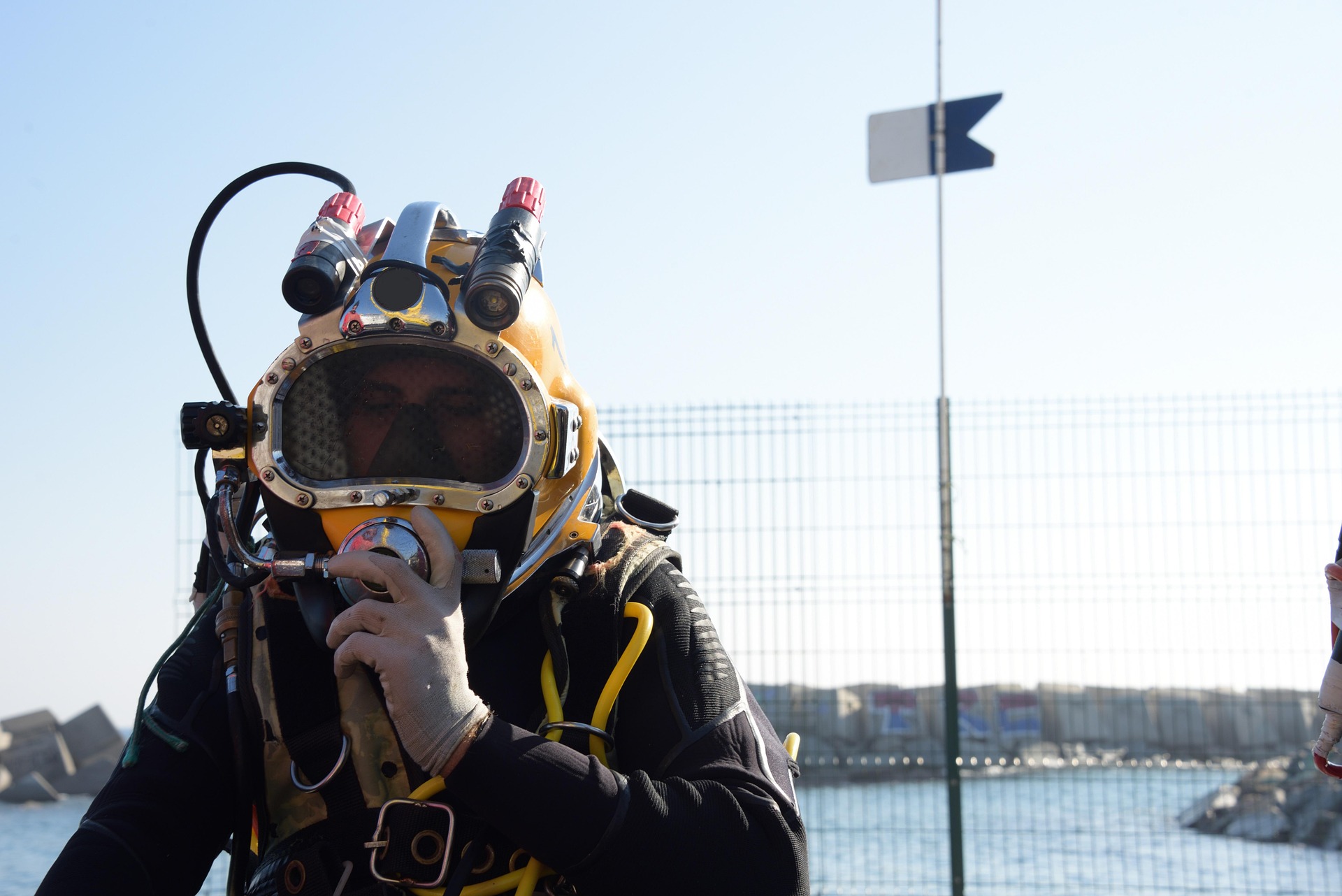
Professional divers in Europe may soon see one of the most important occupational issues of their sector brought into the political spotlight: the recognition of the unique risks connected with commercial and hyperbaric diving work.
According to a public statement by Charis Kladovasilakis, Representative of Greece to the European Diving Technology Committee (EDTC) and Subject Matter Expert in compliance with IMCA Guidelines for commercial diving systems and operations, the European Parliament is expected to examine a petition submitted by professional divers from Spain and Italy on 23 June 2026.
The petition concerns early retirement provisions and the recognition of the demanding working conditions faced by professional divers operating in hyperbaric environments.
The European Parliament’s Committee on Petitions has officially listed meetings for 22 and 23 June 2026 in Brussels, including ordinary meetings on 23 June.
A Petition from Spain and Italy
Spanish diving publication SubaQuatica Magazine reports that the petition was submitted by the Sindicato Estatal de Buzos Profesionales (SEB) together with Italian diving-sector groups. The goal is to ask European institutions to review and harmonize the retirement reduction coefficients applied to professional divers across EU member states.
In Spain, the issue has already gained political attention. Recent discussions have focused on increasing the current reduction coefficient for professional divers, with proposals referring to a move from 0.15 to 0.40, reflecting the higher risks and long-term physical impact of the profession.
This is not only a national issue. Because commercial diving work often follows international standards, offshore practices, and cross-border operations, the lack of a common European approach can create significant differences in how divers are protected, insured, trained, and eventually retired.
Why Commercial Diving Is Different
Commercial diving is not comparable to recreational diving or sport diving.
Professional divers often work in physically demanding and high-risk environments. Their daily reality may include underwater construction, inspection, repair, salvage, offshore work, confined spaces, contaminated water, strong currents, low visibility, heavy tools, decompression obligations, and repeated exposure to increased pressure.
These conditions can have long-term effects on the body. The hyperbaric environment itself, combined with the physical workload and operational risks, makes professional diving one of the most demanding technical occupations.
This is exactly why organizations such as the EDTC and IMCA exist: to promote safer working practices, clearer competence standards, and more consistent guidance for commercial diving operations. The EDTC has repeatedly highlighted the differences between national rules in Europe and the need for guidance that supports safer professional diving across countries.
IMCA, meanwhile, maintains a wide body of guidance documents for offshore and commercial diving operations, including codes of practice, system audits, supervisor guidance, saturation diving systems, and safety procedures.

What This Could Mean for European Divers
The upcoming discussion at European level does not automatically mean that new legislation will follow immediately. A petition before the European Parliament’s Committee on Petitions is a political and institutional step, not an instant law.
However, it can be important for several reasons.
First, it gives professional divers a formal platform to explain why hyperbaric work should be treated differently from ordinary employment.
Second, it may encourage EU institutions to compare national systems and identify gaps in social protection, retirement rights, health monitoring, and occupational recognition.
Third, it could strengthen the argument that professional divers across Europe need more consistent representation and stronger institutional visibility.
For many European countries, where diving activity includes commercial, maritime, archaeological, aquaculture, port, and infrastructure-related work, the debate could open a much-needed conversation about how professional and hyperbaric diving work is recognized, regulated, and protected.
A Wider Debate for the Diving Industry
The discussion around early retirement is not simply about leaving work earlier. It is about recognizing that some professions carry risks that accumulate over time.
For professional divers, the body is part of the workplace. Pressure exposure, decompression, cold, fatigue, confined environments, underwater hazards, and emergency response demands are not occasional exceptions. They are part of the job.
That is why the Spanish and Italian initiative could matter far beyond Spain and Italy. It may become part of a wider European conversation about how professional diving is classified, protected, and represented.
For the diving industry, this is also a reminder that safety does not end with equipment, checklists, and procedures. It also includes long-term health, fair working conditions, and social recognition for the people who carry out some of the most difficult work below the surface.
The European Parliament discussion expected on 23 June 2026 could mark an important step for professional divers in Europe.
It remains to be seen whether the petition will lead to concrete policy changes. But the fact that professional divers from Spain and Italy have brought the issue before European institutions is already significant.
For the wider European diving sector, the message is clear: professional diving needs a stronger voice, better recognition, and a serious conversation about the realities of working underwater.
As the debate develops, it may become an opportunity not only to discuss retirement rules, but to rethink how Europe values and protects the people who work in one of the most demanding environments on Earth.