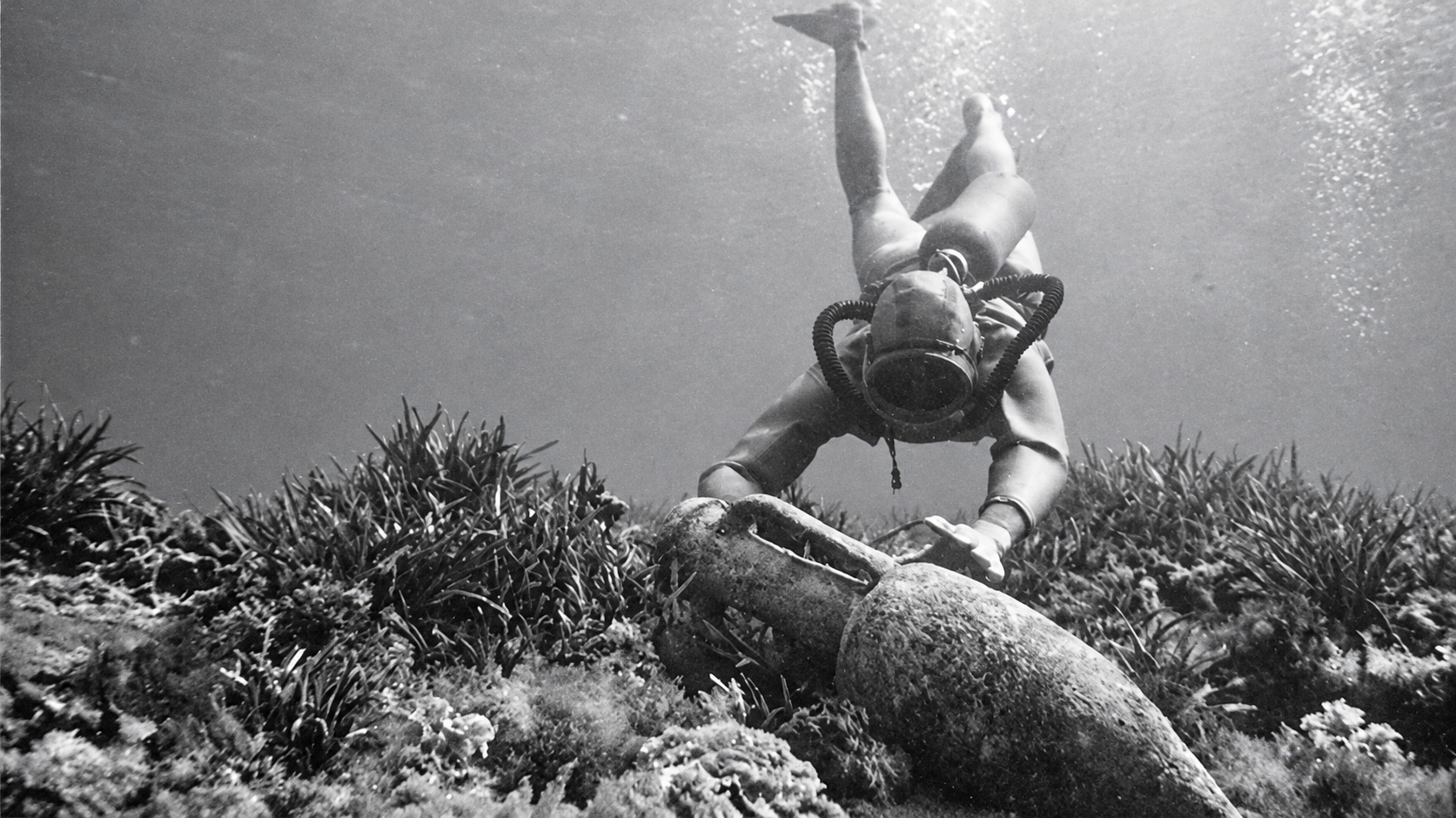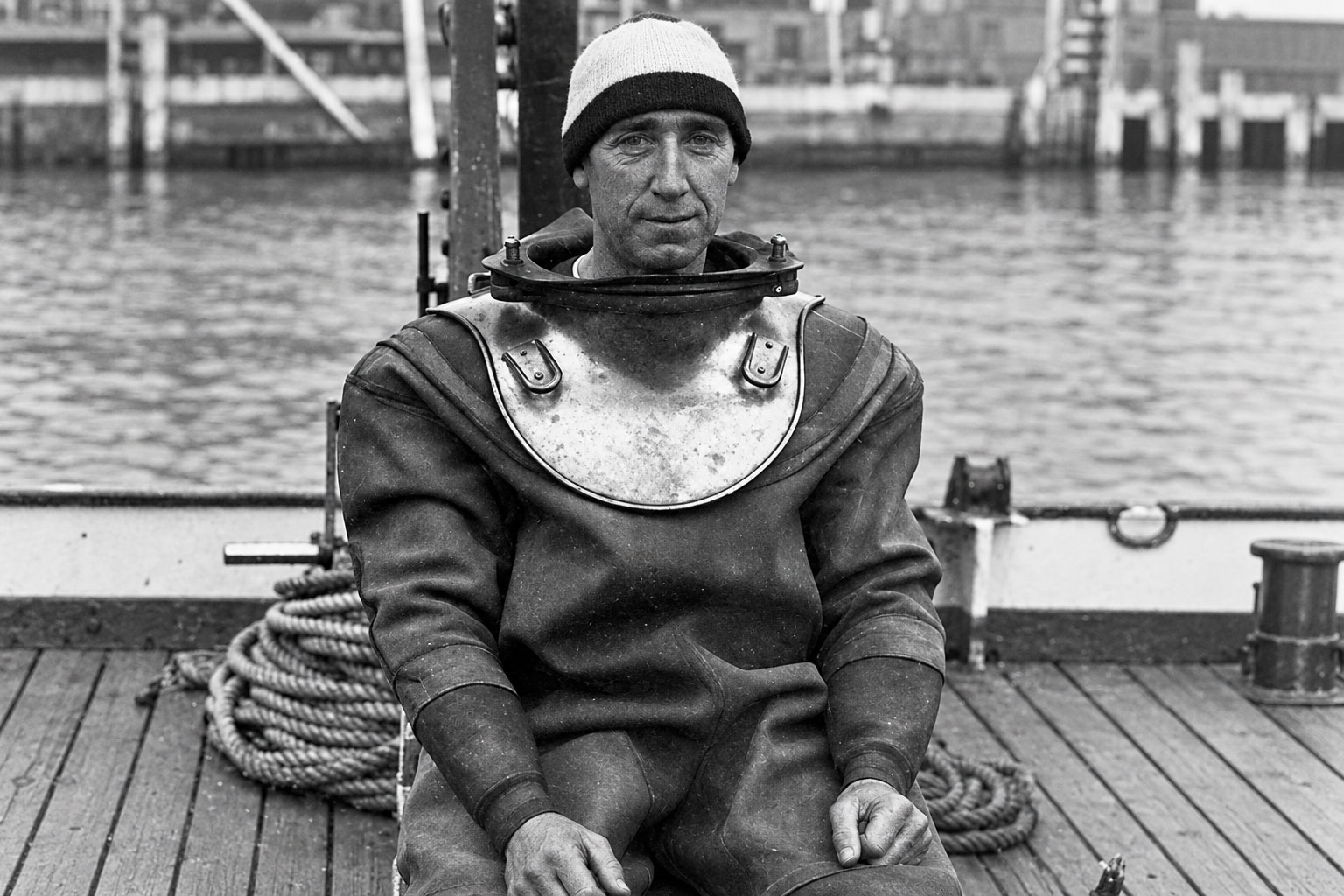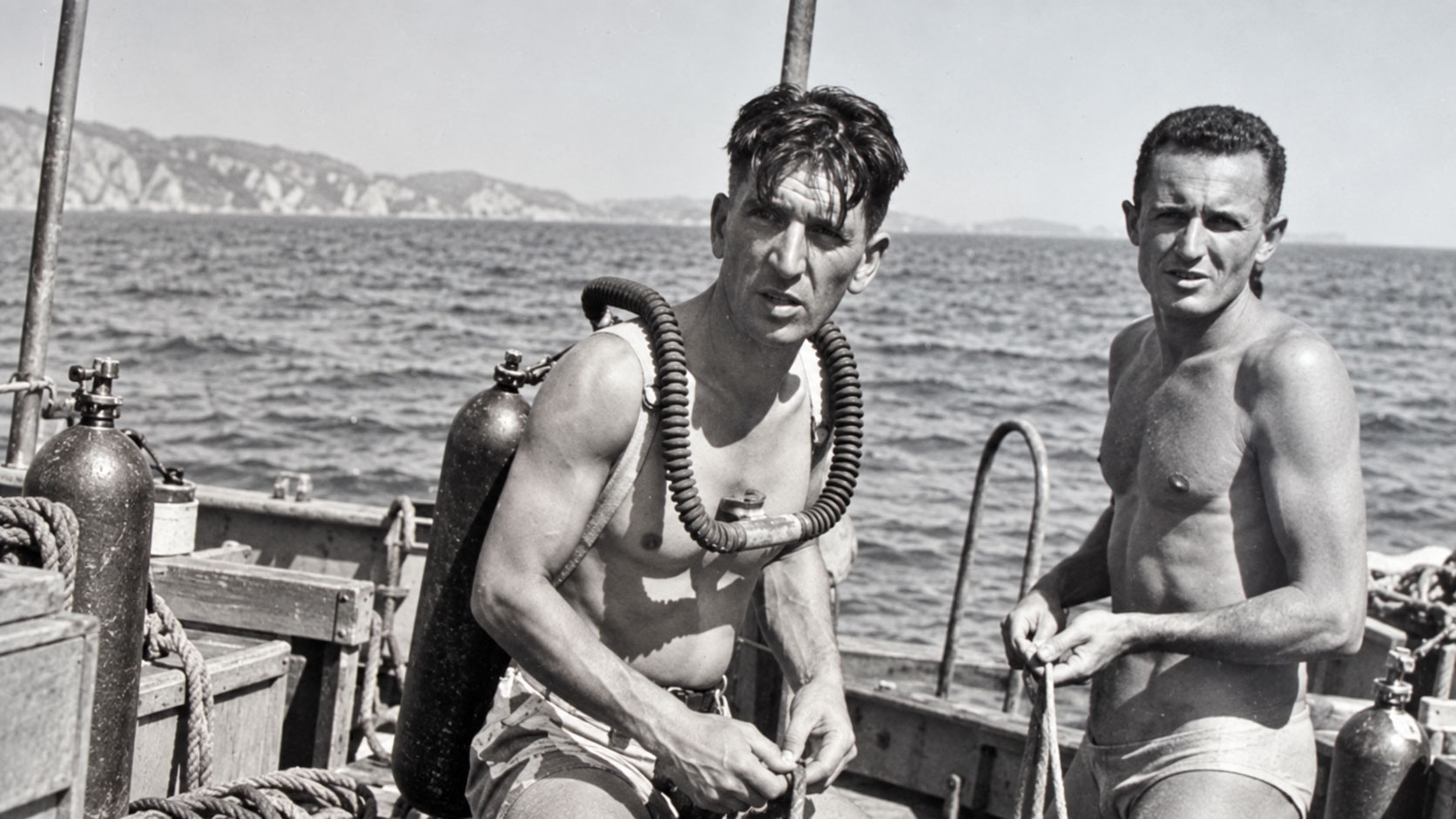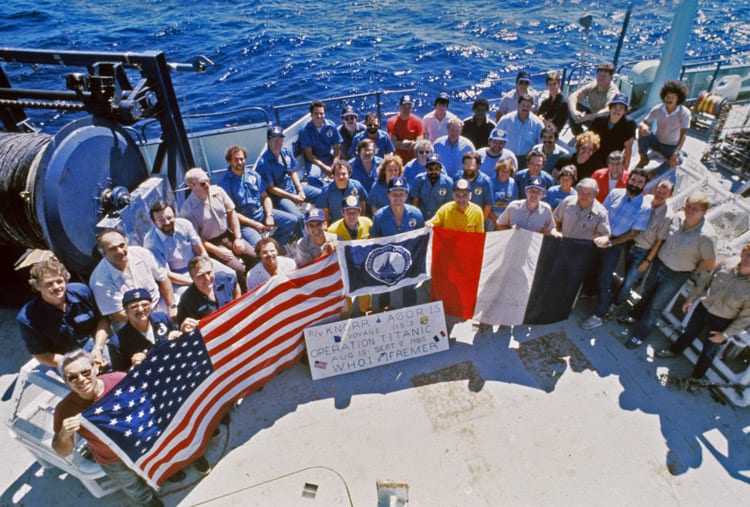
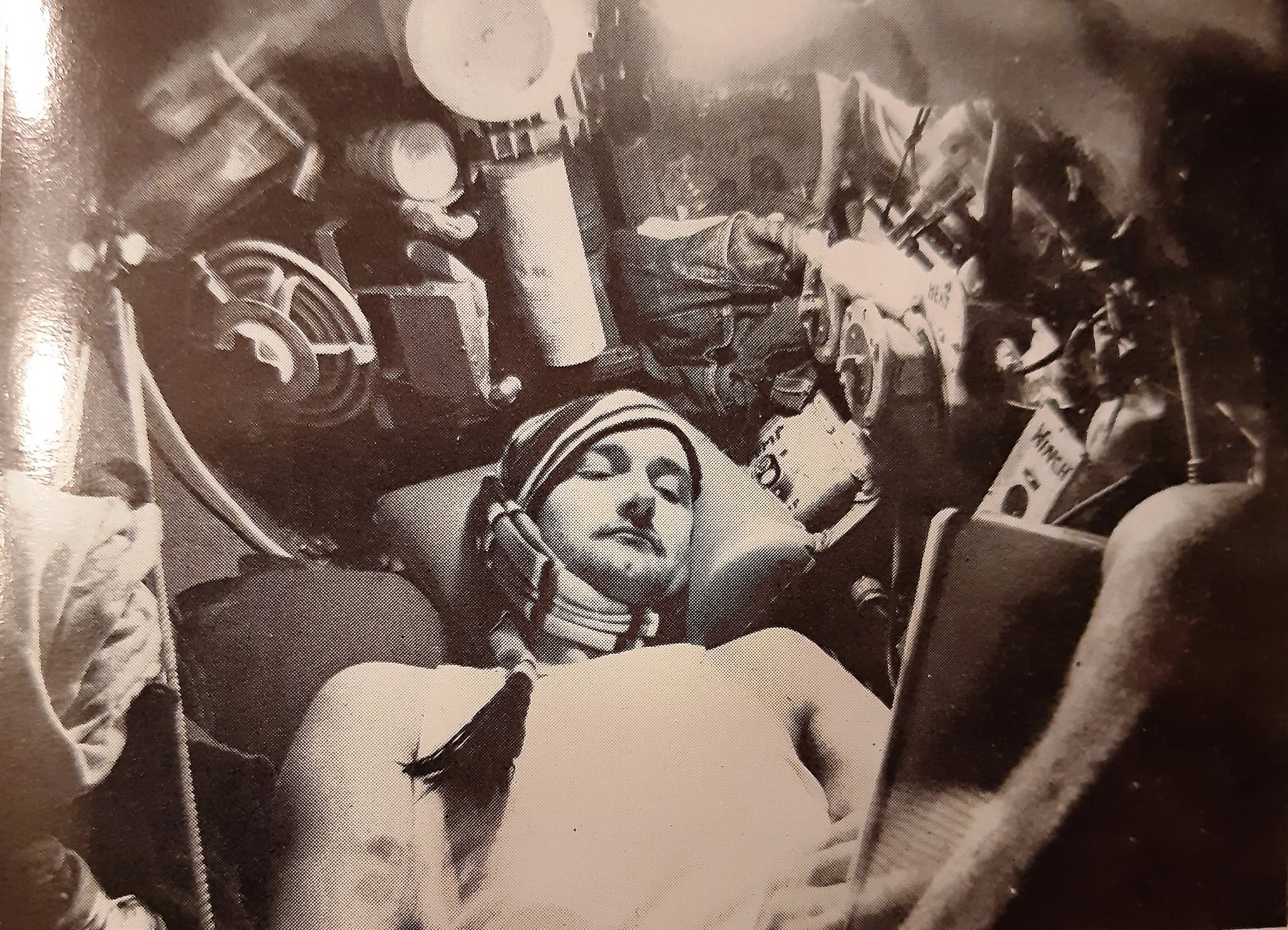
On 6 September 1962, Belgian diver Robert Sténuit descended into the Mediterranean inside a narrow steel cylinder. When he returned, 24 hours and 15 minutes later, he had become the world’s first aquanaut—the first person to spend an entire day living and working on the seabed.
The experiment was called Man in Sea I, and its purpose was far greater than setting another diving record. It sought to prove that humans could remain under pressure for extended periods, opening the way for underwater habitats, saturation diving and longer missions beneath the sea.
Quick Answer
Robert Sténuit became the world’s first aquanaut in September 1962 when he spent 24 hours and 15 minutes at a depth of approximately 61 metres in the Mediterranean Sea. Living inside Edwin Link’s experimental underwater chamber and breathing heliox, he demonstrated that humans could remain and work underwater for extended periods.
From Cave Diver to Underwater Explorer
Robert Sténuit was born in Brussels on 16 July 1933. He began exploring caves as a teenager and discovered scuba diving during the early 1950s, when modern underwater equipment was still relatively new.
His fascination with history soon led him towards shipwrecks. After reading a book about lost underwater treasures, he abandoned his university studies and travelled to Spain in search of ships sunk during the Battle of Vigo Bay in 1702.
The expedition did not produce the treasure he hoped to find, but it helped transform him into a professional diver and brought him into contact with American inventor and explorer Edwin A. Link.
Link had made his fortune by developing the Link Trainer, an early flight simulator used to train thousands of pilots. He later turned his attention from the sky to the sea, becoming convinced that people could live and work at depth instead of returning to the surface after every dive.
The Man in Sea Experiment
Link designed a submersible decompression chamber that became known as the Link Cylinder. It was approximately 3.4 metres tall and less than one metre wide—a vertical steel chamber that looked more like an industrial tank than an underwater home.
The chamber allowed its occupant to remain under pressure while resting, eating and sleeping. The diver could also leave through an opening at the bottom to work outside before returning to the pressurised interior.
On 6 September 1962, the cylinder was lowered to a depth of approximately 61 metres off Villefranche-sur-Mer on the French Mediterranean coast.
Inside was 29-year-old Robert Sténuit.
At that depth, breathing ordinary compressed air for such a long period would have exposed him to severe nitrogen narcosis. Instead, Sténuit breathed heliox, a mixture of helium and oxygen that replaced most of the nitrogen.
He spent 24 hours and 15 minutes underwater, making excursions outside the chamber and demonstrating that a diver could remain at depth long enough for the body’s tissues to become saturated with inert gas.
ROBERT STÉNUIT: QUICK FACTS
Born: 16 July 1933, Brussels, Belgium
Died: 9 December 2024
Historic achievement: World’s first aquanaut
Mission: Man in Sea I
Date: 6–7 September 1962
Depth: Approximately 61 metres (200 feet)
Time underwater: 24 hours and 15 minutes
Breathing mixture: Heliox
What Is Saturation Diving?
During a conventional dive, inert gas is absorbed by the body as the diver remains under pressure. The longer and deeper the dive, the more decompression may be needed before returning safely to the surface.
Eventually, however, the body reaches a point at which it cannot absorb significantly more inert gas at that pressure. This is known as saturation.
Once saturation has been reached, remaining underwater for additional hours—or even days—does not continue increasing decompression time in the same way. Divers can live inside a pressurised habitat or chamber, travel to the working depth and complete one long decompression at the end of the mission.
This principle would eventually transform deep commercial diving, allowing teams to work on pipelines, offshore platforms and scientific projects for extended periods.
In 1962, however, it remained an experimental and dangerous frontier.
A Tiny Chamber in a Violent Sea
The original plan called for Sténuit to remain below for longer, but deteriorating weather disrupted the experiment. Strong conditions threatened the support operation and affected the equipment at the surface.
The Link Cylinder was eventually brought up while still pressurised. Sténuit remained inside during decompression, protected from the sudden pressure change outside.
Despite the shortened mission, the experiment had achieved something unprecedented. A person had spent more than an entire day living on the floor of the Mediterranean at 61 metres.
Sténuit was no longer simply a diver visiting the underwater world. He had temporarily become one of its inhabitants.
The First Aquanaut
The word aquanaut describes a person who remains underwater long enough to experience saturation, usually while living inside an underwater habitat.
Edwin Link had previously completed a shorter experimental exposure inside the chamber. Sténuit’s 24-hour mission, however, earned him recognition as the world’s first aquanaut.
His achievement came only days before Jacques Cousteau launched Conshelf I, during which Albert Falco and Claude Wesly lived underwater for a week at a shallower depth.
The early 1960s soon became a period of intense experimentation. Projects including Cousteau’s Conshelf habitats and the US Navy’s SEALAB programme explored whether people could live, sleep and work beneath the sea.
The race to establish a permanent human presence underwater had begun.
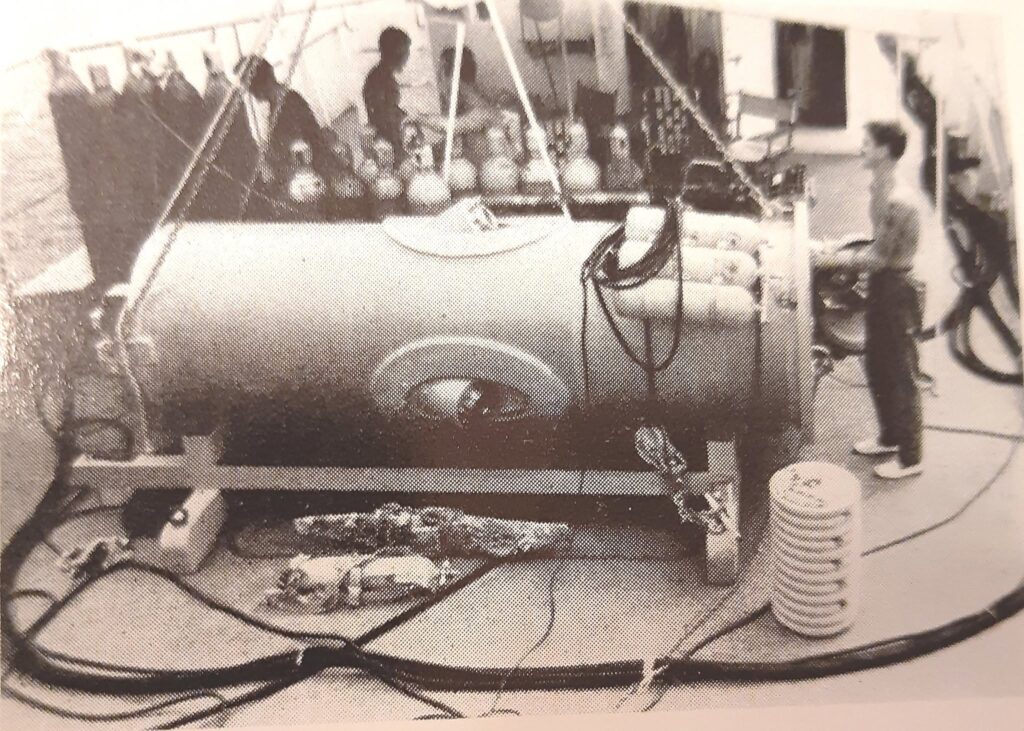
The experimental chamber used by Robert Sténuit
Deeper Than Ever Before
Sténuit returned to the Man in Sea programme in 1964. This time, he was joined by Jon Lindbergh, son of aviation pioneer Charles Lindbergh.
The two men spent 49 hours inside an experimental inflatable habitat in the Bahamas at a depth of approximately 132 metres. Once again, they breathed heliox and ventured outside to work in the surrounding sea.
The mission pushed saturation diving deeper and demonstrated the potential of portable underwater living systems. It also exposed the physical risks involved: Sténuit experienced symptoms of decompression sickness following the operation.
From Aquanaut to Underwater Archaeologist
Becoming the first aquanaut was only one chapter in Sténuit’s remarkable career.
He later became a respected underwater archaeologist and shipwreck researcher. Working with COMEX founder Henri Delauze, he investigated historically important wrecks and helped recover artefacts from ships including the Spanish Armada vessel Girona, wrecked off Northern Ireland in 1588.
In 1968, he founded the Groupe de Recherche Archéologique Sous-Marine Post-Médiévale, dedicated to researching and documenting post-medieval shipwrecks.
His work combined archival research with underwater exploration. Rather than treating wrecks simply as sources of treasure, Sténuit helped demonstrate how historical records and archaeological evidence could be brought together to reconstruct stories lost beneath the sea.
He also wrote extensively about diving, exploration and maritime history, bringing those discoveries to a wider audience.
Robert Sténuit died on 9 December 2024 at the age of 91.
A New Relationship With the Sea
The Link Cylinder was cramped, experimental and vulnerable to the conditions above it. It bore little resemblance to the sophisticated saturation systems later used by commercial and scientific divers.
Yet Robert Sténuit’s 1962 mission represented a profound change in underwater exploration.
For centuries, divers had struggled to extend the short periods humans could spend below the surface. Man in Sea I asked a different question: what if the diver did not need to return immediately?
By spending 24 hours and 15 minutes at 61 metres, Sténuit helped prove that the ocean floor could become a temporary human workplace—and even a place to live.
More than six decades later, his name remains inseparable from one of diving history’s most ambitious dreams: not simply visiting the underwater world, but becoming part of it.