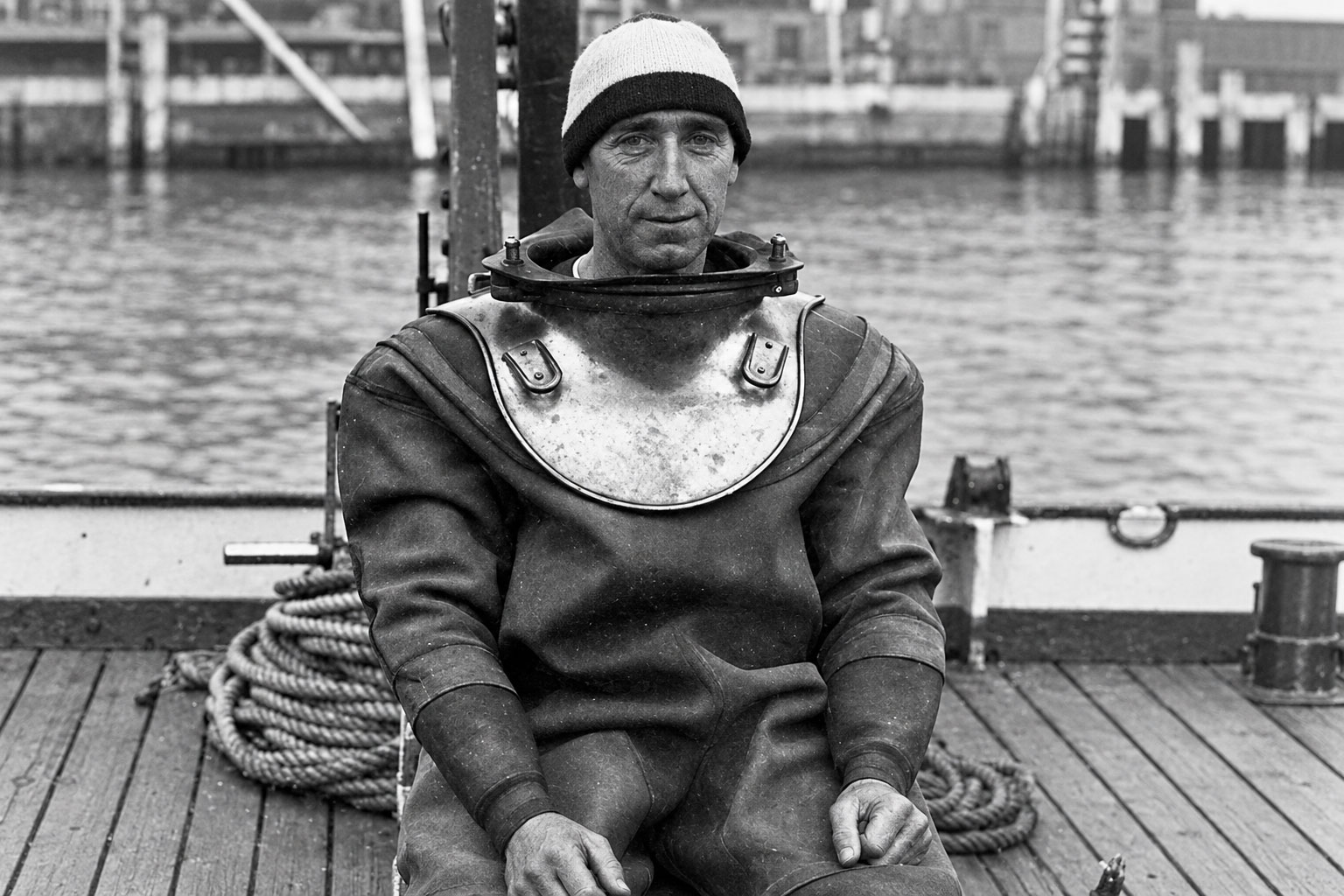
Philippe Tailliez was already exploring the underwater world before recreational scuba diving existed.
A French naval officer, champion swimmer, diver, writer, underwater archaeologist and early advocate for marine protection, he played a decisive role in bringing together Jacques-Yves Cousteau and Frédéric Dumas—the three men who would later become known as the Mousquemers, or “Musketeers of the Sea.”
Cousteau became the internationally recognised face of underwater exploration. Tailliez followed a quieter path, but his influence can be found throughout the formative years of modern scuba diving.
Quick Answer
Philippe Tailliez was a French naval officer and one of the pioneers of modern scuba diving.
He introduced Jacques Cousteau to underwater swimming and later brought him together with accomplished freediver Frédéric Dumas. Tailliez participated in early Aqua-Lung dives, underwater filmmaking and archaeological exploration before becoming the first commanding officer of the French Navy’s Groupe de Recherches Sous-Marines in 1945.
After retiring from the Navy, he dedicated much of his life to underwater archaeology and protecting the marine environment.
PHILIPPE TAILLIEZ: QUICK FACTS
Born: 15 June 1905
Birthplace: Malo-les-Bains, France
Died: 26 September 2002
Occupation: French naval officer, diver, writer and underwater archaeologist
Known for: Bringing together Cousteau and Dumas and commanding the first GRS team
Historic group: The Mousquemers
Important films: Par dix-huit mètres de fond and Épaves
Major organisations: GRS, GRAN and the scientific committee of Port-Cros National Park
Legacy: Modern scuba diving, underwater archaeology and marine conservation
Who Was Philippe Tailliez?
Philippe Tailliez was born on 15 June 1905 in Malo-les-Bains, on the northern coast of France.
His father was a French naval officer who had travelled through Indochina and Tahiti. Stories of Polynesian pearl divers, underwater hunters and distant islands captured Tailliez’s imagination from an early age.
He learned to swim as a child and developed into an exceptional athlete. After entering the French Naval Academy in 1924, he became known for his swimming ability and competed in water polo.
Tailliez joined the French Navy and was eventually stationed in Toulon. By the 1930s, he had developed a strong interest in swimming beneath the surface, freediving, spearfishing and underwater photography.
At the time, exploring underwater without heavy surface-supplied equipment remained highly unusual. Masks were basic, fins were only beginning to appear and the modern demand regulator had not yet been developed.
How Did Tailliez Meet Jacques Cousteau?
Tailliez met the young French naval officer Jacques-Yves Cousteau while they were serving aboard the naval vessel Condorcet in Toulon.
Cousteau had been seriously injured in a car accident and swimming formed part of his physical recovery. Tailliez introduced him to swimming with goggles and to the possibilities of exploring beneath the surface.
The experience helped redirect Cousteau’s life towards the sea.
Tailliez did more than introduce Cousteau to underwater swimming. In 1938, he also introduced him to Frédéric Dumas, a highly skilled freediver and spearfisher whom Tailliez had met near the Îles des Embiez.
Dumas possessed an instinctive understanding of the underwater environment and had already begun modifying his own masks and equipment.
The meeting created one of the most important partnerships in diving history.
The Three Mousquemers
Tailliez, Cousteau and Dumas shared an enthusiasm for underwater exploration at a time when very little of the shallow Mediterranean had been systematically observed.
Tailliez later gave the trio the name Mousquemers, a French play on mousquetaires—musketeers—and mer, meaning sea.
The name reflected both their friendship and their shared identity as explorers of a largely unknown world.
Their personalities and abilities complemented one another. Cousteau was ambitious, inventive and increasingly interested in filmmaking. Dumas was an exceptionally capable diver with practical underwater experience. Tailliez provided leadership, naval experience and a broader philosophical view of humanity’s relationship with the sea.
Their collaboration helped transform diving from a specialised military and commercial activity into a tool for exploration, science, archaeology and public communication.
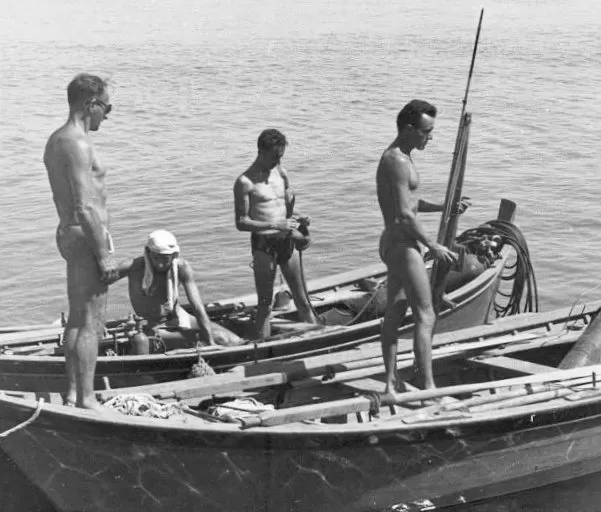
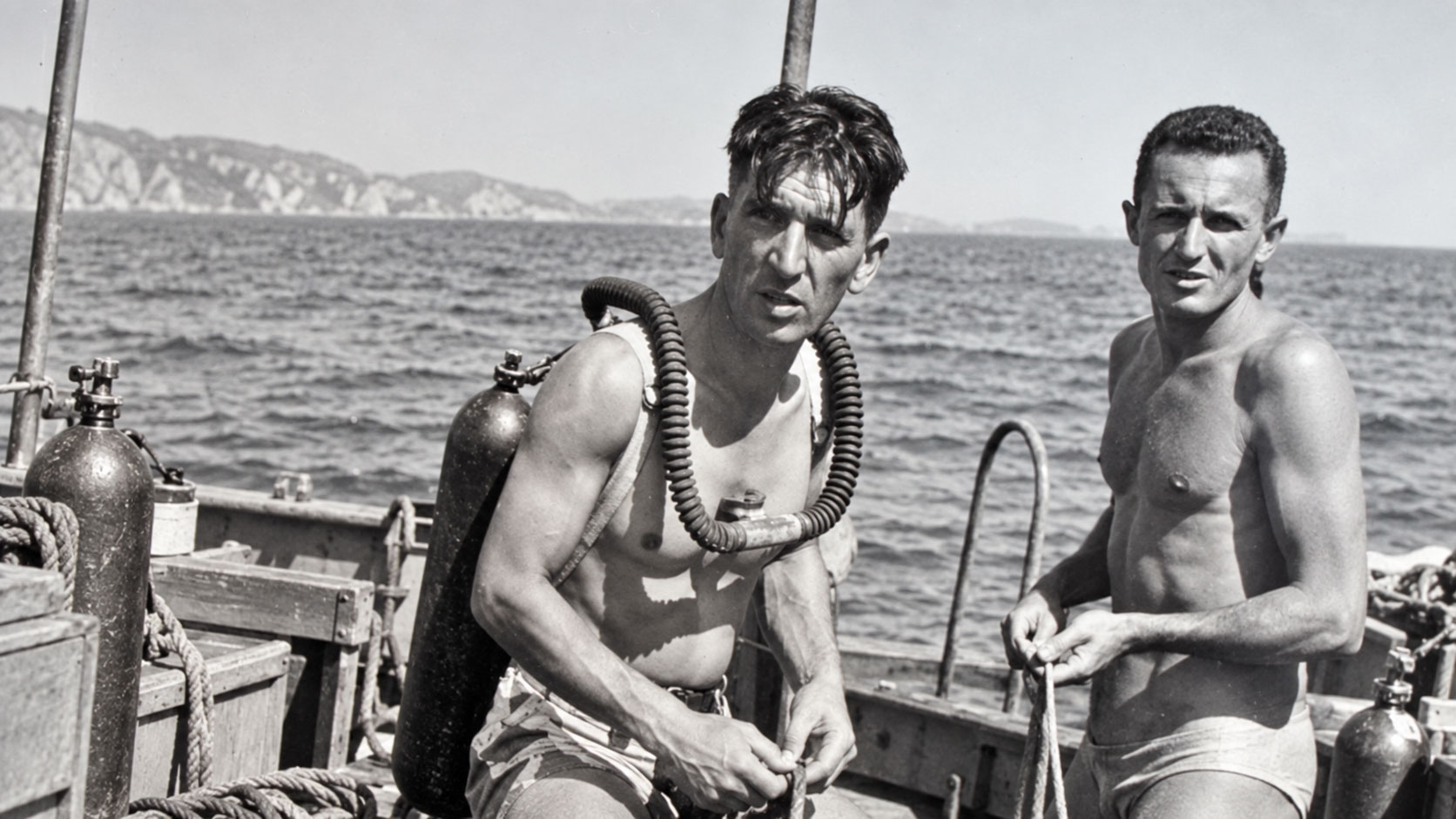
The “Mousquemers” — Philippe Tailliez, Jacques-Yves Cousteau and Frédéric Dumas — the pioneering trio whose experiments, dives and films helped shape the early years of modern scuba diving.
The First Underwater Films
During the Second World War, the three divers continued exploring whenever circumstances allowed.
In 1942, they produced Par dix-huit mètres de fond—Eighteen Metres Deep—one of the earliest French underwater films. It was filmed while freediving because the Aqua-Lung had not yet become available.
The following year, they made Épaves, or Wrecks, using the newly developed Cousteau-Gagnan demand regulator.
The Aqua-Lung allowed compressed air to be delivered to a diver according to the surrounding pressure. Unlike traditional equipment connected to the surface, it gave divers a new degree of independence and mobility.
Tailliez participated in hundreds of early dives as the team tested the possibilities and limitations of the new apparatus.
Épaves demonstrated that self-contained divers could move freely underwater, explore shipwrecks and film an environment that had previously remained inaccessible to most people.
The film would also help persuade the French Navy to investigate the military, scientific and practical potential of autonomous diving.
The Creation of the GRS
In 1945, Philippe Tailliez asked Cousteau to present Épaves to Admiral André Lemonnier, chief of staff of the French Navy.
Impressed by the equipment and its possibilities, Lemonnier authorised the creation of the Groupe de Recherches Sous-Marines, or GRS.
Tailliez was appointed its first commanding officer. Cousteau joined as a naval officer, while Dumas became the group’s civilian technical expert.
The GRS conducted mine-clearance operations, tested diving equipment, investigated diver physiology and developed procedures for autonomous diving.
The group also supported early bathyscaphe trials and carried out experimental and archaeological missions.
In 1950, the GRS became the Groupe d’Études et de Recherches Sous-Marines, or GERS. Its institutional descendants continued developing French military diving technology and procedures and eventually evolved into what is now CEPHISMER.
WHY THE GRS MATTERED
The GRS was one of the first organised military units dedicated to developing autonomous diving.
Its work helped transform the Aqua-Lung from a new invention into a practical tool supported by training, procedures, physiological research and specialised equipment.
Tailliez provided the group’s first leadership and helped bring Cousteau and Dumas into the same pioneering team.
A Pioneer of Underwater Archaeology
Tailliez also recognised that autonomous diving could change the study of human history.
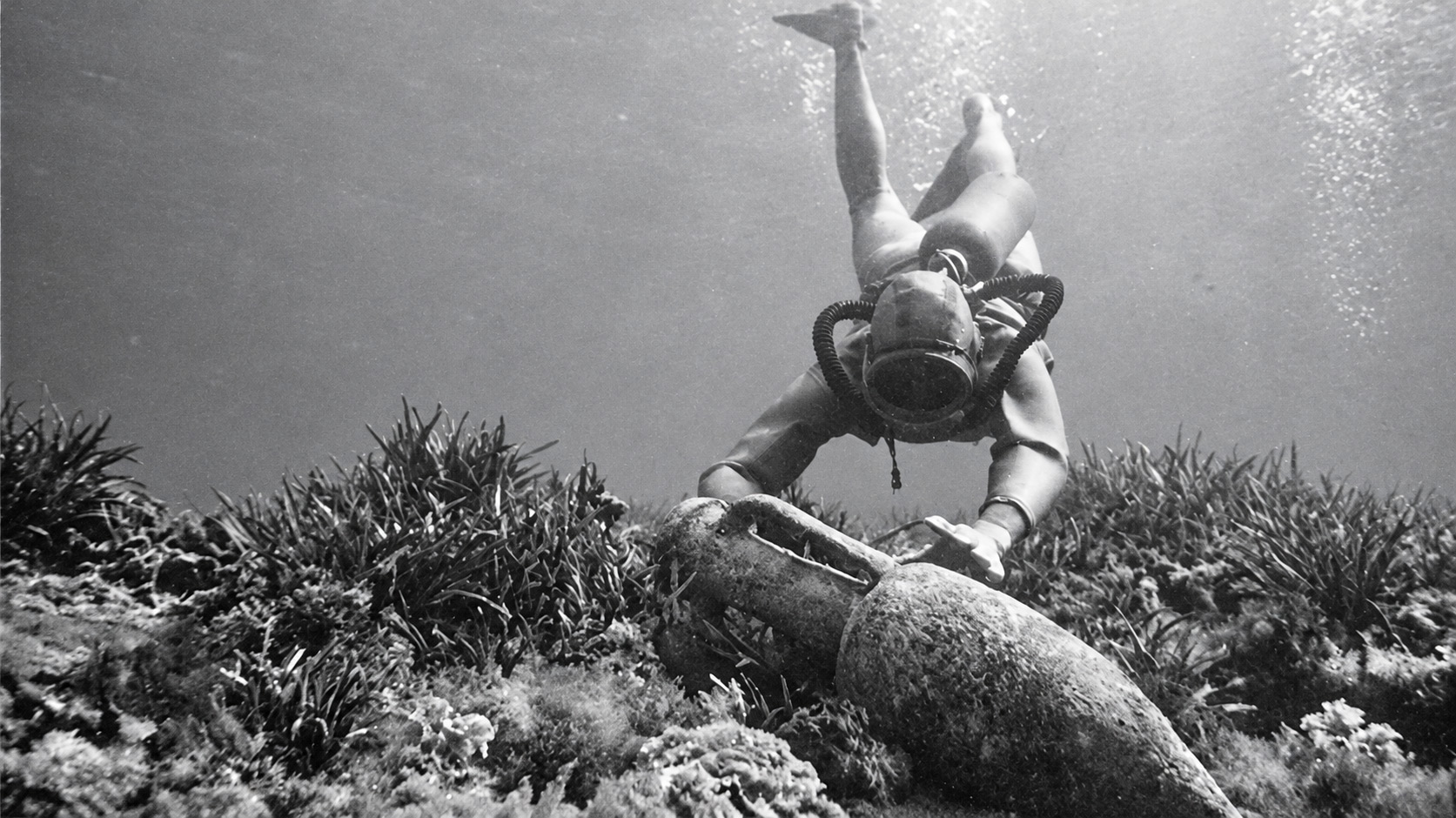
In 1948, Tailliez, Cousteau and Dumas travelled to the ancient Mahdia shipwreck off Tunisia. The site had first been explored using helmet divers, but the new Aqua-Lung allowed divers to examine it with greater freedom of movement.
The mission is recognised as one of the earliest systematic archaeological surveys conducted by autonomous divers.
Specialised underwater excavation tools and established archaeological procedures did not yet exist. The team had to develop practical methods while working on the site.
Their activities helped establish some of the basic approaches that would later shape underwater archaeology—although the discipline would continue evolving towards stricter scientific documentation and protection of artefacts in their original context.
Tailliez remained involved with maritime archaeology long after leaving command of the GRS.
In 1982, he helped establish the Groupe de Recherche en Archéologie Navale, or GRAN, and served first as its president and later as its honorary president.
From Exploration to Marine Protection
One of the most distinctive parts of Tailliez’s legacy was the development of his environmental thinking.
During the early years of underwater exploration, the sea was often treated as limitless: an environment capable of providing endless resources and absorbing almost any human impact.
Tailliez gradually rejected that view.
He came to understand that the biologically rich coastal zone was limited and vulnerable to pollution, construction, overexploitation and irresponsible human activity.
Following his retirement from the French Navy in 1960, he increasingly dedicated himself to marine environmental protection.
He became involved with the scientific committee of Port-Cros National Park, established in 1963 as Europe’s first marine national park. Tailliez participated in numerous research campaigns there, working with students and biologists to study the protected environment.
He also worked with environmental organisations and argued for systematic observation of the effects of coastal development on Mediterranean marine life.
His ideas went beyond protecting individual species. He viewed the sea, the land and human society as parts of an interconnected system.
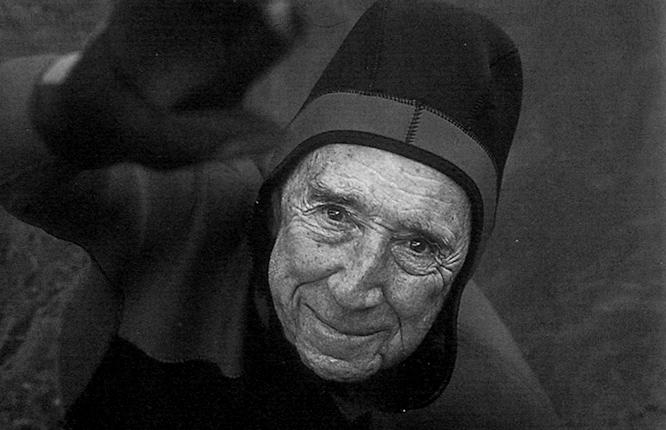
Did Tailliez Influence Cousteau’s Environmentalism?
Cousteau is widely remembered as one of the most influential marine conservation communicators of the 20th century.
Tailliez, however, was considering the limits of marine ecosystems before environmental protection became central to Cousteau’s public identity.
The two men followed different paths. Cousteau used cinema and television to bring the underwater world to millions of people. Tailliez worked more quietly through research groups, protected areas, archaeology and environmental advocacy.
It would be too simple to attribute Cousteau’s environmental transformation entirely to one person. Nevertheless, Tailliez was an important early influence and consistently encouraged a more thoughtful relationship between humans and the ocean.
A Writer and Philosopher of the Sea
Tailliez documented many of his early diving experiences in his 1954 book Plongées sans câble, published in English as To Hidden Depths.
His writing reflected more than a fascination with equipment and exploration. He saw the ocean as a place where science, history, philosophy and human imagination came together.
In his later years, he continued thinking about the future relationship between civilisation and the sea.
Unlike Cousteau, Tailliez never became a global media personality. He was generally described as modest, thoughtful and more comfortable leading through personal example than public performance.
That relative absence from popular culture partly explains why his name is less familiar today.
When Did Philippe Tailliez Die?
Philippe Tailliez died in Toulon on 26 September 2002, aged 97.
Until the final years of his life, he remained connected to diving, underwater archaeology, environmental research and the people he had inspired.
The tributes published after his death remembered not only a pioneer of autonomous diving, but also a teacher, writer, environmental advocate and philosopher of the sea.
The Legacy of Philippe Tailliez
Philippe Tailliez did not invent the Aqua-Lung, command the Calypso or become the star of internationally distributed underwater documentaries.
His contribution was different but fundamental.
He introduced Cousteau to underwater exploration. He brought Cousteau and Dumas together. He participated in the earliest Aqua-Lung dives and films. He became the first commander of the GRS and helped establish organised research into autonomous diving.
He also contributed to the beginnings of underwater archaeology and recognised the vulnerability of the marine environment long before ocean conservation became a global movement.
Modern diving history often concentrates on its most visible personalities. Tailliez’s story reminds us that transformative achievements are rarely created by one person alone.
Before Cousteau became the public face of the underwater world, Philippe Tailliez helped show him the way beneath the surface.