Knowing when to cancel a scuba dive is one of the most important safety skills a diver can develop.
A dive may need to be cancelled before entering the water or ended after it has already begun. Poor conditions, equipment concerns, illness, anxiety or simply feeling that something is not right are all valid reasons.
No booking, certification level or expectation from another diver is more important than returning safely.
Quick Answer
Any diver can cancel any dive, at any time and for any reason.
Do not begin the dive if you feel unwell, mentally unprepared, inadequately trained or uncomfortable with the conditions, equipment or dive plan. Once underwater, end the dive if you experience difficulty breathing or equalising, equipment problems, unexpected current, poor visibility, cold, anxiety, rapid air consumption or anything else that makes the situation feel unsafe.
Signal your buddy, remain together and make a slow, controlled ascent. You do not need to justify your decision underwater.
WHEN TO CANCEL A DIVE: QUICK FACTS
Before entering: Cancel if the conditions, equipment, dive plan or your physical and mental condition are unsuitable
Underwater: End the dive if a problem cannot be resolved quickly and safely
Who can decide: Any diver, regardless of certification or experience
Signal: Use the thumbs-up signal to indicate that the dive is ending
Ascent: Stay with your buddy and make a slow, controlled ascent
Most important rule: A cancelled dive is always better than an avoidable emergency
Can Any Diver Cancel a Dive?
Yes. Every diver has the right to refuse or end a dive, regardless of who organised it or who has more experience.
This principle is often expressed as:
Anyone can call any dive, at any time, for any reason.
A beginner does not need permission from an instructor, guide or more experienced buddy to decide that a dive feels unsafe. Similarly, an experienced diver should never feel compelled to continue simply because others expect them to.
The person cancelling the dive does not need to prove that a serious danger exists. Feeling uncomfortable, underprepared or uncertain is enough.
Divers Alert Network describes this principle as one of the cornerstones of safe diving.
What Is the Difference Between Cancelling and Calling a Dive?
These expressions are often used interchangeably, but they can describe slightly different moments.
Cancelling a dive usually means deciding not to enter the water at all. The decision may be based on weather, equipment, health, unsuitable conditions or concerns about the plan.
Aborting a dive generally means ending it after it has begun because a problem has developed.
Calling the dive is the broader expression. It can mean cancelling before entry or ending the dive underwater.
The terminology matters less than the decision itself. If continuing no longer feels safe, the dive should end.
When Should You Cancel Before Entering the Water?
Many diving incidents begin with warning signs that were visible before anyone entered the water.
Cancelling at the surface may feel disappointing, particularly after travelling, paying for a boat trip or preparing equipment. However, entering the water does not make an existing concern disappear. It usually makes it more difficult to manage.
The Conditions Are Beyond Your Ability
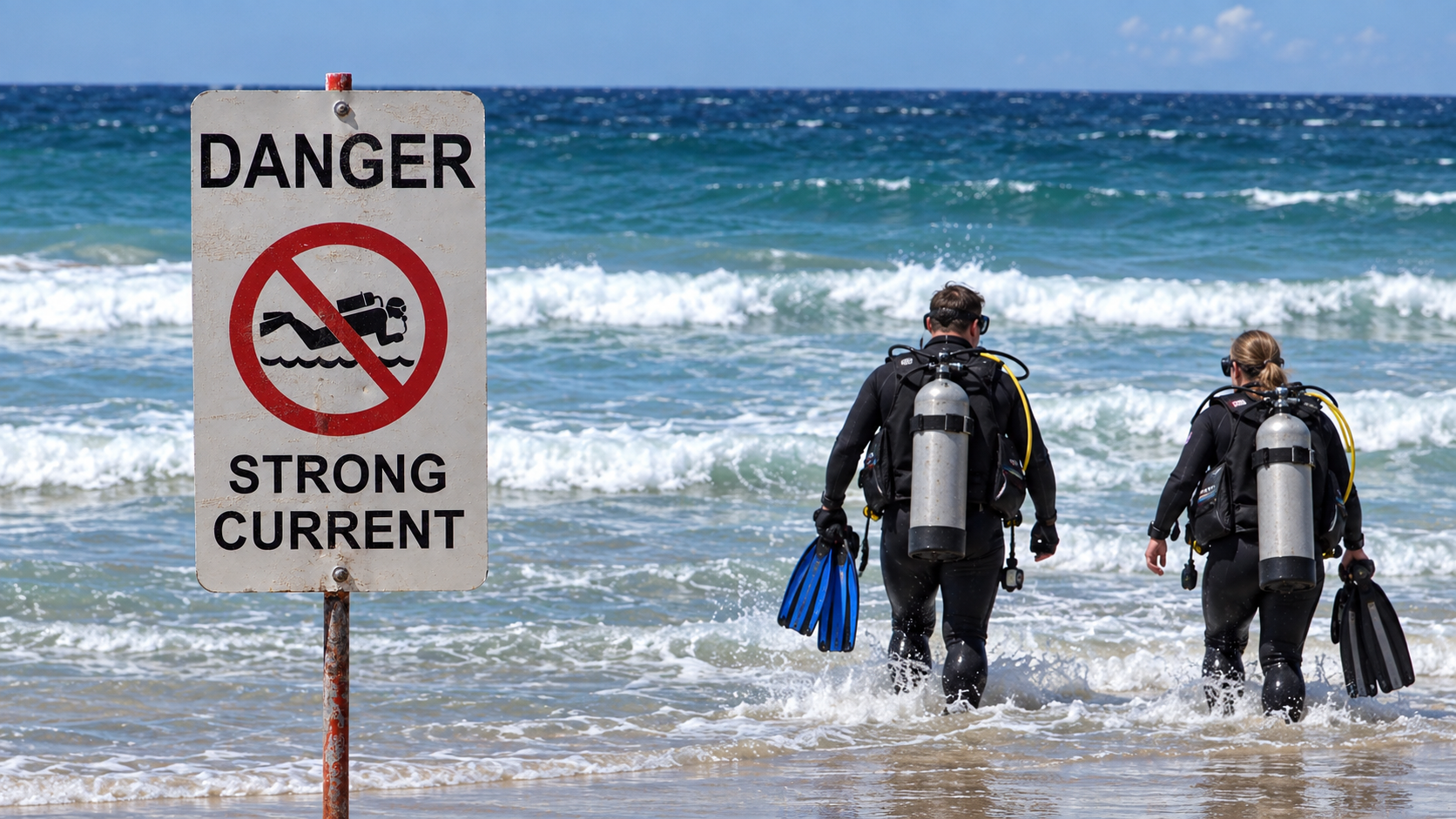
Wind, waves, current, visibility, water temperature and entry or exit conditions should all be considered before the dive.
A site that is straightforward in calm weather may become demanding when waves make the entry difficult or when current affects the descent, ascent or return to the boat.
Ask yourself:
- Can I enter and leave the water safely?
- Am I comfortable with the expected visibility and current?
- Can the boat reliably recover the divers?
- Are these conditions within my actual experience—not merely my certification limit?
- Could the weather, tide or sea state change while we are underwater?
There is no single weather limit suitable for every location. A sheltered shore site and an exposed offshore wreck may respond very differently to the same wind. Local knowledge, official marine forecasts and the judgement of the skipper or dive operator are therefore essential.
BSAC advises divers to consider entries, exits, weather, tides and the ability to regain contact with the boat before diving.
You Are Unwell or Not Physically Ready
Do not dive with an acute illness, fever, vomiting, diarrhoea or significant congestion.
Even a common cold may prevent safe equalisation and reduce your ability to exercise. Gastrointestinal illness can cause dehydration and an electrolyte imbalance, while fatigue can reduce awareness and make routine tasks more difficult.
You should also reconsider the dive if you are:
- Dehydrated or hungover.
- Severely sleep-deprived.
- Experiencing unusual pain or weakness.
- Seasick before entering the water.
- Recovering from a recent illness or injury.
- Unable to complete the entry, exit or planned dive comfortably.
Medication should not be used simply to hide symptoms and make a dive possible. If a medical condition or medication could affect diving safety, seek advice from a medical professional familiar with diving medicine.
DAN states that acute illness is incompatible with safe diving and recommends medical evaluation when indicated by the recreational diving medical screening system.
You Are Not Mentally Prepared
Physical fitness is only part of readiness.
Some nervousness before an unfamiliar dive is normal. Strong anxiety, however, can affect breathing, attention and decision-making before the dive has even begun.
Pause if you feel overwhelmed, unable to concentrate or pressured into attempting something you do not want to do.
Discussing the plan, reducing the depth or choosing an easier site may solve the problem. If it does not, sitting out the dive is the correct decision.
Fear is not a personal failure. It is information that should be taken seriously.
Something Is Wrong With the Equipment
Scuba equipment is life-support equipment. An unexplained leak, damaged hose, loose cylinder strap, faulty inflator, malfunctioning computer or regulator that does not breathe normally must be addressed before entering the water.
Do not accept improvised repairs that you do not understand. Do not dive with unfamiliar equipment unless you know how to operate it safely.
If a replacement item does not fit properly or changes an important part of your usual configuration, take time to adjust and test it in controlled conditions.
A minor problem at the surface can become much more difficult to manage underwater.
The Dive Plan Exceeds Your Training
Certification cards establish training limits; they do not guarantee readiness for every dive within those limits.
A diver may be qualified for a particular depth but lack recent experience in current, low visibility, cold water, overhead environments or demanding boat entries.
Cancel or change the plan if it requires skills, equipment or procedures you have not been trained to use.
This also applies when the briefing changes unexpectedly. A planned reef dive should not quietly become a deep wreck penetration or a decompression dive after the boat has left the harbour.
DO NOT LET THE MONEY MAKE THE DECISION
Travel costs, prepaid bookings and limited holiday time can create pressure to dive when the conditions are unsuitable.
The money has already been spent. Entering the water will not recover it—but it may add unnecessary risk.
When Should You End a Dive Underwater?
Not every difficulty requires an immediate ascent. A displaced mask or minor buoyancy adjustment can normally be resolved calmly.
The dive should end when a problem cannot be corrected quickly, when it begins increasing your workload or when several small problems start appearing together.
You Cannot Equalise
Never continue descending through ear or sinus pain.
Stop, ascend slightly and attempt to equalise gently. If the problem cannot be resolved without force, end the descent and return to the surface with your buddy.
Forcing equalisation or continuing despite pain can cause barotrauma.
Your Breathing Becomes Difficult
Rapid breathing may result from current, exertion, anxiety, excessive depth or an equipment problem.
Stop, signal your buddy and reduce your workload. If your breathing does not return to normal promptly, end the dive.
Do not continue swimming hard while hoping the problem will disappear. Breathing difficulty can lead to carbon dioxide accumulation, panic and loss of control.
You Are Using Air Faster Than Planned
Unexpectedly rapid air consumption may indicate exertion, stress, depth, current or an equipment leak.
Inform your buddy early. Do not wait until the cylinder is nearly empty before changing the plan.
If the available air is no longer sufficient to complete the dive with the agreed reserve, the dive is over.
You Become Cold
Feeling cold is not merely an issue of comfort.
Progressive cooling can impair coordination, awareness and decision-making. End the dive before shivering or loss of dexterity makes the ascent and exit more difficult.
A diver who is cold may also consume air more rapidly and become less capable of assisting a buddy.
The Conditions Change
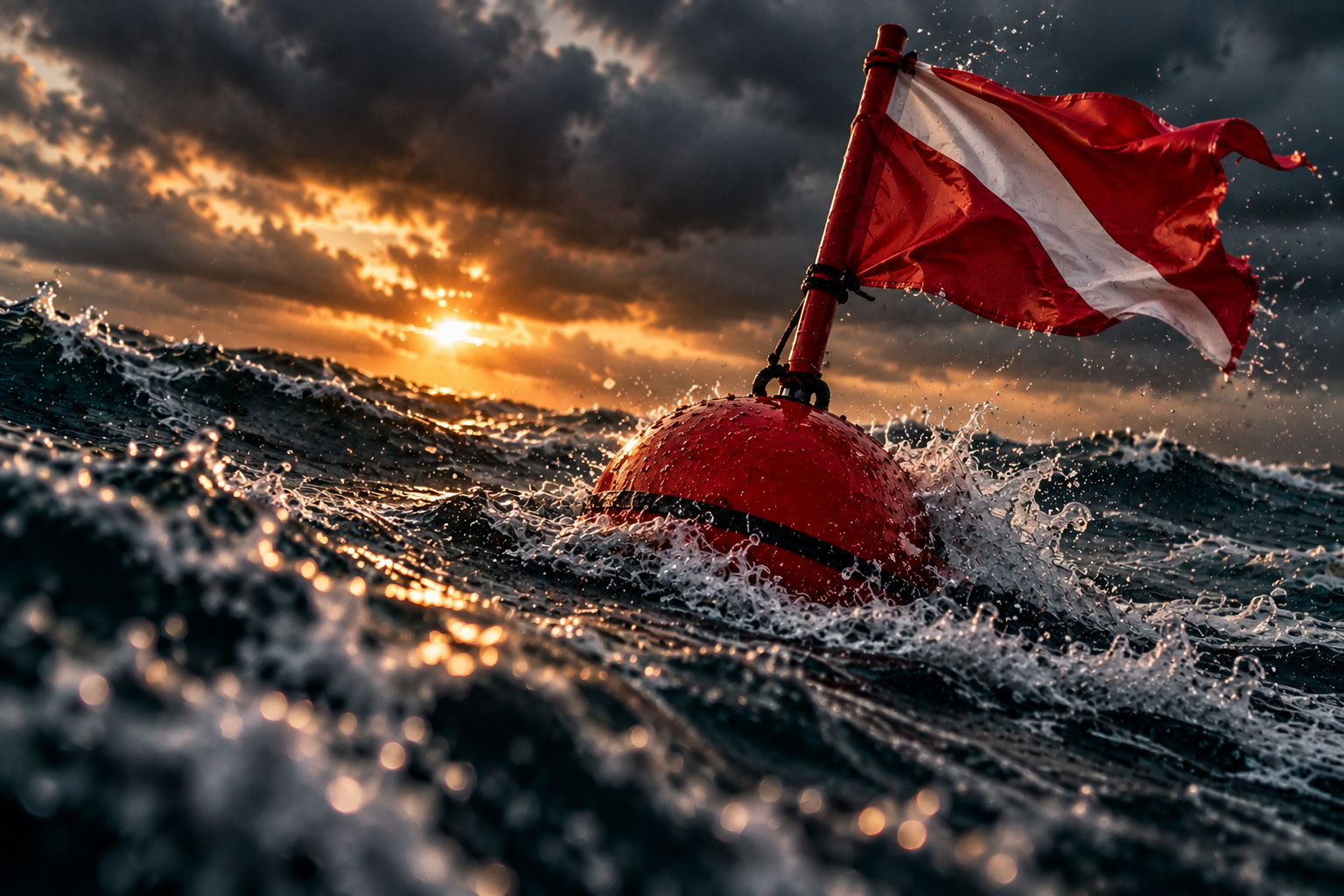
Visibility can deteriorate, current can strengthen and waves can make an exit that was manageable at the beginning of the dive considerably more difficult.
End the dive if the team can no longer navigate reliably, remain together or reach the planned exit with an adequate reserve.
A dive plan should adapt to changing conditions, but adaptation does not mean continuing regardless of risk.
You Lose Control or Situational Awareness
End the dive if you become disorientated, cannot maintain buoyancy, lose track of depth or time, or feel overwhelmed by task loading.
The same applies if your buddy appears confused, responds incorrectly to signals or behaves in a way that does not match the plan.
You do not need to identify the exact cause underwater. Establish contact, communicate clearly and move towards a controlled ascent.

waves can make an exit that was manageable at the beginning of the dive considerably more difficult.
What If Your Buddy Wants to Continue?
A buddy team should follow the most conservative decision.
If one diver calls the dive, both divers end it together. The other diver should not continue alone or pressure their buddy to remain underwater.
The thumbs-up signal means end the dive and ascend. It does not mean “I am going up while you continue.”
A responsible buddy acknowledges the signal, stays close and assists with a controlled ascent if necessary.
Anyone who mocks, pressures or becomes angry with a diver for ending a dive is not demonstrating safe buddy behaviour.
How Should You End the Dive?
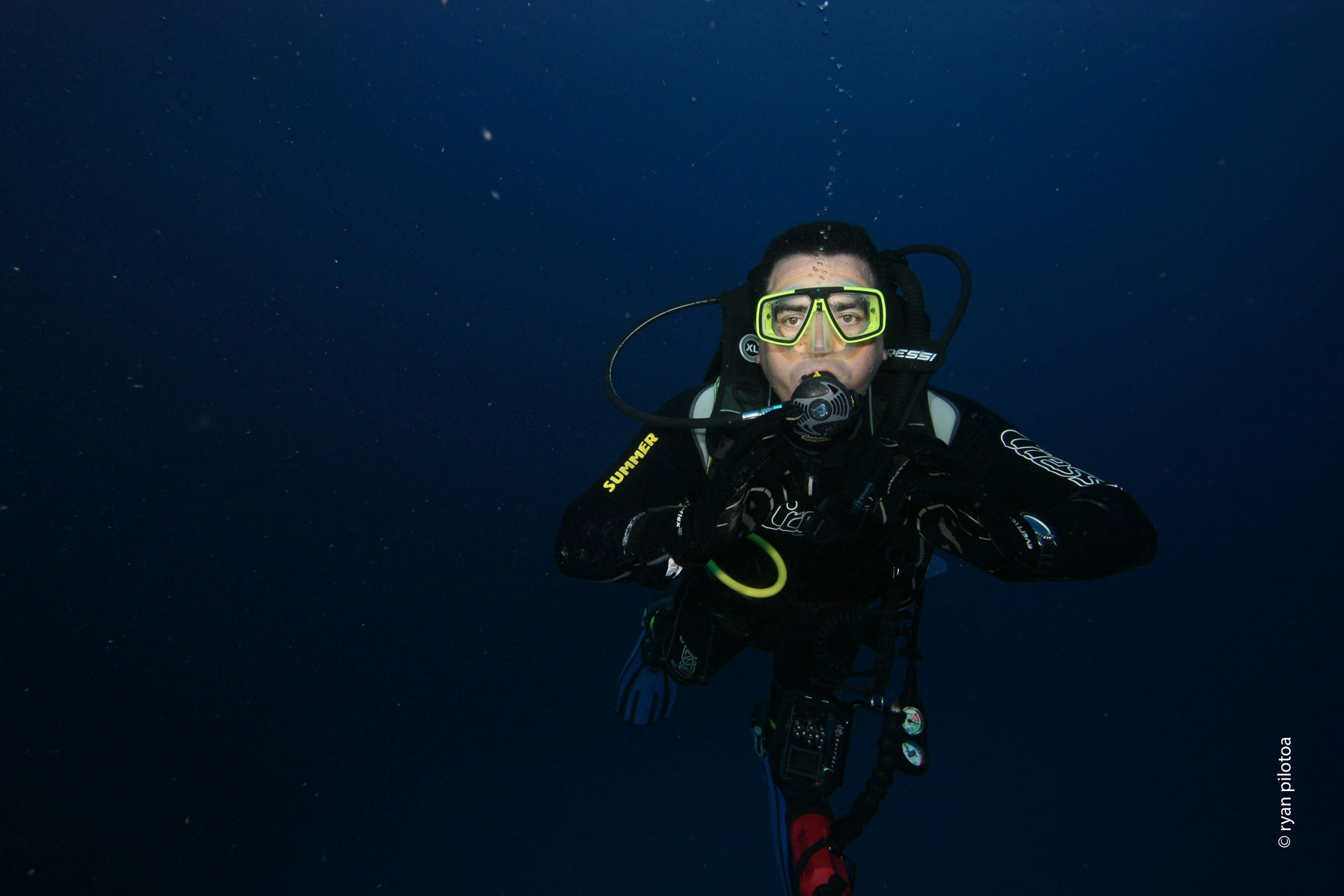
Signal your buddy clearly using the thumbs-up signal and confirm that it has been understood.
Remain together and begin a slow, controlled ascent while monitoring depth, ascent rate and remaining air. Keep breathing normally and do not hold your breath.
Complete a safety stop if the situation, conditions and available air allow. A safety stop should not create an additional emergency when the air supply is limited or a diver is struggling.
Once on the surface, establish positive buoyancy and signal the boat or shore team.
An explanation can wait until both divers are safely out of the water.
Should You Attempt the Dive Again?
Possibly—but only after the reason for cancellation has been identified and resolved.
A loose fin strap can be replaced. A misunderstanding in the plan can be clarified. A difficult site may become suitable when the weather improves.
Illness, anxiety, unsuitable conditions or equipment problems may require postponing the dive until another day.
Do not restart simply because the group is waiting. Reassess the entire situation rather than assuming that one small correction has removed every concern.
A Cancelled Dive Is a Good Decision
Cancelling a dive can be frustrating, but it should never be treated as a failed dive.
Good judgement is not measured by how many dives someone completes. It is demonstrated by recognising when the available conditions, equipment or personal readiness no longer provide an acceptable margin of safety.
The most important rule is simple:
If you are uncertain whether the dive should continue, call it.
The site will still be there another day.
This article provides general educational information and is not a substitute for recognised scuba-diving training, local professional guidance or medical advice.