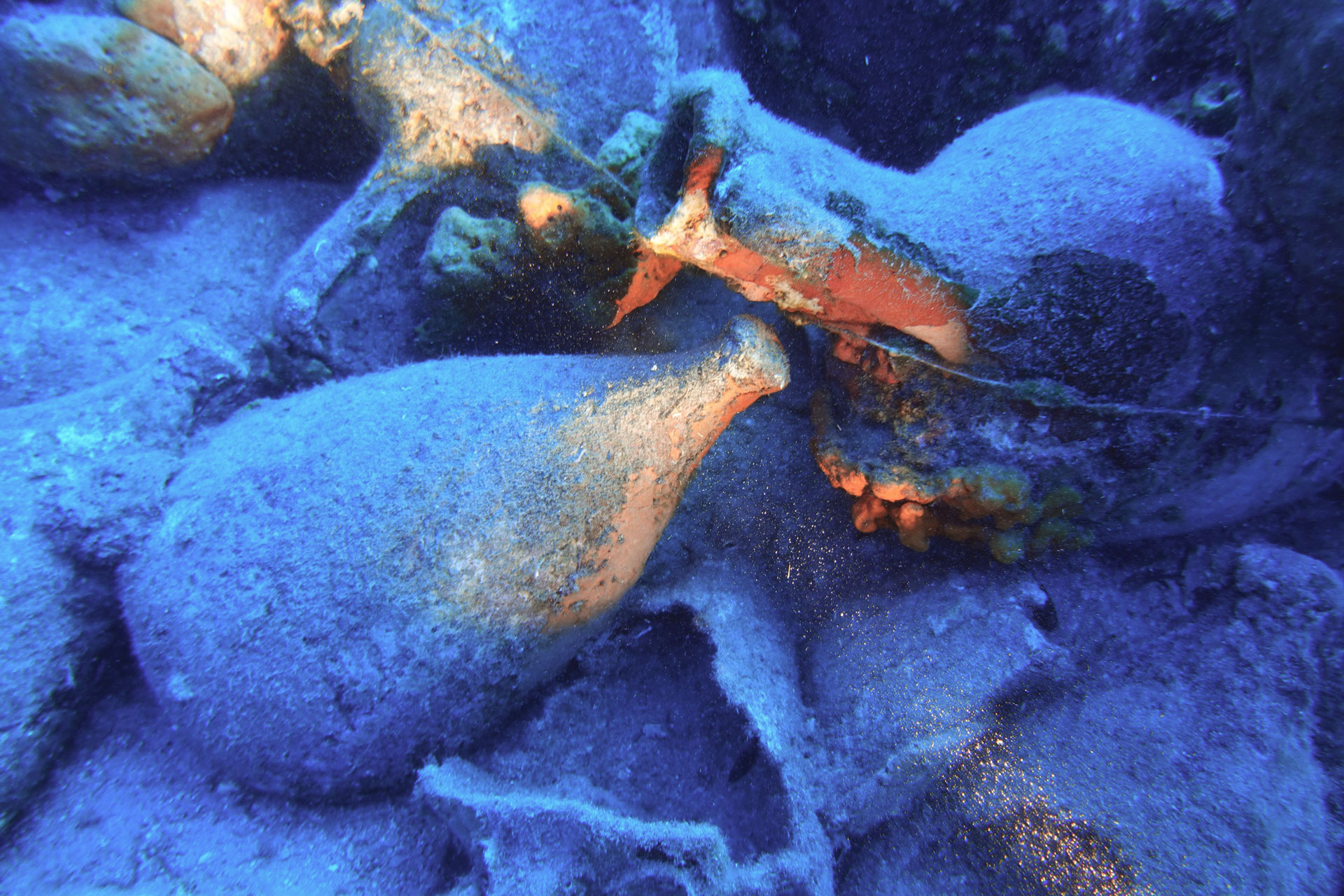
A nearly 2,500-year-old shipwreck carrying hundreds of ancient transport amphorae has been discovered off the Greek island of Andros.
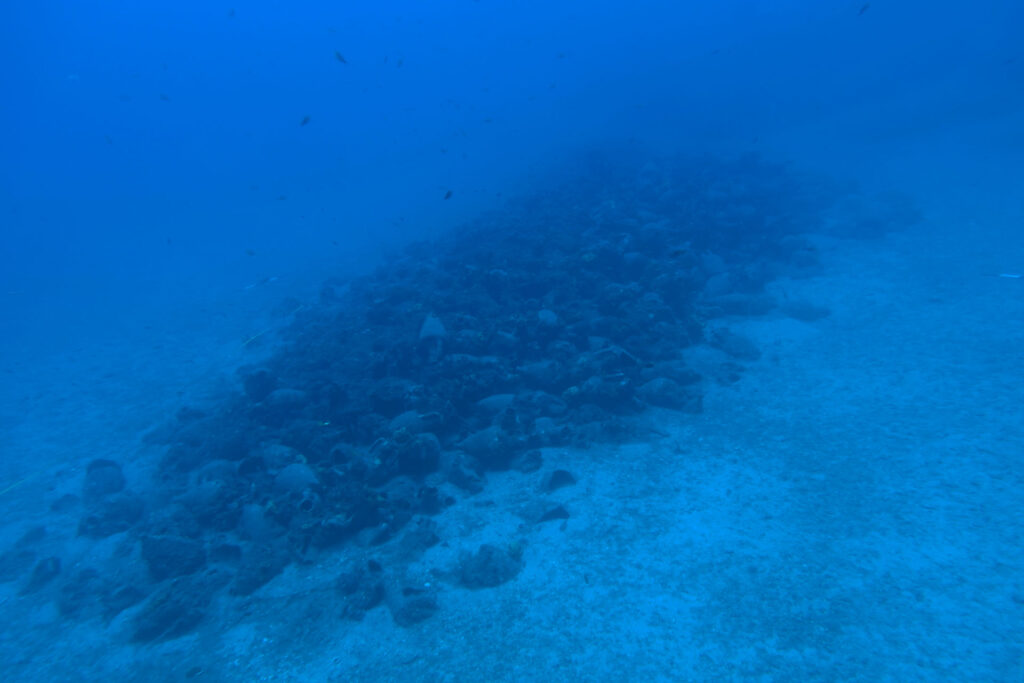
The wreck lies at a depth of between 39 and 44 metres and is believed to date from the late 5th or early 4th century BC. An initial survey suggests that its cargo includes approximately 600 to 650 amphorae, making it an important new discovery for the study of trade and navigation in the Classical Aegean.
The discovery was announced by Greece’s Ministry of Culture on 31 July 2026.
Hundreds of Amphorae on the Seabed
Greece’s Ephorate of Underwater Antiquities inspected the site after receiving information from a private individual.
During the underwater survey, archaeologists identified the cargo of an ancient merchant vessel spread across the seabed. At least three different types of pointed transport amphorae were recorded: Mende, Peparethos and Solokha 2.
One example of each type was carefully recovered for conservation and further study.
Based on their shape and typology, the amphorae have been dated to the late 5th and early 4th centuries BC. This places the wreck near the end of the Classical period, around the time of the final years of the Peloponnesian War and its aftermath.
Quick Facts
Location: Andros, Greece
Depth: 39–44 metres
Date: Late 5th–early 4th century BC
Estimated cargo: 600–650 amphorae
Survey: Ephorate of Underwater Antiquities
What Was the Ship Carrying?
The original contents of the amphorae have not yet been confirmed. However, their types provide important clues about the ship’s cargo and possible trading route.
Mende was an ancient city located on the Kassandra peninsula in northern Greece. Its wine was well known and widely traded throughout the ancient world.
Peparethos—modern-day Skopelos—was also recognised for its wine production. Ancient literary and archaeological evidence indicates that wine from Peparethos was exported to different parts of the Aegean and Black Sea regions.
It is therefore possible that at least part of the cargo contained wine. However, this remains an interpretation until residue analysis or further archaeological study provides direct evidence.
Solokha 2 is a typological name used by archaeologists to classify a particular amphora form. Unlike Mende and Peparethos, it should not automatically be interpreted as a confirmed geographic place of production.
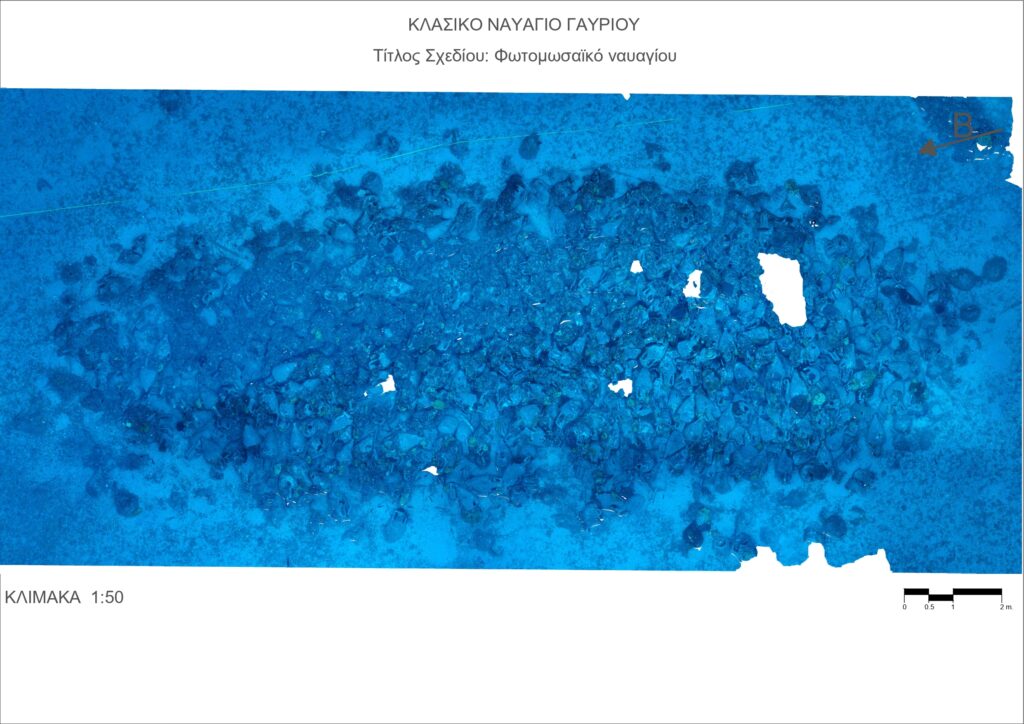
Photomosaic of the Classical-period shipwreck off Gyaros, showing the dense concentration of amphorae and other remains of its cargo on the seabed.
Evidence of the Ancient Vessel
The Ministry’s announcement refers primarily to the ship’s surviving cargo. It does not confirm whether substantial sections of the wooden hull remain preserved beneath the seabed.
Archaeologists also located part of a lead anchor stock and a small number of stones that may have been used as ballast.
These finds are important because they could help researchers understand the size, construction and operation of the vessel. The distribution of the amphorae may also reveal how the cargo was arranged before the ship sank.
For now, the cause of the sinking remains unknown.
A Window into Classical Aegean Trade
Andros occupies an important position in the northern Cyclades, close to maritime routes connecting mainland Greece, the northern Aegean, the Cyclades and the wider eastern Mediterranean.
The presence of several amphora types in a single cargo may indicate that the merchant vessel visited different production centres or collected products through a regional trading port.
The wreck could therefore provide valuable evidence about how goods moved across the Aegean during a period of major political and economic change.
The late 5th century BC was dominated by the Peloponnesian War between Athens and Sparta and their respective allies. Despite the conflict, maritime trade remained essential for supplying cities and maintaining connections between communities throughout the Greek world.
Each amphora type, manufacturing detail and surviving residue could help archaeologists reconstruct a small part of that commercial network.
A Challenging Underwater Site
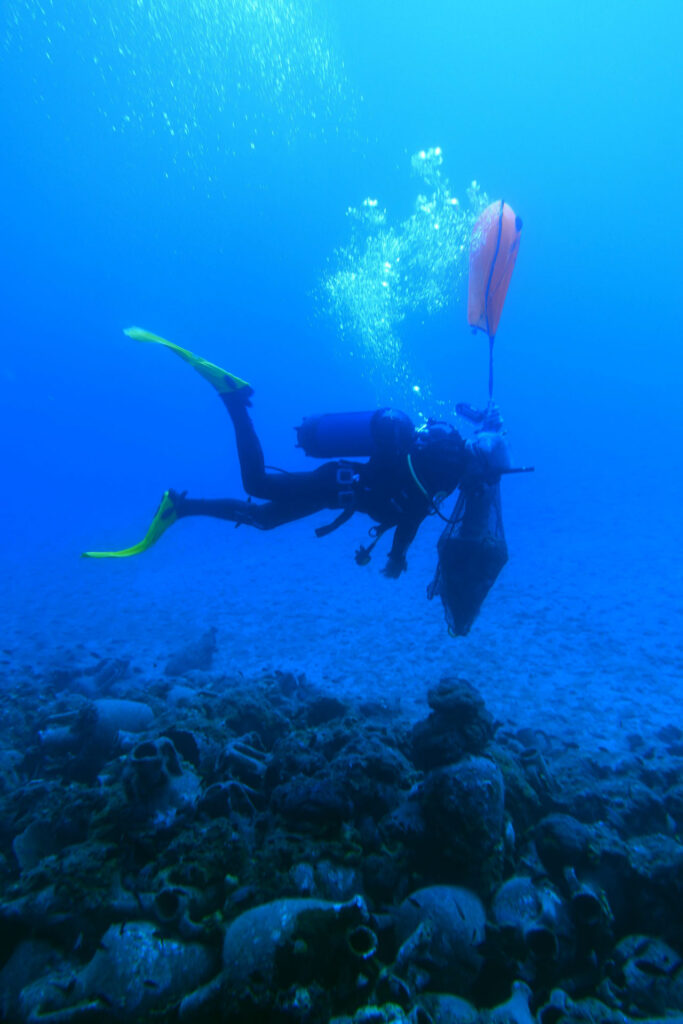
At 39 to 44 metres, the wreck lies at a demanding depth where archaeological work requires careful planning, specialised diving procedures and limited bottom times.
The exact location has not been publicly disclosed, and the site is protected as part of Greece’s underwater cultural heritage. There has been no announcement suggesting that it will become accessible as a recreational diving site.
The initial inspection was carried out by diving archaeologist Dionysis Evangelistis, diving conservator Angelos Tsompanidis and seabed technician Louis Mersenier from the Ephorate of Underwater Antiquities.
What Happens Next?
Only a small number of objects have been recovered, and much about the wreck remains unknown.
Further study of the three sampled amphorae may help confirm their production centres, original contents and precise date. Additional underwater documentation could also reveal the dimensions of the wreck site and whether remains of the vessel survive beneath the cargo.
For now, the discovery offers a remarkable image: hundreds of amphorae resting on the Aegean seabed almost 2,500 years after the vessel carrying them disappeared beneath the sea.
As research continues, the Andros shipwreck may provide new evidence about ancient navigation, wine production and the commercial routes that connected the Classical Greek world.
Sources: Hellenic Ministry of Culture