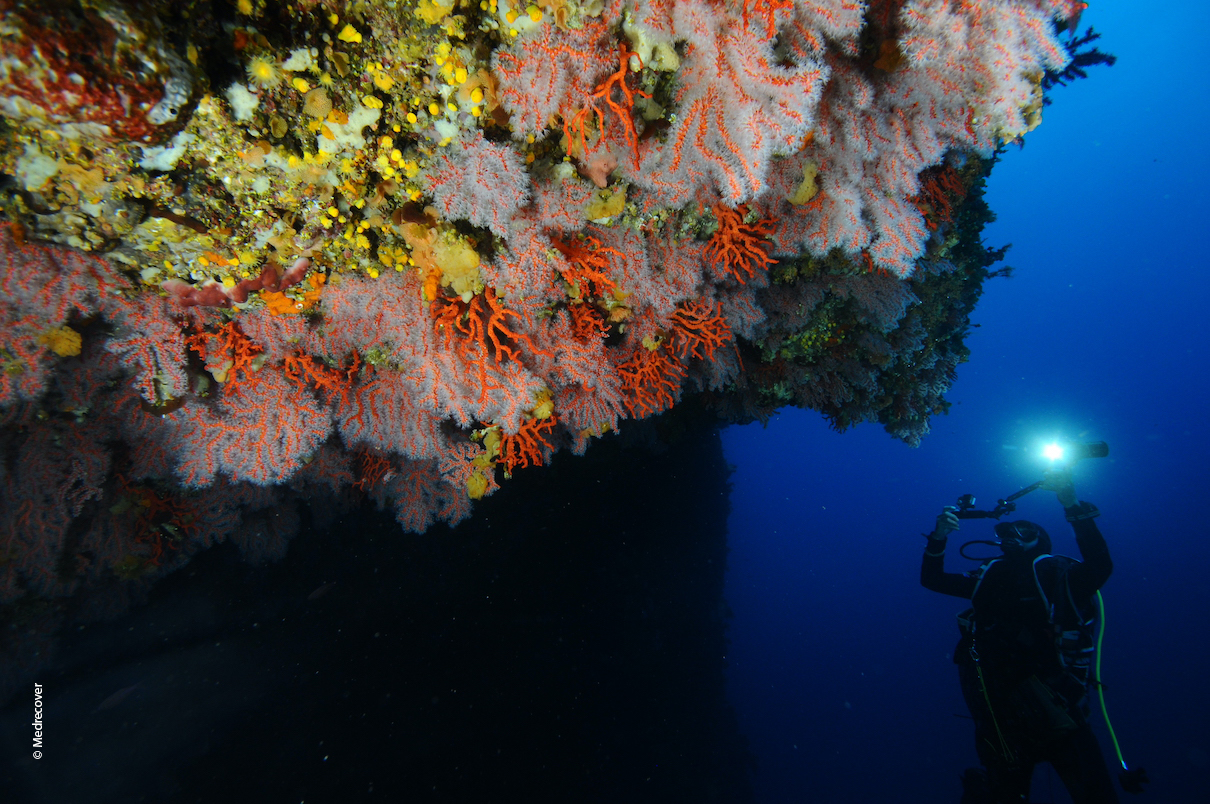
Italian divers operating from a recreational yacht have been linked to an €800,000 coral smuggling operation involving protected species taken from the Aegean seabed off Skopelos.
The Skopelos coral seizure was revealed on 4 August 2026 following an investigation by the Special Operations Directorate of Greece’s Independent Authority for Public Revenue, known as AADE.
Suspicious Shipments Led Investigators to the Yacht
The case did not begin with a routine inspection at sea.
According to reports citing AADE sources, investigators used risk-analysis systems to identify suspicious activity connected to a transport company. The company appeared to be handling repeated shipments to Italian ports accompanied by vague or unclear descriptions of their contents.
By examining the deliveries and associated digital information, the authorities reportedly linked the suspicious shipments to a recreational yacht operating near Skopelos.
The vessel had been rented by Italian nationals and was officially being used for leisure purposes. Investigators, however, suspect that it was also serving as a platform for collecting, storing and transporting coral taken from the seabed.
What Was Found?
Authorities reportedly discovered protected coral, scuba diving equipment, cutting tools and makeshift storage areas onboard the yacht. The equipment and repeated shipments indicate that the activity may have been organised and ongoing.
© Géry PARENT
Coral Destined for Italy
The coral was reportedly intended for transport to Italy, where red coral is processed into jewellery and high-value decorative objects.
Authorities estimate the seized material to be worth around €800,000 based on current international market prices for red coral and related species. This remains a preliminary estimate, as the exact quantity, weight and complete identification of the seized specimens have not yet been announced.
Greek authorities are cooperating with their Italian counterparts to identify the intended recipients and determine whether other people were involved in Greece or abroad.
Investigators have not ruled out the possibility that the operation formed part of a wider international trafficking network.
Why Is Mediterranean Red Coral So Valuable?
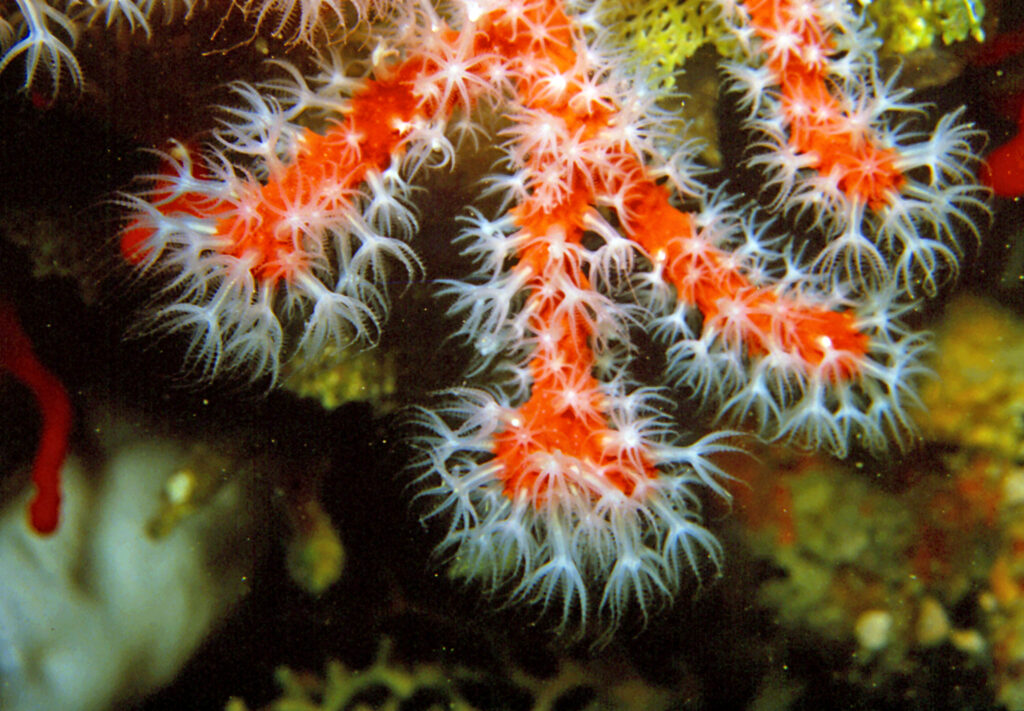
Mediterranean red coral, scientifically known as Corallium rubrum, has been harvested since ancient times because of the intense red colour and durability of its skeleton.
Once polished, it is used to produce jewellery, beads, sculptures and luxury decorative items. Its high commercial value has earned it the nickname “red gold.”
Unlike tropical reef-building corals, Corallium rubrum usually grows in shaded rocky habitats, underwater caves, overhangs and deeper waters across the Mediterranean and parts of the eastern Atlantic.
Its slow growth and long lifespan make it particularly vulnerable to intensive harvesting. Large colonies may take decades to develop, but they can be removed from the seabed in only a few moments.

Mediterranean red coral, scientifically known as Corallium rubrum, is used to produce jewellery, beads, sculptures and luxury decorative items. Its high commercial value has earned it the nickname “red gold.” image by Géry PARENT
Strict Rules Protect Red Coral
The harvesting of Mediterranean red coral is subject to strict controls.
Under the management plan adopted by the General Fisheries Commission for the Mediterranean, harvesting is prohibited in waters shallower than 50 metres, helping damaged shallow-water populations recover.
Harvesting may only be carried out by authorised fishers using regulated methods. Colonies below the minimum permitted size must not be collected, while authorities can temporarily close areas where excessive numbers of undersized colonies are found.
The reports concerning the Skopelos investigation state that the coral was taken from protected marine areas associated with the Natura 2000 network. The exact collection sites, depths and environmental damage have not yet been publicly disclosed.
More Than a Financial Crime
The estimated value of the seized cargo makes this a significant suspected smuggling case, but its impact cannot be measured only in euros.
Red coral colonies form complex three-dimensional habitats that provide shelter and living space for other marine organisms. Removing them damages structures that may need many years to recover.
Illegal collectors also operate outside scientific monitoring and management plans. Authorities therefore have no reliable way to assess how much coral has been removed, which areas have been targeted or whether individual populations can recover.
The discovery of cutting tools, diving equipment and specially arranged storage areas suggests that the extraction was planned rather than opportunistic.
The Investigation Continues
Several important details remain unknown.
Authorities have not publicly announced the total weight of the coral, the number of people under investigation or whether formal arrests and charges have been made. The exact date of the operation has also not been specified in the available reports.
The €800,000 valuation should therefore be treated as an initial estimate rather than a final confirmed figure.
Investigators are now attempting to identify possible collaborators, trace earlier shipments and locate the intended recipients in Italy.
The case is a reminder that environmental crime does not always involve large industrial vessels. A recreational yacht, scuba equipment and legitimate transport routes can also be used to conceal organised exploitation of the seabed.
As the investigation develops, more information may emerge about how long the operation had been active—and how much of the Aegean’s slow-growing coral habitat may already have been lost.