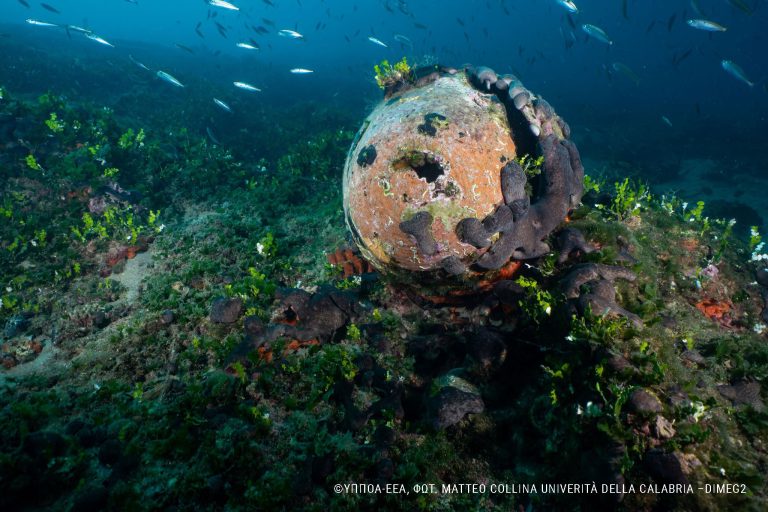

The Tilegrafos dive site in Nies is a protected underwater archaeological site featuring a Late Roman shipwreck with scattered amphorae and excavation remains.
Dive Overview
Located at Cape Tilegrafos in the Nies area, this underwater archaeological site dates back to the Late Roman period (4th century AD).
The ship is believed to have sunk during rough seas while transporting amphorae filled with wine, garum, fruits, and olives, likely heading toward one of the ports of the Pagasetic Gulf for trade.
Like other archaeological sites in the Western Pagasetic and Peristera Underwater Museum, access is strictly controlled and available only through licensed dive centers with trained archaeological guides.
Entry & Conditions
This is a guided dive conducted exclusively through authorized dive operators.
All entry procedures and safety briefings are handled by the dive center. Divers must strictly follow guidelines to preserve the site.
Nearby, the settlement of Nies offers a calm and sheltered beach for non-divers.
What You ‘ll See
The site is characterized by scattered amphorae lying across the seabed, along with visible traces of underwater excavation work.
These remains form a historical landscape rather than a traditional shipwreck structure.
At the beginning of the dive, divers will also encounter a small wooden boat wreck, adding an additional point of interest.
The combination of ancient cargo and modern remnants creates a layered and unique underwater experience.
Important Consideration
- Access only through authorized dive centers
- Protected archaeological site
- Strict no-touch policy
- Follow guide instructions
Tips for divers
- Maintain excellent buoyancy control
- Keep a safe distance from all artifacts
- Move slowly to avoid disturbing the seabed
- Follow the designated route provided by your guide
- Photography is allowed for personal use only
Why this dive stands Out
Tilegrafos stands out for combining a Late Roman shipwreck with visible excavation traces, offering a rare opportunity to observe both ancient cargo and archaeological work underwater.
For those who feel at home underwater — explore our gear.