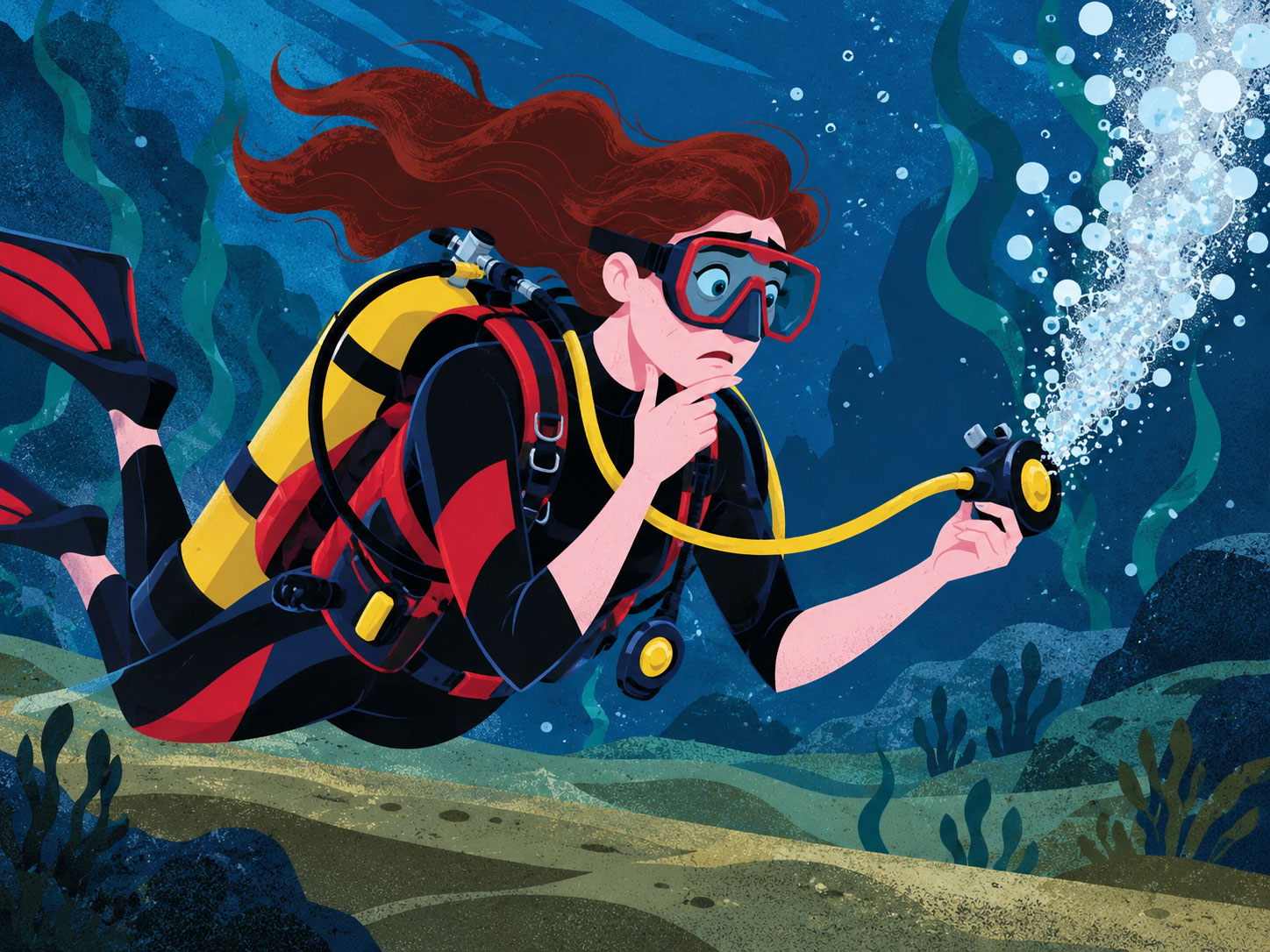
A reverse block while scuba diving occurs when expanding air becomes trapped inside the middle ear or sinuses during ascent. Instead of feeling difficulty equalising while descending, the diver experiences pressure, pain or vertigo while returning towards the surface.
The natural reaction may be to continue ascending and hope the discomfort disappears. However, forcing the ascent can increase the pressure difference and potentially cause middle-ear or inner-ear injury.
Knowing how to recognise and respond to a reverse block can prevent a manageable problem from becoming a serious diving accident.
Quick Answer
If you experience a reverse block, stop your ascent and signal your buddy. Descend slightly until the pressure or pain decreases, then allow time for the trapped air to escape.
Swallowing, moving the jaw or pointing the affected ear towards the bottom may help. Resume the ascent slowly and in small increments. Never forcefully equalise or make an uncontrolled ascent.
What Is a Reverse Block?
The middle ear is an air-filled space connected to the throat through the Eustachian tubes.
During descent, increasing water pressure compresses the air inside the middle ear. Divers equalise by allowing additional air to enter through the Eustachian tubes.
During ascent, the process normally happens automatically. As the surrounding pressure decreases, the air inside the middle ear expands and escapes through the Eustachian tubes.
A reverse block—also known as a reverse squeeze—occurs when that expanding air cannot escape. Pressure builds behind the eardrum, causing it to bulge outwards.
If the diver continues ascending, the increasing pressure difference can cause significant pain and potentially damage or rupture the eardrum.
What Does a Reverse Block Feel Like?
A reverse block usually begins during ascent and may affect one or both ears.
Common symptoms include:
- Increasing pressure or fullness inside the ear.
- Sharp or worsening ear pain.
- Difficulty continuing the ascent.
- Reduced or muffled hearing.
- Dizziness or vertigo.
- Nausea or loss of orientation.
If the pressure differs between the two ears, the diver may experience alternobaric vertigo—the sensation that they or their surroundings are spinning.
This can be particularly dangerous underwater because it may lead to disorientation, panic or loss of buoyancy control.
What Should You Do Underwater?
Stop the Ascent
As soon as you feel pressure or pain, stop ascending. Continuing towards the surface will cause the trapped air to expand further.
Signal your buddy that something is wrong and point towards the affected ear.
Descend Slightly
Return a short distance deeper until the discomfort decreases. The increase in surrounding pressure compresses the trapped air and may help the Eustachian tube reopen.
This does not mean returning to the bottom. A small, controlled descent may be enough.
Allow the Air to Escape
Remain calm and give the pressure time to equalise. Swallow, move your jaw from side to side or make a gentle yawning movement.
Pointing the affected ear towards the bottom may also help the trapped air escape.
Avoid aggressive or forceful equalisation. Blowing hard against a blocked Eustachian tube can increase pressure inside the ear and risk damaging delicate inner-ear structures.
Do Not Force It
A reverse block is caused by air that needs to escape—not by a lack of air inside the ear. Forceful equalisation may make the pressure worse rather than relieve it.
Resume the Ascent Slowly
Once the discomfort improves, begin ascending again in very small increments.
If the pressure returns, stop, descend slightly and wait again. Maintain close contact with your buddy and use a reference such as an ascent line whenever possible.
Good buoyancy control is especially important. An uncontrolled buoyant ascent can rapidly worsen the pressure difference.
The diver must also monitor the remaining air supply, no-decompression limit and any required stops. If the blockage does not resolve, remain calm and make the slowest controlled ascent that the available air and dive conditions safely allow.
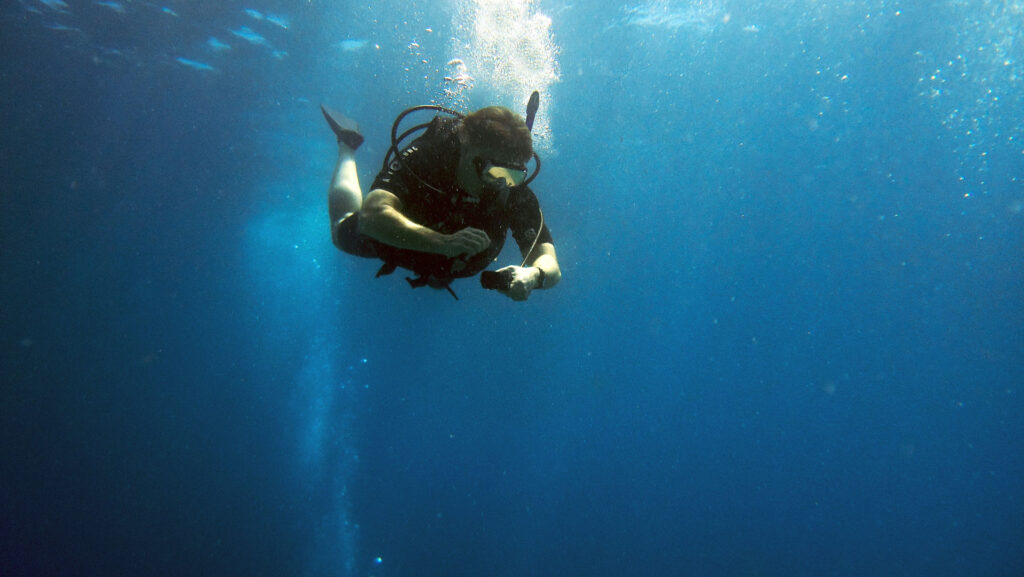
A slow, controlled ascent is an essential part of every safe dive.
What Causes a Reverse Block?
Congestion is one of the most common contributing factors. A cold, allergies or inflammation can restrict the Eustachian tubes and prevent expanding air from escaping.
Other possible factors include:
- Diving while congested.
- Mucus blocking the Eustachian tubes.
- Difficulty equalising during descent.
- Swelling caused by cold water.
- A decongestant wearing off during the dive.
- Rebound congestion following repeated use of nasal sprays.
A diver may descend successfully because a decongestant temporarily opens the air passages. If its effect fades underwater, the expanding air may become trapped during ascent.
Divers should not use medication simply to make themselves fit to dive. Anyone considering decongestants should first discuss their use and possible side effects with a medical professional familiar with diving medicine.
Can a Reverse Block Affect the Sinuses?
Yes. Expanding air can also become trapped inside a sinus cavity.
A sinus reverse block may cause sharp pain in the forehead, cheeks, around the eyes or behind the nose. A diver may also experience a headache or nosebleed after surfacing.
The underwater response is similar: stop ascending, descend slightly if possible and resume the ascent slowly once the pressure decreases.
When Should You Seek Medical Advice?
Do not continue diving after a significant reverse block.
Medical evaluation is recommended if symptoms persist after surfacing, particularly when they include:
- Continuing pain or pressure.
- Vertigo or balance problems.
- Hearing loss or muffled hearing.
- Tinnitus or ringing in the ear.
- Blood or fluid coming from the ear.
- Persistent sinus pain or nosebleeding.
Sudden hearing loss, severe vertigo or neurological symptoms require urgent medical assessment. These symptoms may indicate inner-ear barotrauma or another diving-related condition that should not be self-diagnosed.
Repeated reverse blocks should be assessed by an ear, nose and throat specialist familiar with diving medicine.
How Can You Reduce the Risk?
Do not dive when congested or when you cannot equalise comfortably at the surface.
Equalise early and gently during descent rather than waiting for discomfort. If equalisation becomes difficult, stop descending and end the dive if the problem cannot be resolved.
Avoid relying on nasal sprays or decongestants to dive through an illness or active allergy. Their effects may wear off underwater and contribute to a reverse block during ascent.
Finally, maintain good buoyancy control and always make slow, controlled ascents. The largest proportional pressure change occurs close to the surface, which means the final metres may be the most difficult part of an ascent with trapped air.
A reverse block can be painful and disorienting, but a calm response is essential: stop, descend slightly, allow time for the pressure to release and continue upwards slowly.
This article provides general educational information and is not a substitute for professional medical advice or recognised scuba-diving training.