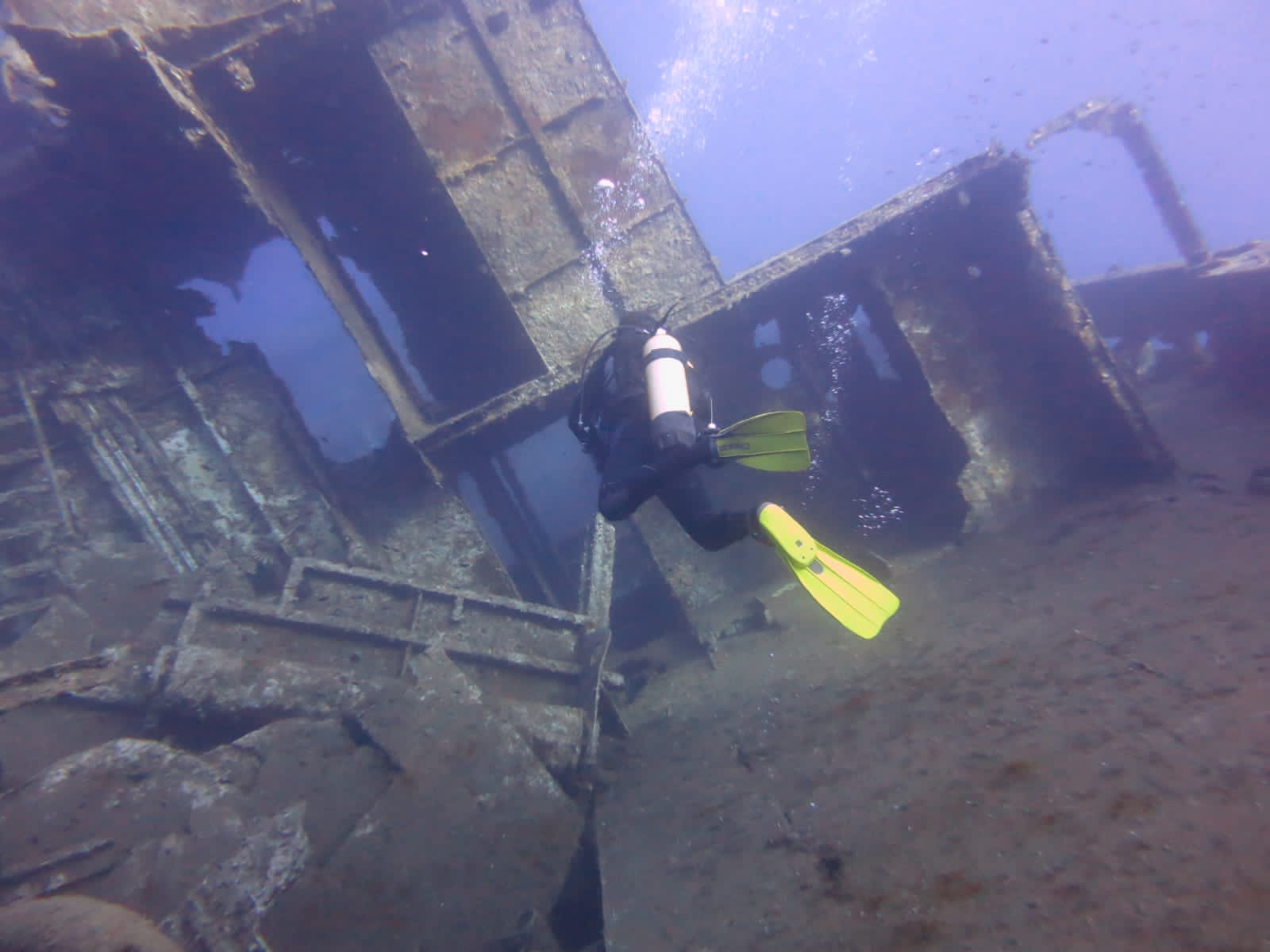
The Giannoula K is one of the most famous wreck dives in Greece and one of the premier wreck dives in the Dodecanese. Resting on a sandy seabed off southern Rhodes, this 110-meter cargo ship offers an unforgettable experience for both recreational and trained wreck divers.
Dive Overview
The Giannoula K lies approximately one nautical mile south of Plimmiri, Rhodes. The vessel rests with a slight starboard list on a flat sandy bottom and is large enough to require multiple dives for proper exploration.
Its relatively shallow depth, excellent visibility, and extensive penetration opportunities have made it one of the most popular wreck dives in the eastern Mediterranean.
Entry & Conditions
Access is possible only by boat.
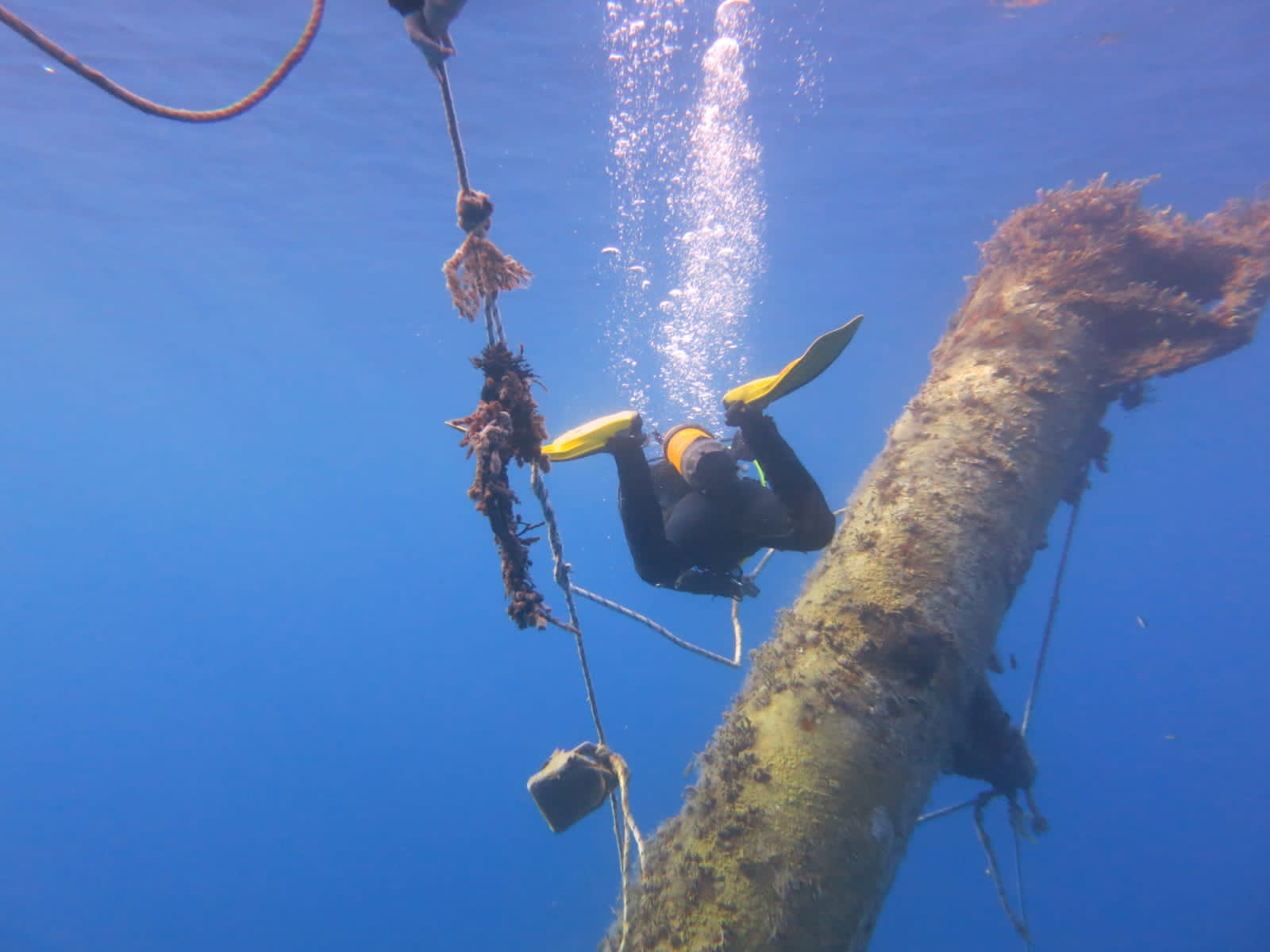
Divers typically depart from Plimmiri Harbor and follow a permanent mooring buoy attached to one of the ship’s funnels. A descent line runs directly from the buoy to the wreck, while a horizontal line at approximately 5 meters provides a convenient location for safety stops.
Visibility is usually very good and the wreck is often visible from the surface. Mild currents may occasionally be present.
What You’ll See
Descending along the mooring line, divers arrive near the central section of the wreck. From here, they can choose to explore either the bow or stern first.
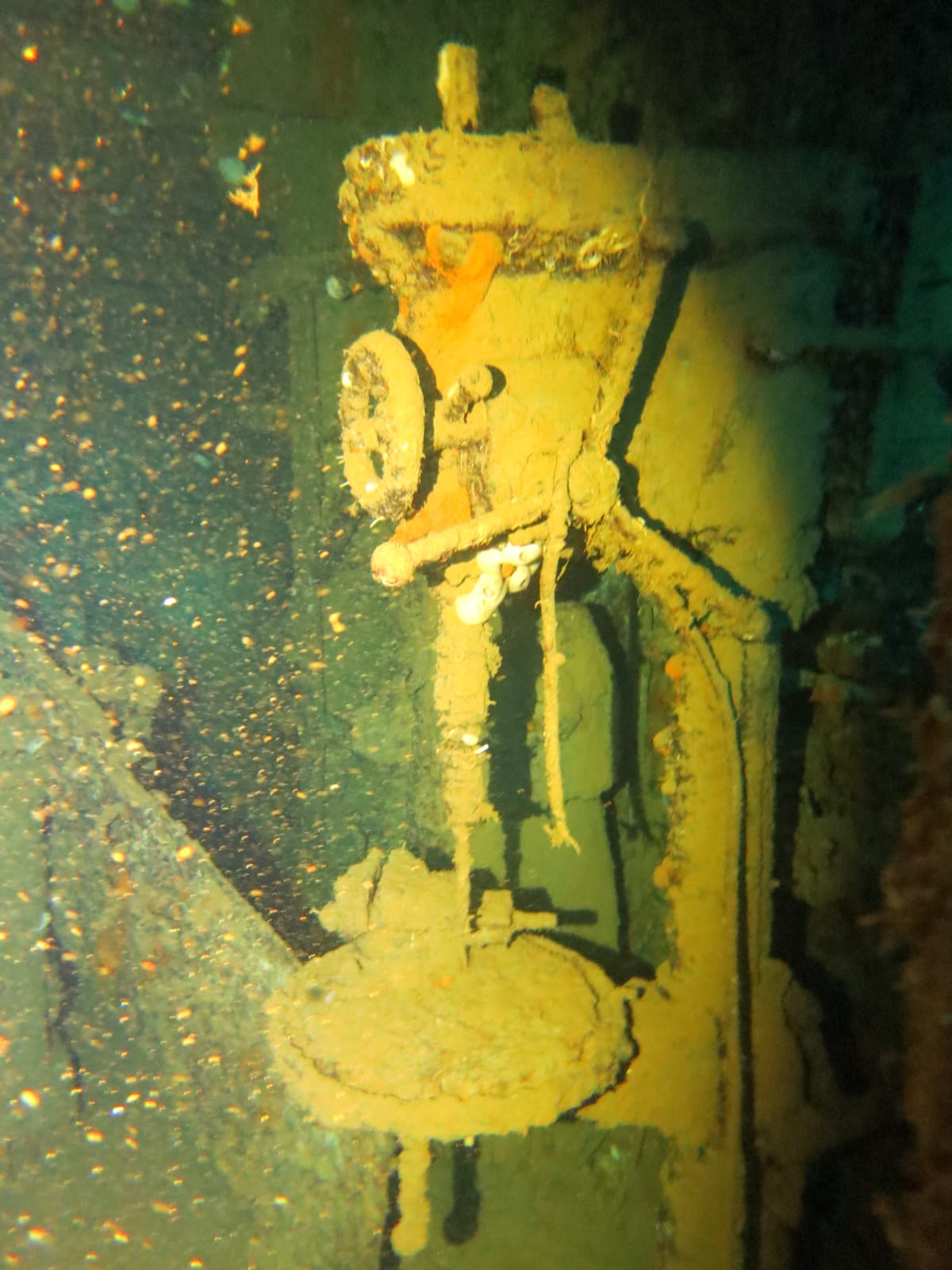
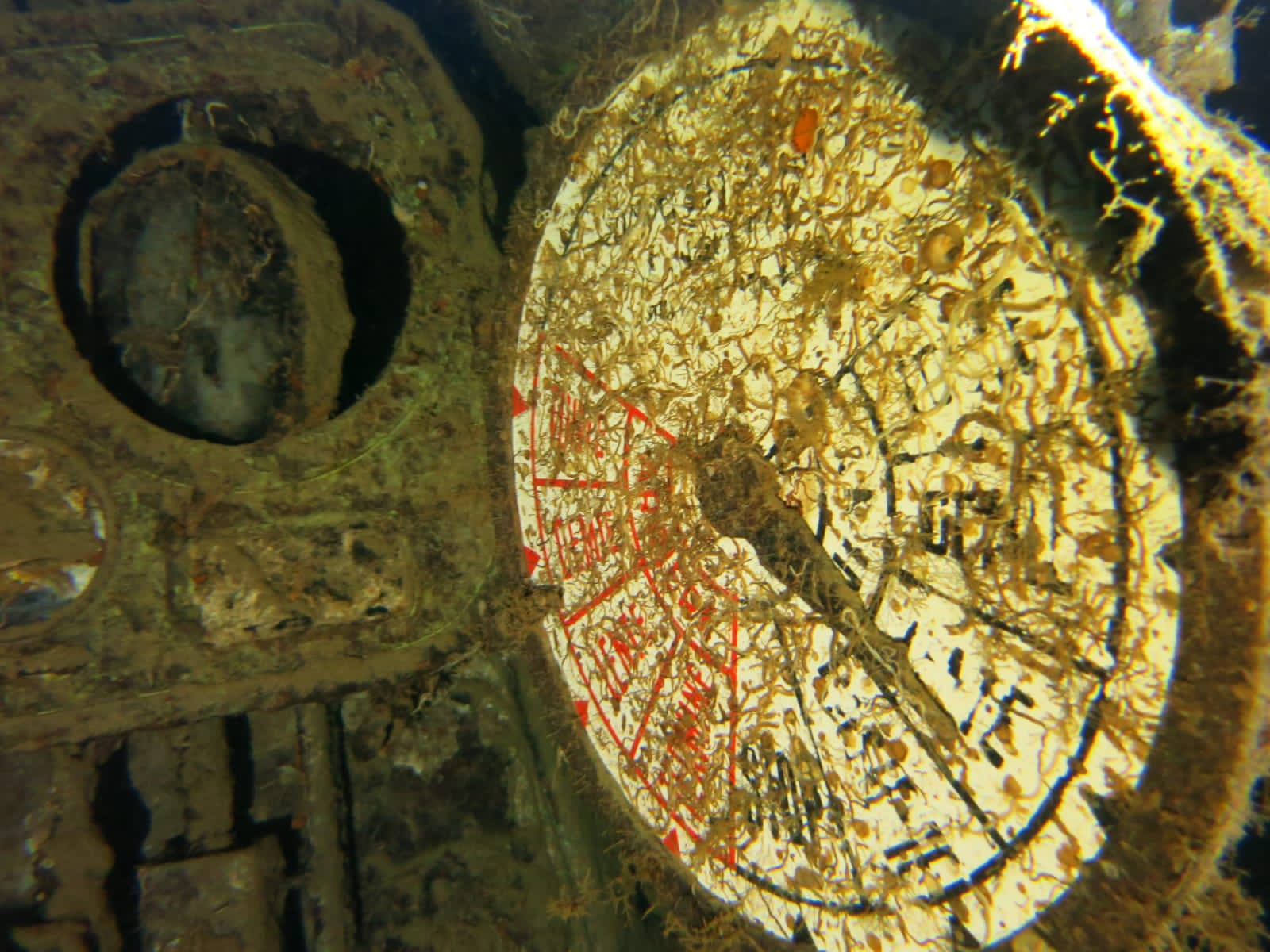
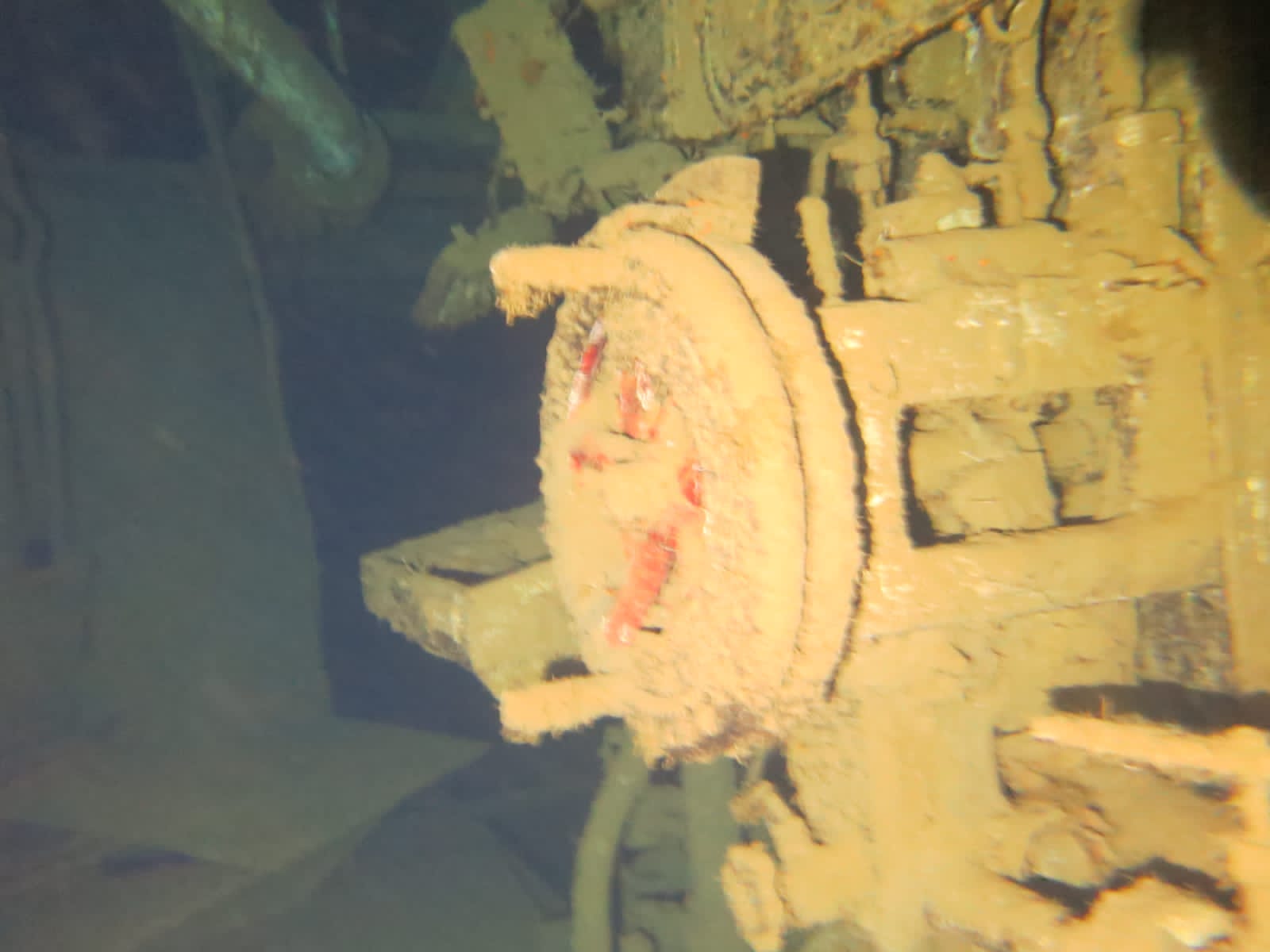
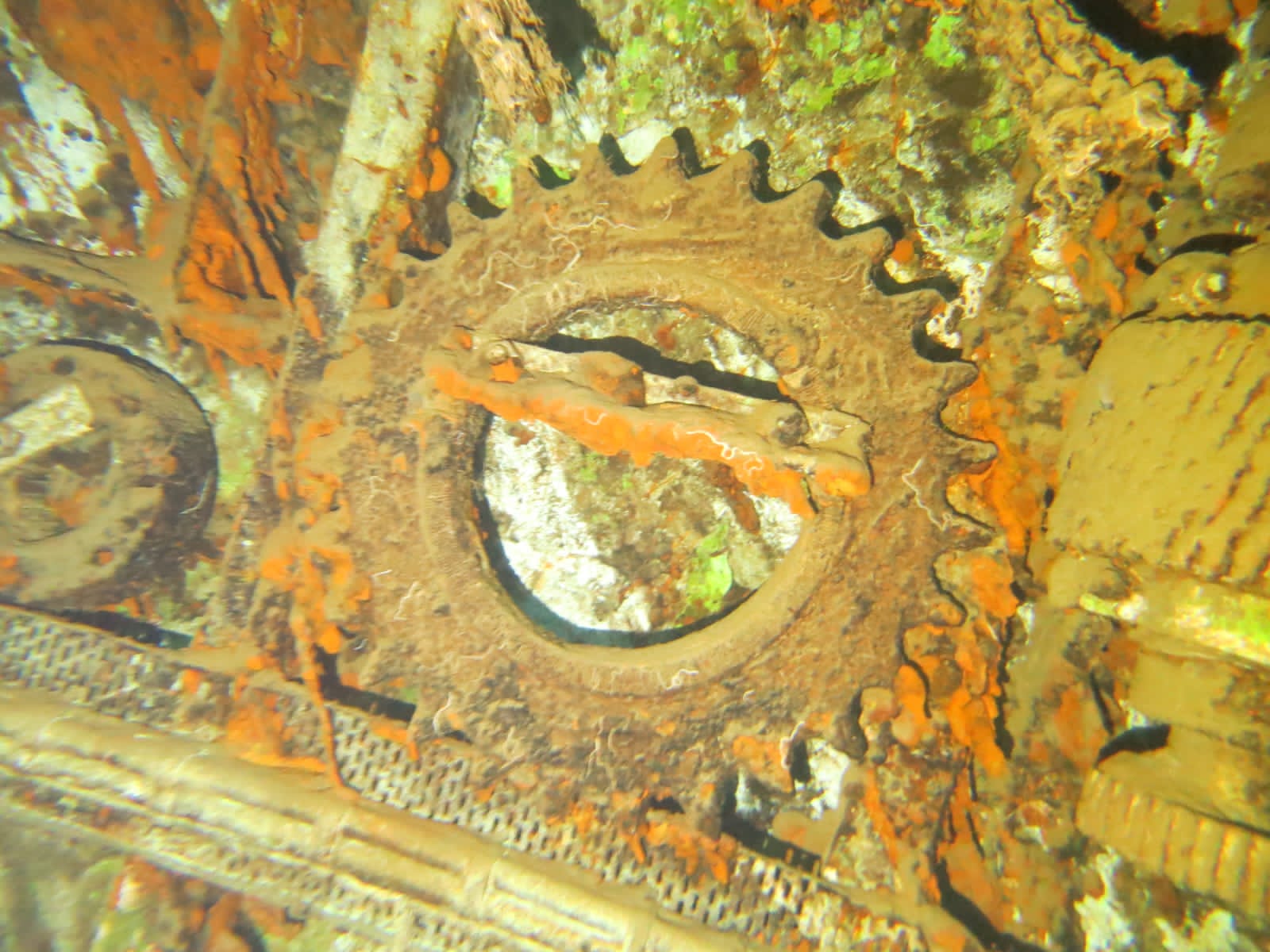
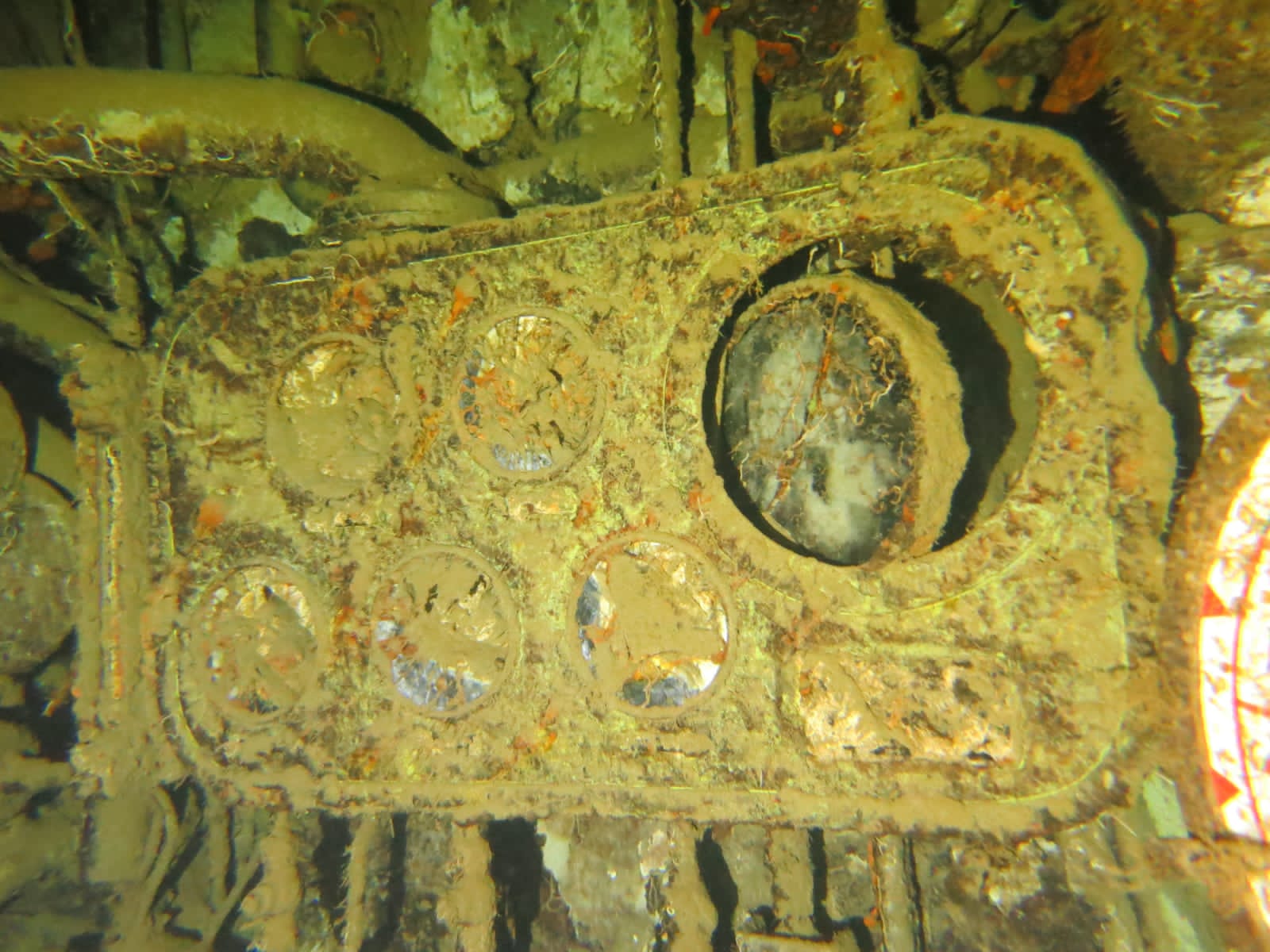
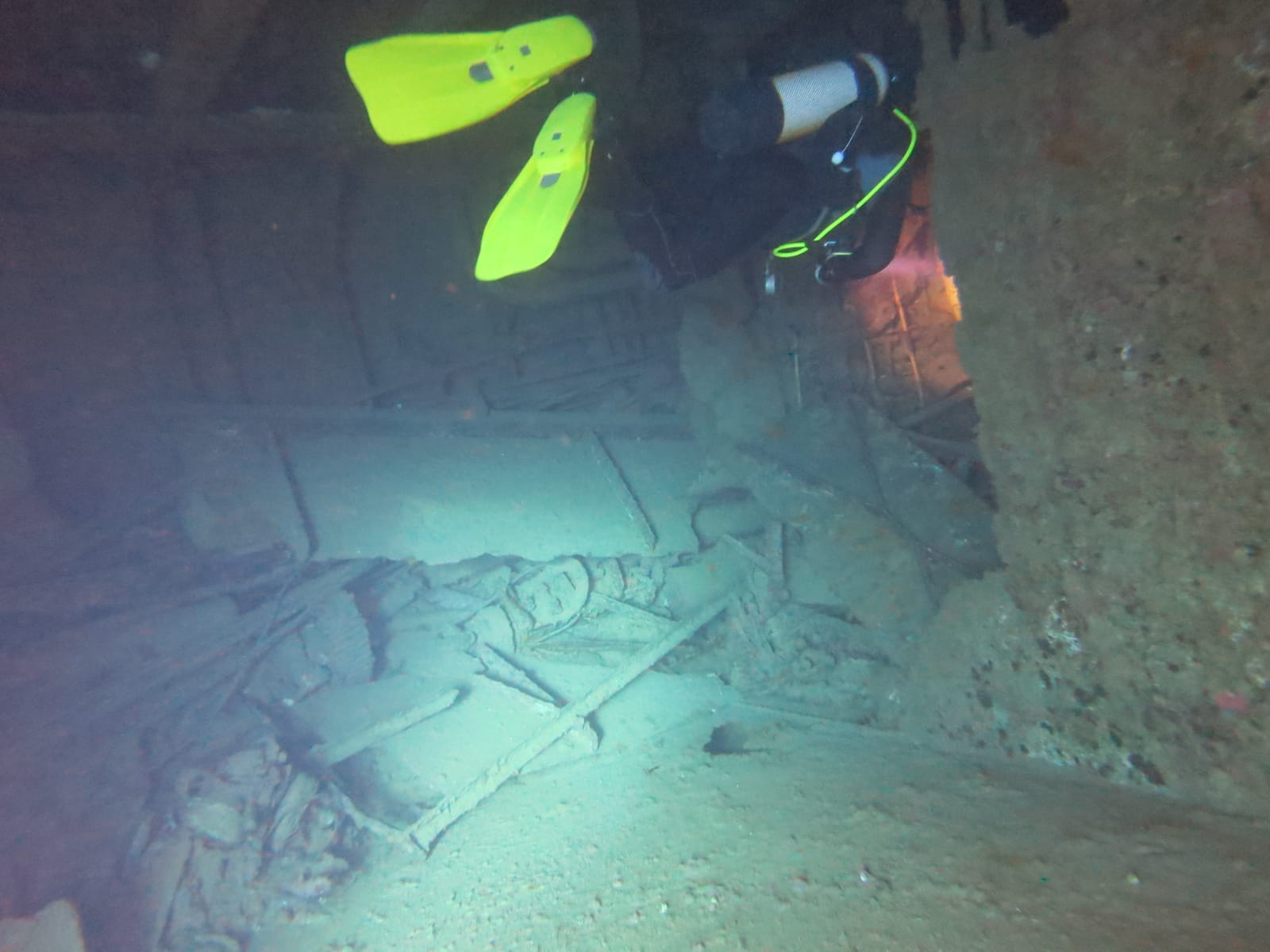
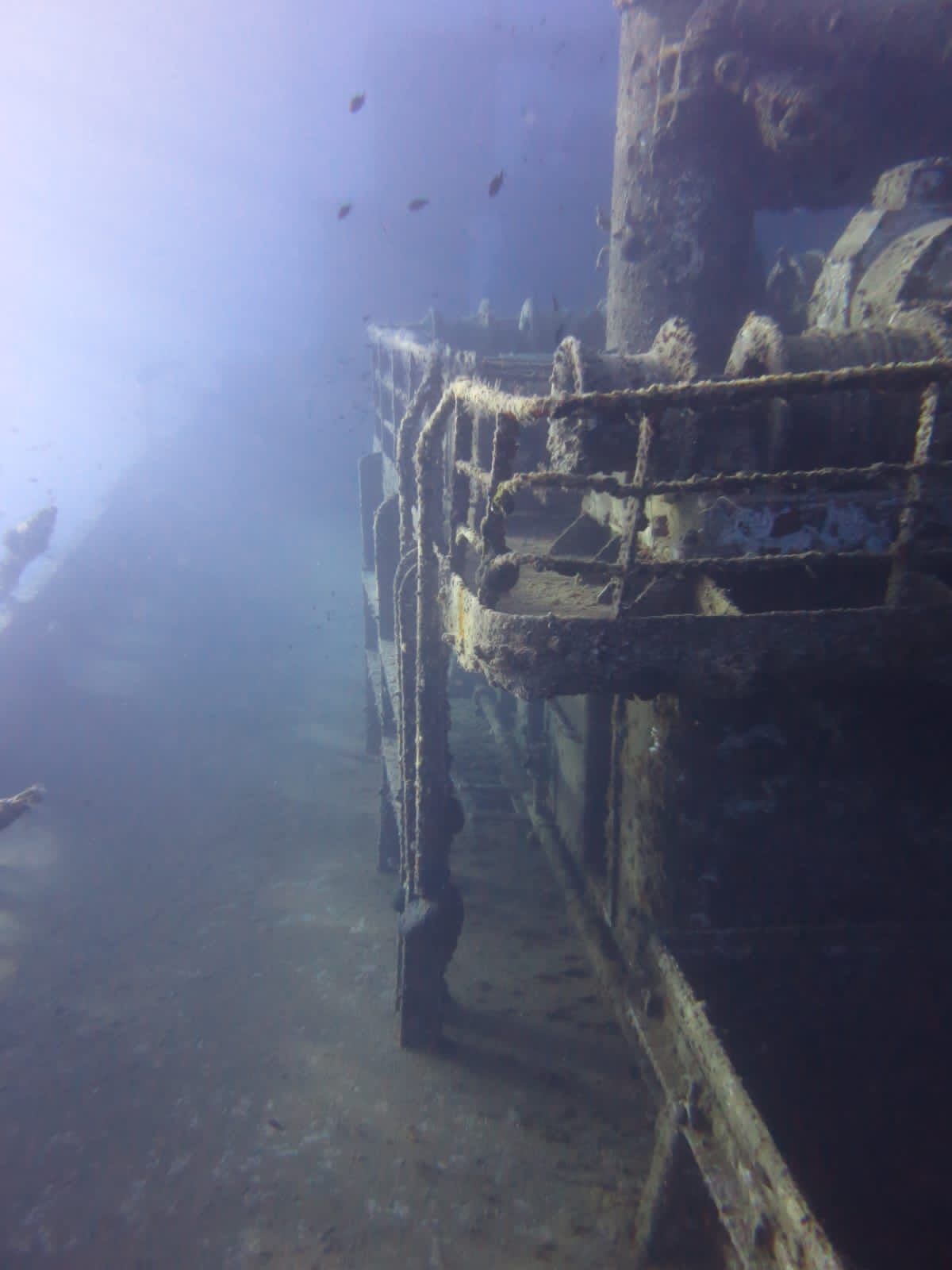
The wreck features three cargo holds, a large engine room, extensive deck structures, and numerous penetration points. Despite damage caused by illegal blast fishing over the years, much of the vessel remains intact.
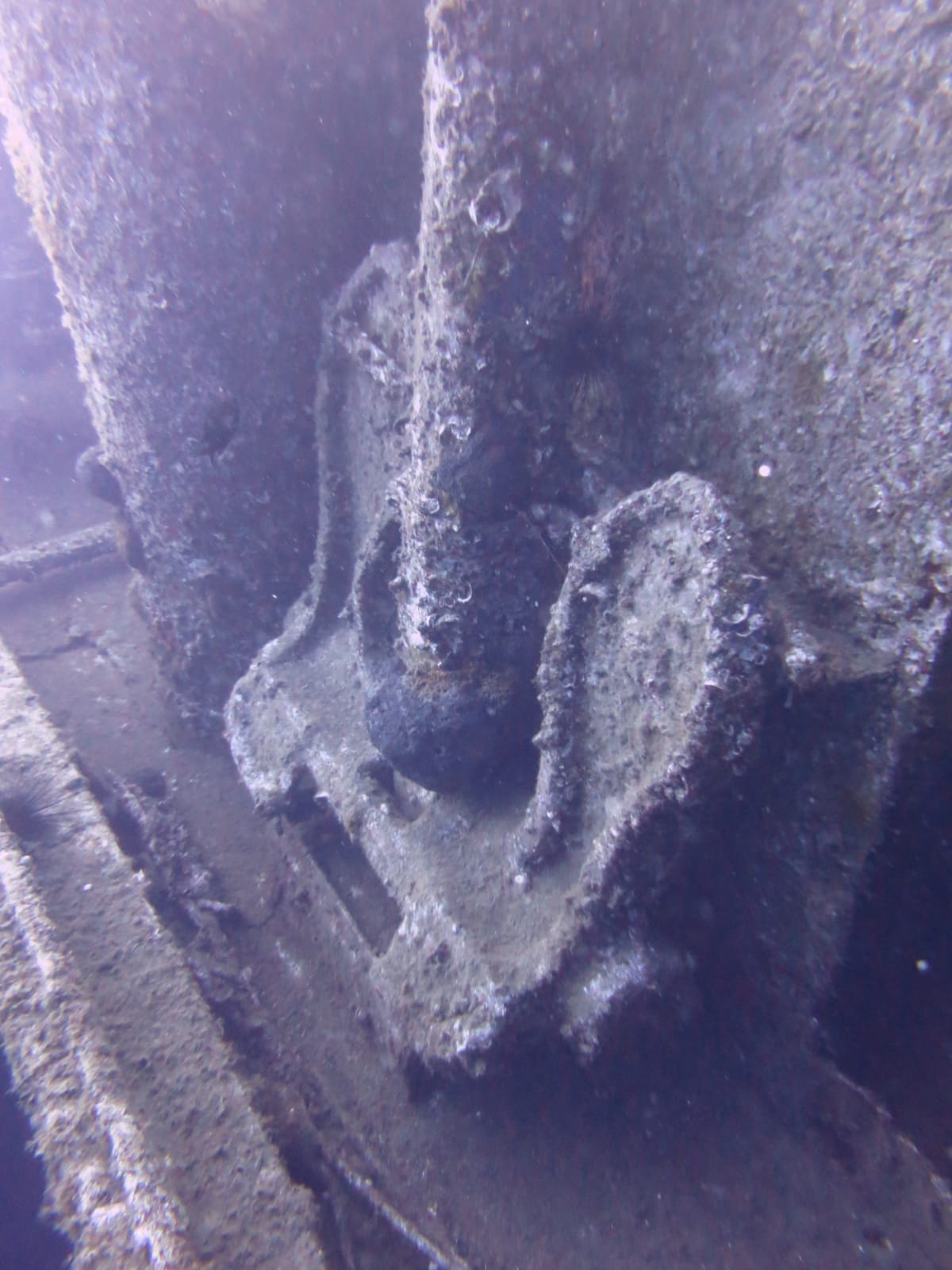
Among the most impressive sights are the enormous spare anchor stored in the bow section, the spare propeller located near the stern, and the multi-level engine room. Schools of fish surround the structure year-round, while lionfish have become a common sight throughout the wreck.
Because of its size, many divers choose to dedicate one dive to external exploration and a second dive to penetration.
Important Considerations
- Boat access only
- Wreck penetration requires appropriate training
- Sharp metal edges are present throughout the wreck
- Carry a torch if entering enclosed spaces
- Monitor gas consumption carefully
- Follow all safety and penetration procedures
- Safety stops should be completed on the mooring line

Depth Profile
The wreck rests at approximately 11 meters depth, making it accessible to divers of all certification levels. The shallow profile allows for long bottom times and relaxed exploration.
Tips for Divers
- Bring a torch even for daytime dives
- Plan multiple dives to fully explore the wreck
- Photograph the spare anchor and spare propeller
- Pay special attention to buoyancy inside the wreck
- Keep an eye out for lionfish and large schools of fish
- Follow the mooring line for ascent and safety stops
Why This Dive Stands Out
Few wrecks in Greece combine the size, accessibility, and penetration opportunities of the Giannoula K. Its shallow depth allows recreational divers to appreciate a truly massive shipwreck, while trained wreck divers can spend multiple dives exploring its interior spaces.
Scubadiver.gr would like to thank mr Paris Sofos for the help with this article.