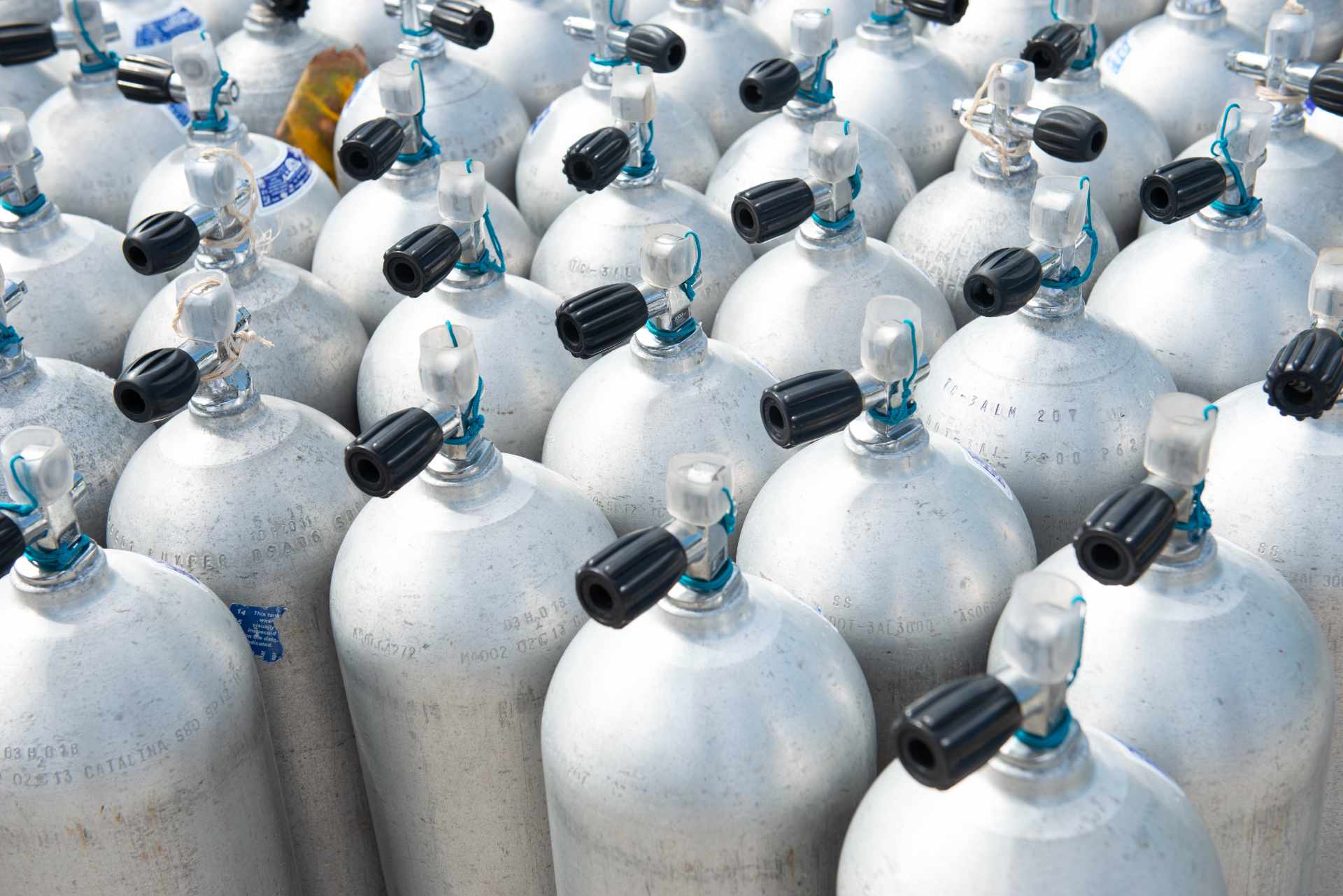
Buying your own scuba tank is often one of the last steps divers take when completing their personal equipment. While many divers continue renting tanks from dive centers, owning one offers flexibility and long-term cost benefits for those who dive frequently.
In this guide we explain the advantages of owning a scuba tank, the differences between aluminum and steel cylinders, and how to choose the right capacity.
Advantages of Owning a Scuba Tank
One of the main advantages of owning your own tank is flexibility. Divers are not dependent on dive centers for rentals and can plan dives more easily.
Instead of organizing logistics every time you want to dive, you can keep your tank ready, refill it when needed, and be prepared whenever a diving opportunity appears.
There is also a financial advantage. Divers who dive frequently may find that the cost of filling their own tank is significantly lower than repeated rentals.
Aluminum vs Steel Scuba Tanks
The two most common materials used for scuba tanks are steel and aluminum.
Steel tanks are popular in many parts of Europe because they have more negative buoyancy, meaning divers usually need less additional weight.
Aluminum tanks, on the other hand, tend to be more buoyant and may require extra weights during the dive.
Another difference is durability:
Steel tanks
- heavier
- less buoyant
- require proper maintenance to prevent rust
Aluminum tanks
- lighter
- more buoyant
- more resistant to corrosion
A well-maintained steel tank can last for decades.
Choosing the Right Tank Size
Common recreational scuba tank sizes include:
12 liter tanks
The most common size used for recreational diving.
15 liter tanks
Offer more air capacity and are often preferred by larger divers or those with higher air consumption.
18 liter tanks
Provide even more capacity but are heavier and bulkier.
Many divers believe that a larger tank is always better, but bigger tanks also add weight and can reduce comfort underwater.
For most divers, a 12 liter tank is sufficient for typical recreational dives.
Do Beginners Need Their Own Tank?
In most cases, beginners do not need to buy their own tank immediately.
New divers are still learning buoyancy control and understanding their air consumption. Renting tanks from dive centers allows them to experiment with different sizes before deciding what suits them best.
Once a diver gains experience and starts diving regularly, purchasing a personal tank becomes a more practical decision.
Simple Air Capacity Example
Air capacity depends on both tank size and pressure.
For example:
- A 12 liter tank at 200 bar contains about 2400 liters of air
- A 15 liter tank at 200 bar contains about 3000 liters of air
- An 18 liter tank at 200 bar contains about 3600 liters of air
- Understanding your personal air consumption will help you decide which tank size is most suitable.
Quick Tips Before Buying a Tank
Before buying a scuba tank, consider the following:
- choose the size that fits your diving style
- think about weight and comfort
- consider your air consumption
- check inspection and maintenance requirements
Owning a scuba tank can provide great flexibility for active divers, but it is a decision that should be made after gaining enough diving experience.
FAQ
Do divers buy their own scuba tanks?
Many experienced divers buy their own tanks for convenience and long-term cost savings.
What is the most common scuba tank size?
The 12 liter tank is the most commonly used size for recreational diving.
Are steel tanks better than aluminum?
Both have advantages. Steel tanks are less buoyant, while aluminum tanks are more resistant to corrosion.
Recommended gear for your next dive
If you’re building your diving kit, take a look at our scuba-inspired gear and apparel designed for divers.