Archaeologists working off the Mediterranean coast of Türkiye have revealed an Early Bronze Age shipwreck dating back as far as 4,700 years, potentially making it the oldest known seagoing wreck ever identified.
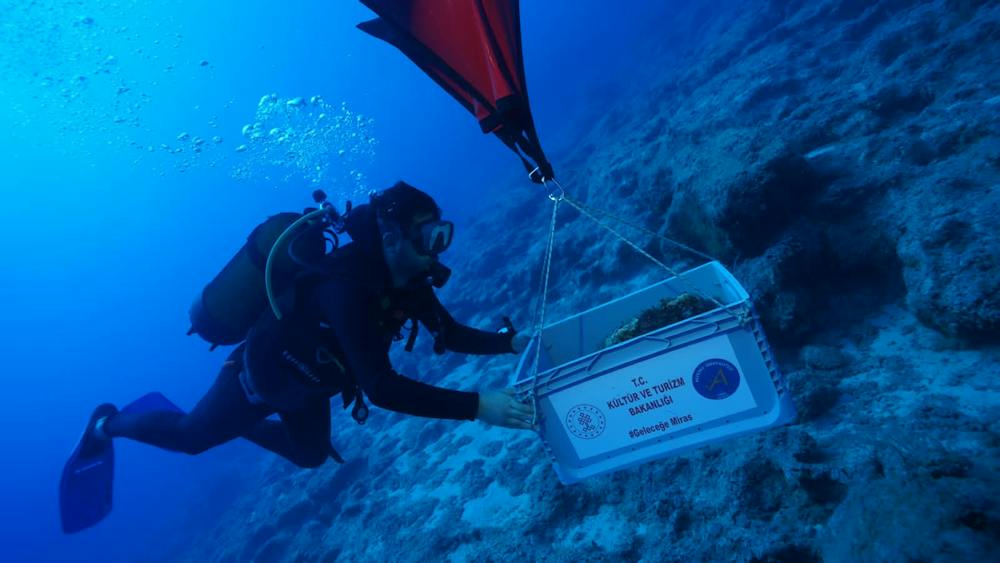
The site lies near Kekova Island in Antalya Province, where underwater excavations have uncovered ceramic storage vessels and stone anchors from a cargo ship believed to have sunk between approximately 2700 and 2400 BC—around the period when the Great Pyramid of Giza was being constructed.
Although the vessel’s wooden structure has not survived, the arrangement of its cargo and anchors provides rare physical evidence of maritime trade across the eastern Mediterranean almost five millennia ago.
Quick Answer
Archaeologists have excavated the remains of a merchant vessel that sank near Kekova Island off southern Türkiye approximately 4,400–4,700 years ago.
The wooden hull has disappeared, but pottery vessels, traces of their contents and stone anchors remain on the seabed. Their age and arrangement indicate the presence of an Early Bronze Age shipwreck that may predate the Dokos wreck in Greece, currently widely recognised as the world’s oldest known shipwreck.
Further analysis is still under way, so the description “world’s oldest known shipwreck” should be treated as the researchers’ current conclusion rather than a permanently settled record.
4,700-YEAR-OLD SHIPWRECK: QUICK FACTS
Location: Near Kekova Island, Antalya Province, Türkiye
Estimated age: Approximately 4,400–4,700 years
Historical period: Early Bronze Age
Depth: Approximately 30 metres
Vessel type: Small wooden merchant or cargo vessel
Main finds: Ceramic storage vessels and stone anchors
Possible route: From the Levantine coast towards Crete or Troy
Importance: May be the oldest known shipwreck yet identified
What Did Archaeologists Discover?
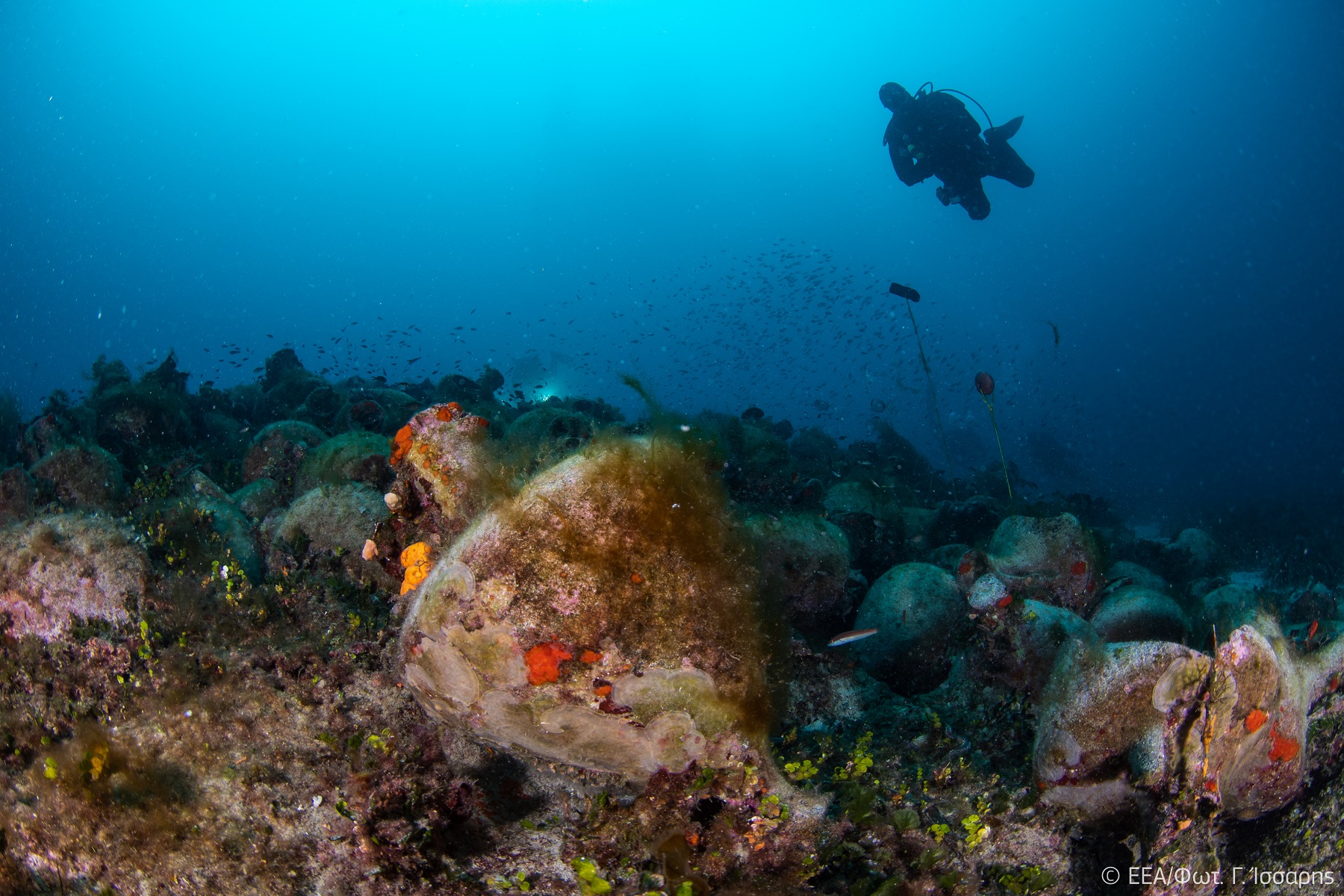
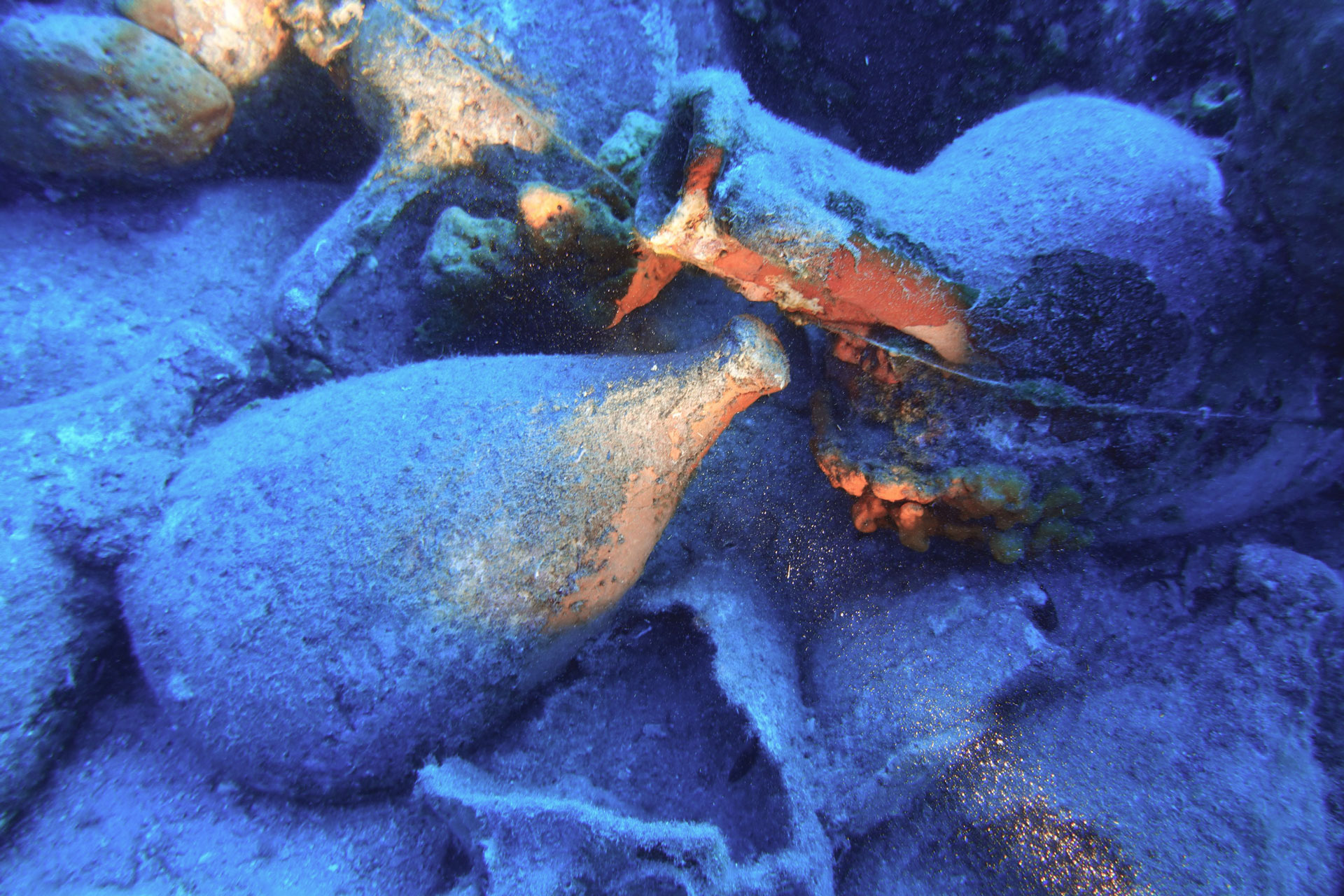
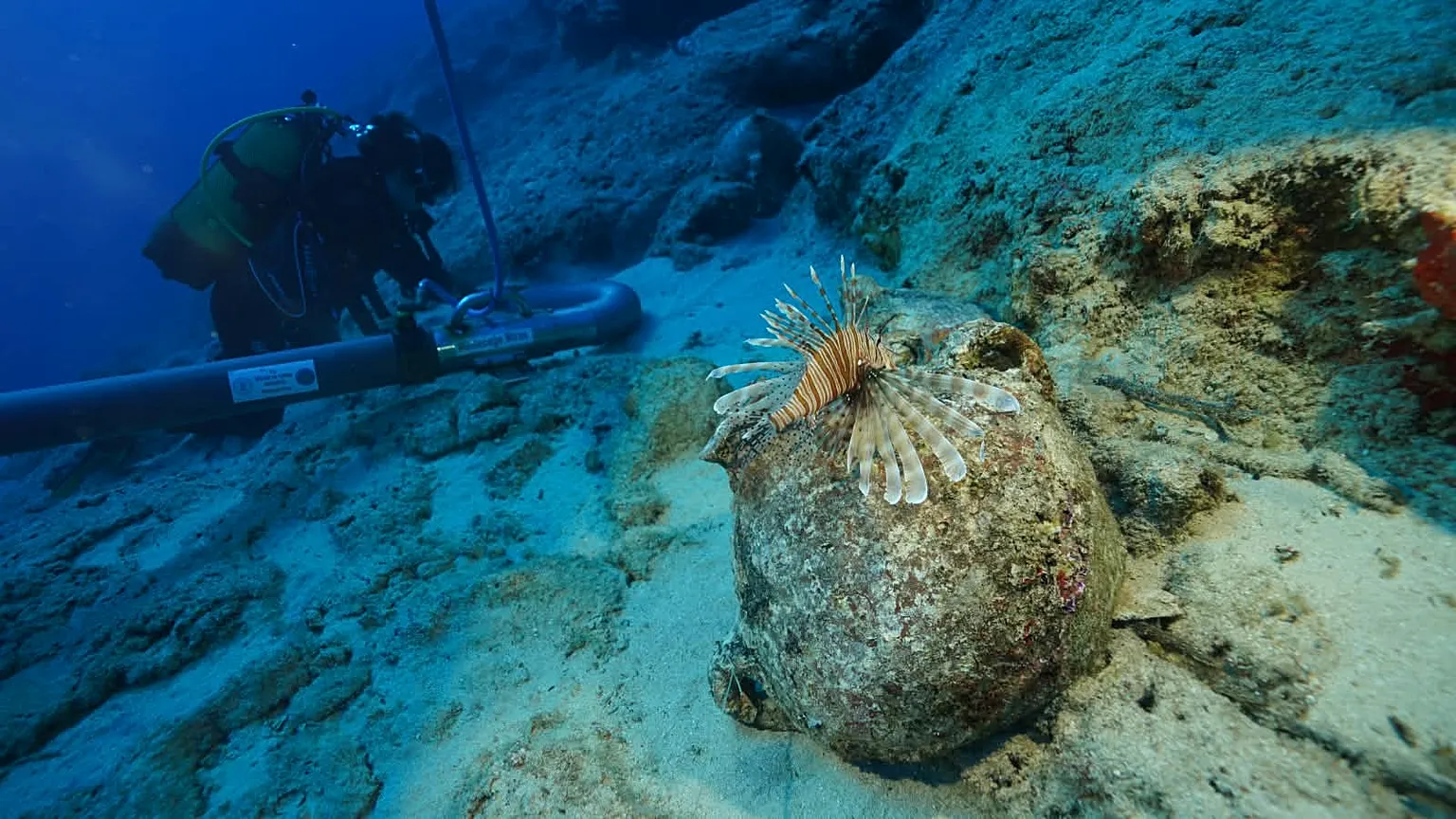
The shipwreck site contains a concentration of ceramic storage vessels embedded among rocks on the seabed. Some of the jars measure up to approximately 50 centimetres in height, while several have survived well enough for specialists to examine their clay, form and decoration.
Three stone anchors were also reportedly found at the site. Their presence, together with the organised group of cargo vessels, supports the interpretation that the objects belonged to a ship rather than reaching the seabed separately.
The surviving evidence does not include an intact wooden hull. After thousands of years underwater, the vessel’s organic structure has decayed, leaving its more durable cargo and equipment behind.
This distinction is important: archaeologists are not examining a complete 4,700-year-old ship. They are studying an archaeological wreck site identified through the objects that remained after the ship disappeared.
WHAT HAS ACTUALLY SURVIVED?
The wooden vessel itself has not survived nearly five millennia underwater.
The wreck has been identified from the concentration and arrangement of pottery, stone anchors and other archaeological evidence remaining on the seabed.
How Was the Shipwreck Dated?
The estimated date of the wreck is based primarily on the style, construction and clay composition of the pottery recovered from the site.
Ceramics can provide archaeologists with valuable chronological evidence because their shapes, handles, bases, decoration and manufacturing techniques changed between regions and periods.
Specialists compared the recovered vessels with Early Bronze Age pottery found elsewhere in the eastern Mediterranean. Similar objects have been identified in the Levant, Egypt, Troy and Crete.
Researchers currently place the shipwreck between approximately 4,400 and 4,700 years ago, although further scientific analysis may refine that estimate. Ceramic specialist Dr Karin Sowada examined more than 20 objects to help establish their likely date and origin.
What Was the Ship Carrying?
The pottery vessels may have transported products such as olive oil, wine, grain, resins or other foodstuffs and commodities. However, their original contents have not yet been conclusively identified.
Researchers have recovered small amounts of residue from some of the jars for further analysis. These tests may eventually reveal what the vessel was carrying, although contamination or the reuse of containers could complicate the results.
One unusual jar has two holes in its body and nine separate markings. Initial interpretations suggest it may have been used for churning milk to produce butter or cheese.
The idea has led to speculation that livestock could have been transported aboard the vessel or that sailors produced dairy products during their journey. For now, this remains an interpretation requiring further evidence—not a confirmed reconstruction of life aboard the ship.
Where Was the Ship Travelling?
Analysis of the clay suggests that at least some of the pottery may have been produced in or near the Jordan Valley.
Comparable vessels have been found at archaeological sites in Egypt, Troy and Crete, pointing towards commercial and cultural connections across a surprisingly large part of the Early Bronze Age Mediterranean.
Researchers believe the vessel may have departed from the Levantine coast and been sailing towards either Crete or Troy when it sank. Its precise point of departure, destination and route remain unknown.
The wreck therefore offers evidence of maritime exchange, but it does not yet allow archaeologists to reconstruct the ship’s final voyage with certainty.
Why Is the Discovery So Important?
Physical evidence of very early seafaring is extremely rare.
Wooden boats usually decay, while cargo can be scattered by storms, currents, fishing activity and geological movement. Even when ancient objects are discovered underwater, proving that they belonged to a single vessel can be difficult.
This site may demonstrate that organised maritime trade connected distant regions of the eastern Mediterranean nearly 5,000 years ago. The pottery may help researchers study not only trade routes, but also shipboard food, storage practices, ceramic production and the daily lives of prehistoric sailors.
The wreck was reportedly first located during earlier surveys, with an Early Bronze Age site near Kekova recorded in 2024. Excavation began in 2026 under the Antalya Museum Directorate, with Hakan Öniz of Akdeniz University leading the scientific work. A peer-reviewed 2026 paper by Öniz also places the Kekova wreck within a much older maritime route along the Antalya coast.
Is It Definitely the World’s Oldest Shipwreck?
The safest description is “the world’s oldest known shipwreck” or “believed to be the world’s oldest known shipwreck.”
Before this announcement, the oldest widely recognised wreck was the Dokos shipwreck in Greece. Located at a depth of approximately 20 metres, the Dokos site contained a large collection of Early Helladic pottery and two stone anchors dating to around 2200 BC.
The new site near Kekova could be several centuries older. However, archaeological records can change as dating is refined and new discoveries are made.
It is also necessary to distinguish between different claims. Some wrecks preserve an intact hull, while others—such as Dokos and the Kekova site—are identified mainly through cargo, anchors and the archaeological context left after the vessel disappeared.
Guinness World Records still lists Dokos as the oldest shipwreck, but notes that records can change and are not always updated immediately. Guinness World Records
A Window Into the Earliest Mediterranean Sailors
The objects recovered near Kekova are not treasure in the conventional sense. Their real value lies in the information they may preserve about a period for which direct evidence of maritime activity is exceptionally scarce.
Each vessel, mark, anchor and trace of residue contributes another piece to the story of how people moved goods and ideas across the Mediterranean thousands of years before the famous trading networks of classical antiquity.
If the current dating is confirmed, the Kekova wreck will extend the archaeological record of Mediterranean seafaring by several centuries.
For now, the most accurate conclusion is also the most compelling: archaeologists may have found the oldest known evidence of a seagoing merchant ship ever discovered.