
Horto dive site in Pelion is a hidden reef dive that takes a bit of navigation to find, but rewards divers with a beautiful underwater route, rich marine life, and a more adventurous feel than the average shore dive.
Dive Overview
Some dive sites are easy to read from the surface. You look at the coastline, spot the underwater relief, and more or less know where to go. Horto is not one of them.
This is a dive site that has cost divers quite a few tanks while trying to locate it properly, but once you know the marks and the route, it becomes a very rewarding dive on an almost hidden reef.
The beach lies in front of the Leda hotel in the village of Horto, Pelion. If you are staying at the hotel or diving with the dive center inside, you can park in the hotel parking area and carry your equipment down to the shore. Otherwise, continue past the hotel and turn into the narrow road marked café-Casablanca. Parking there is a bit trickier, but in both cases you will still have a short 70–80 meter path to the beach.
Entry & Conditions
The beach is narrow but attractive, with sand and small pebbles, and the water is usually clear. There are also two cafés very close by, which makes the site convenient for non-divers as well.
The entry point is on the right-hand side when facing the sea. Because this is a relatively deep dive and the reef is not close to shore, it is best to make a long surface swim in order to save as much gas as possible.
Enter the water, complete your checks, and begin swimming on the surface. Your goal is to reach a point about 20 meters off the shore, roughly in line with the rocks seen from the beach. Keep glancing down at the bottom and look for a distinctive old square mooring block, which works as an important visual reference. Continue swimming on the surface for another 2–3 minutes on a heading of around 240 degrees, then descend.


What You ‘ll See
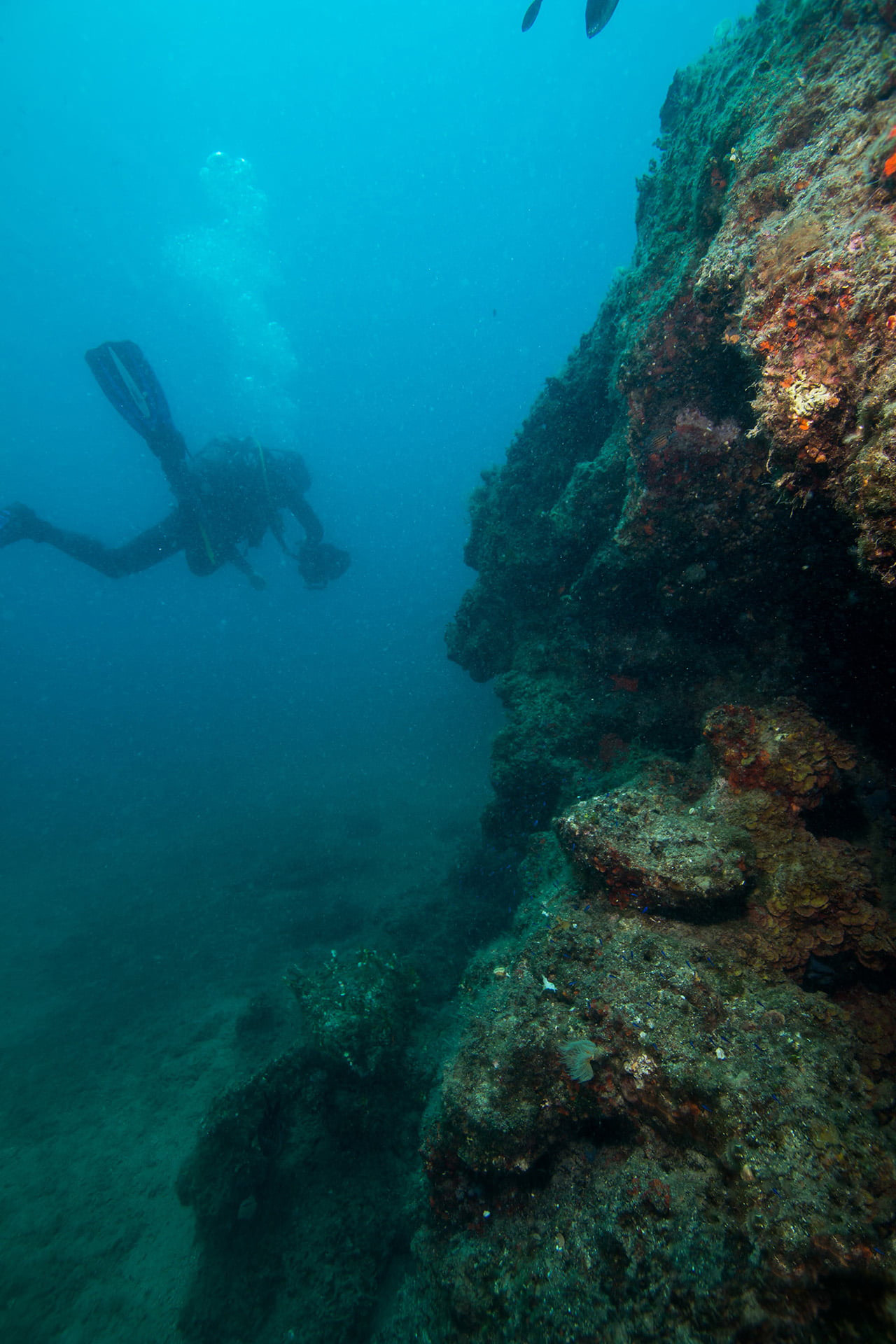
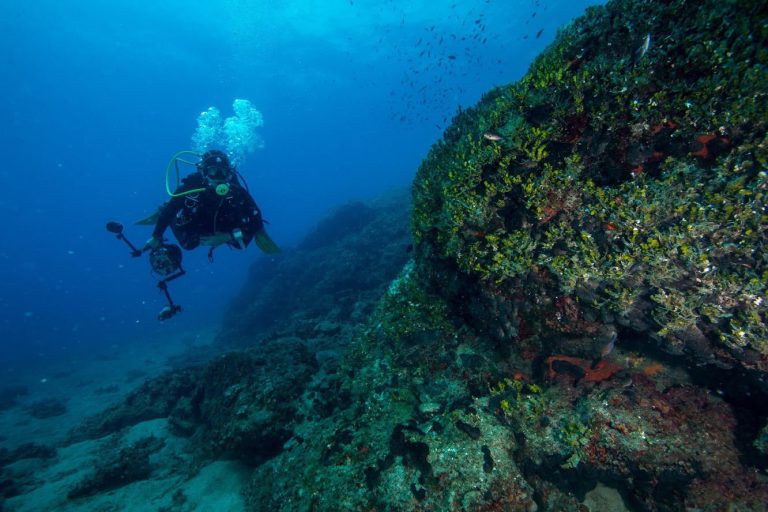
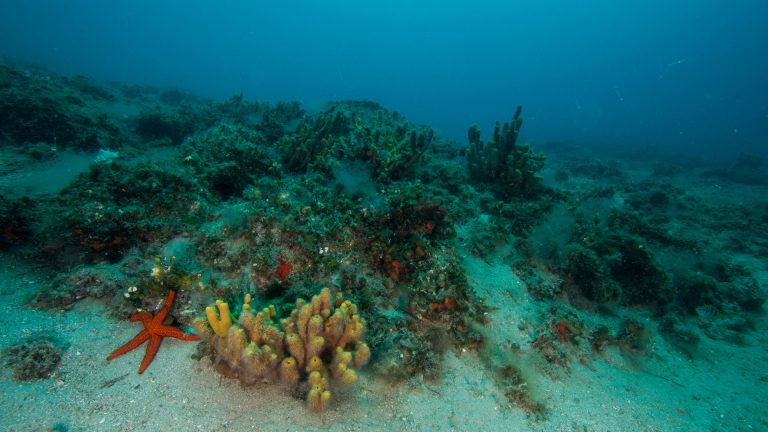
The reef begins at around 12 meters, where large rock formations suddenly break the monotony of sand and Posidonia seagrass. The rocks are covered in sponges and spirorbid worms, while schools of damselfish are a constant presence on this lively reef.
After a short stretch of reef, and as you continue deeper, the rocky terrain gives way once again to sand. Keep following roughly the same 240-degree heading and after a few more fin kicks you will meet another rocky section.
This is a deep dive and continues beyond 40 meters, so depth and gas management are essential. On the return, the shallower Posidonia beds provide shelter for all kinds of small marine life and are well worth slowing down to observe.
Important Consideration
- Navigation can be tricky
- Long surface swim
- Deep profile
- Decompression risk
- Distance from shore
Depth Profile
The reef starts at around 12 meters and progressively deepens. The main dive can easily exceed 30 meters, while deeper sections continue beyond 40 meters.
Tips for divers
- Use the square mooring block as a navigation reference before descending
- Follow a heading of around 240 degrees to locate the reef more easily
- Agree on a maximum depth with your buddy before the dive
- Start your return at 110–120 bar due to the distance from shore
- If you go beyond 30 meters, monitor your no-decompression limits carefully
- Take your time on the return and observe the shallow Posidonia for macro life
Why this dive stands Out
Horto stands out because it feels like a hidden find. It is not an obvious or instantly readable dive site, which makes locating the reef part of the experience. For divers who enjoy navigation, discovery, and a more adventurous shore dive, it is one of Pelion’s most rewarding spots.