Every diver has looked at their pressure gauge during a dive and wondered the same thing:
“Why am I using so much air?”
It’s even more frustrating when your buddy surfaces with 70 bar left while you’re already approaching your reserve.
The good news?
Air consumption is something you can improve.
The bad news?
Probably not in the way you’ve been told.
Many divers focus almost exclusively on breathing techniques. In reality, breathing is only one piece of a much larger puzzle.
Understanding what really affects your air consumption is the first step toward longer, more comfortable dives.
Quick Answer
How can I reduce my air consumption while scuba diving?
Improving air consumption is about much more than breathing slowly. Proper weighting, good buoyancy, efficient trim, relaxed finning, reduced stress and experience all have a significant impact. Your body size and physiology also play an important role, meaning you should never compare your air consumption directly with another diver’s.
First, Stop Comparing Yourself to Your Buddy
One of the biggest misconceptions in scuba diving is that everyone should finish a dive with roughly the same amount of air.
That’s simply not true.
Imagine two divers:
- Diver A: 186 cm tall, 98 kg.
- Diver B: 166 cm tall, 73 kg.
Even if both divers have identical buoyancy skills, move equally efficiently and remain equally relaxed, Diver A will almost certainly consume more air.
A larger body requires more oxygen. Larger lungs move more air with each breath, and more muscle mass generally demands more energy.
Your goal is not to breathe less than your buddy.
Your goal is to breathe as efficiently as you can.
What You Can’t Change
Some factors affecting air consumption are simply part of who you are.
These include:
- Body size
- Height
- Muscle mass
- Lung capacity
- Natural metabolism
- Age (to some extent)
Understanding this helps eliminate unnecessary frustration.
A higher air consumption doesn’t automatically mean you’re a worse diver.
What matters is improving your own diving, not competing with someone else’s physiology.
What You Can Improve
The encouraging news is that most of the factors affecting air consumption are within your control.
Let’s look at the ones that make the biggest difference.
1. Proper Weighting
Carrying too much lead is one of the most common causes of excessive air consumption.
More weight means adding more air into your BCD to compensate.
That creates larger buoyancy changes during the dive, forcing you to make constant corrections.
The result is more movement, more effort and ultimately more breathing.
Proper weighting is often the easiest way to improve your gas consumption.
2. Buoyancy Control
Excellent buoyancy isn’t just about looking graceful underwater.
Every unnecessary fin kick to maintain depth burns energy.
Divers with good buoyancy remain almost effortless in the water.
Less effort means lower oxygen demand.
Lower oxygen demand means lower air consumption.
3. Trim
Imagine swimming underwater in an upright position.
Now imagine swimming perfectly horizontal.
Which one creates less resistance?
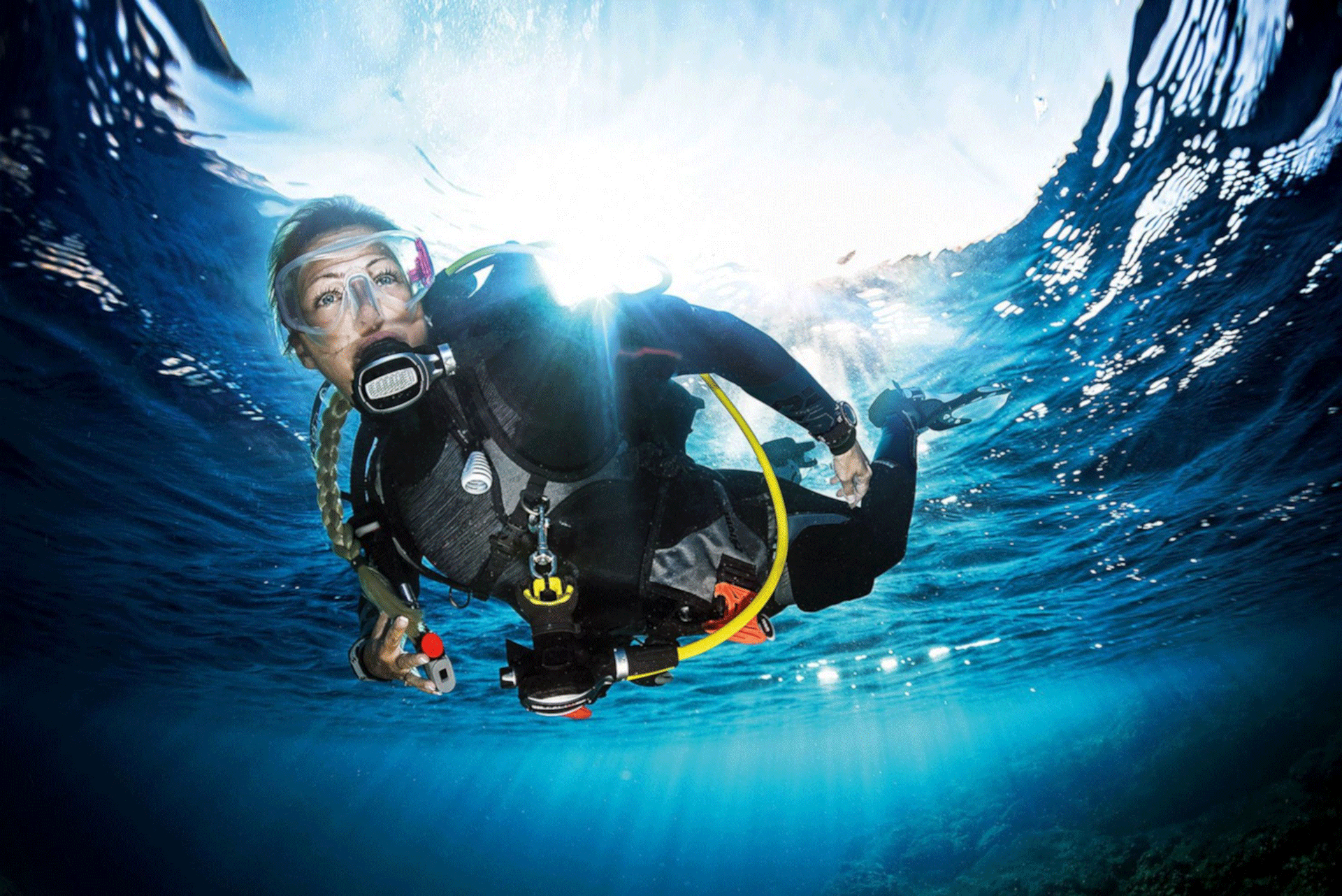
A streamlined, horizontal trim reduces drag and allows you to move through the water with less effort.
Less effort means lower oxygen demand, which naturally leads to lower air consumption.
Good trim isn’t just about looking like an experienced diver—it directly affects how much gas you use.
4. Finning Technique
Many divers unknowingly waste energy with inefficient fin kicks.
Large, rapid or unnecessary movements force your muscles to work harder, increasing your oxygen demand.
Instead, focus on:
- Slow, controlled fin kicks.
- Letting your fins do the work.
- Maintaining momentum rather than constantly accelerating.
Small improvements in finning technique often make a noticeable difference over the course of an entire dive.
5. Stress and Anxiety
Your body doesn’t know the difference between excitement and danger.
Stress increases your heart rate, your breathing rate and your oxygen consumption.
This is why many divers notice that their air consumption improves dramatically after their first 20–30 dives.
It’s not because their lungs suddenly became more efficient.
It’s because they became more relaxed.
Confidence underwater is one of the best ways to reduce air consumption.
6. Water Conditions
Not every dive is equally demanding.
Swimming against a strong current, dealing with surge or carrying heavy camera equipment all require additional effort.
It’s perfectly normal to consume more air on these dives.
Comparing your air consumption from a calm reef dive to one in difficult conditions simply isn’t meaningful.
Always compare similar dives.
7. Physical Fitness
You don’t need to be a marathon runner to become an efficient diver.
However, general cardiovascular fitness does make everyday movements feel easier.
A diver who becomes exhausted after a short swim will naturally consume more air than someone performing the same task comfortably.
The goal isn’t athletic performance.
The goal is reducing unnecessary effort underwater.
8. Your Breathing
Notice that we’ve left breathing until the very end.
That’s because breathing is often the result of everything we’ve discussed so far.
When you’re properly weighted, neutrally buoyant, well-trimmed and relaxed, your breathing usually becomes slower and more natural without you consciously trying to control it.
Rather than forcing long or exaggerated breaths, aim for a calm, continuous breathing rhythm.
Never hold your breath.
And never try to “save air” by breathing unnaturally.
Relaxed breathing is far more effective than forced breathing.
Does Experience Really Matter?
Absolutely.
One of the biggest reasons experienced divers consume less air isn’t superior lung capacity.
It’s efficiency.
Experienced divers move less, anticipate their buoyancy adjustments, maintain better trim and remain calmer throughout the dive.
In other words, they waste less energy.
With every dive, you’ll naturally become more efficient.
And as your efficiency improves, so will your air consumption.
Did You Know?
Many divers notice a significant improvement in air consumption after their first 30–50 dives—not because their lungs change, but because their diving becomes smoother, calmer and more efficient.
Final Thoughts
If there’s one lesson to take away from this guide, it’s this:
Don’t chase numbers. Chase efficiency.
You may never finish a dive with as much air as your smaller buddy—and that’s perfectly normal.
What matters is improving your own diving, not competing with someone else’s physiology.
Focus on the things you can control:
- Better weighting.
- Better buoyancy.
- Better trim.
- Better finning.
- Less stress.
- More experience.
Over time, your air consumption will improve naturally.
And more importantly, you’ll become a safer, more relaxed and more enjoyable diver to dive with.