You check your dive computer and see a number labelled NDL.
Ten minutes later, that number has become much smaller.
But what exactly is it counting—and what happens when it reaches zero?
Understanding your no-decompression limit is an essential part of safe recreational diving. It tells you how long you can remain at your current depth without being required to complete mandatory decompression stops during your ascent.
Quick Answer
What is a no-decompression limit?
A no-decompression limit, or NDL, is the maximum estimated time you can remain at a given depth and still ascend to the surface at a safe rate, without mandatory decompression stops.
Your dive computer continuously adjusts this time according to your depth and dive profile.
NDL Does Not Mean “Safe Until Zero”
A no-decompression limit is based on a mathematical model. It is not a guarantee against decompression sickness, so good divers maintain a reasonable margin instead of deliberately allowing the timer to reach zero.
Why Do No-Decompression Limits Exist?
While diving, your body absorbs nitrogen from the air you breathe.
The deeper you go, the greater the surrounding pressure and the faster nitrogen is absorbed by your tissues. Your body needs time to release this nitrogen gradually during the ascent and after the dive.
If you remain too deep for too long, a direct ascent is no longer recommended. You will need to stop at specific depths to allow additional nitrogen to leave your body before reaching the surface.
Recreational dives are normally planned to remain within no-decompression limits. Mandatory decompression diving requires additional training, planning, equipment and air reserves.
Where Can You See Your NDL?
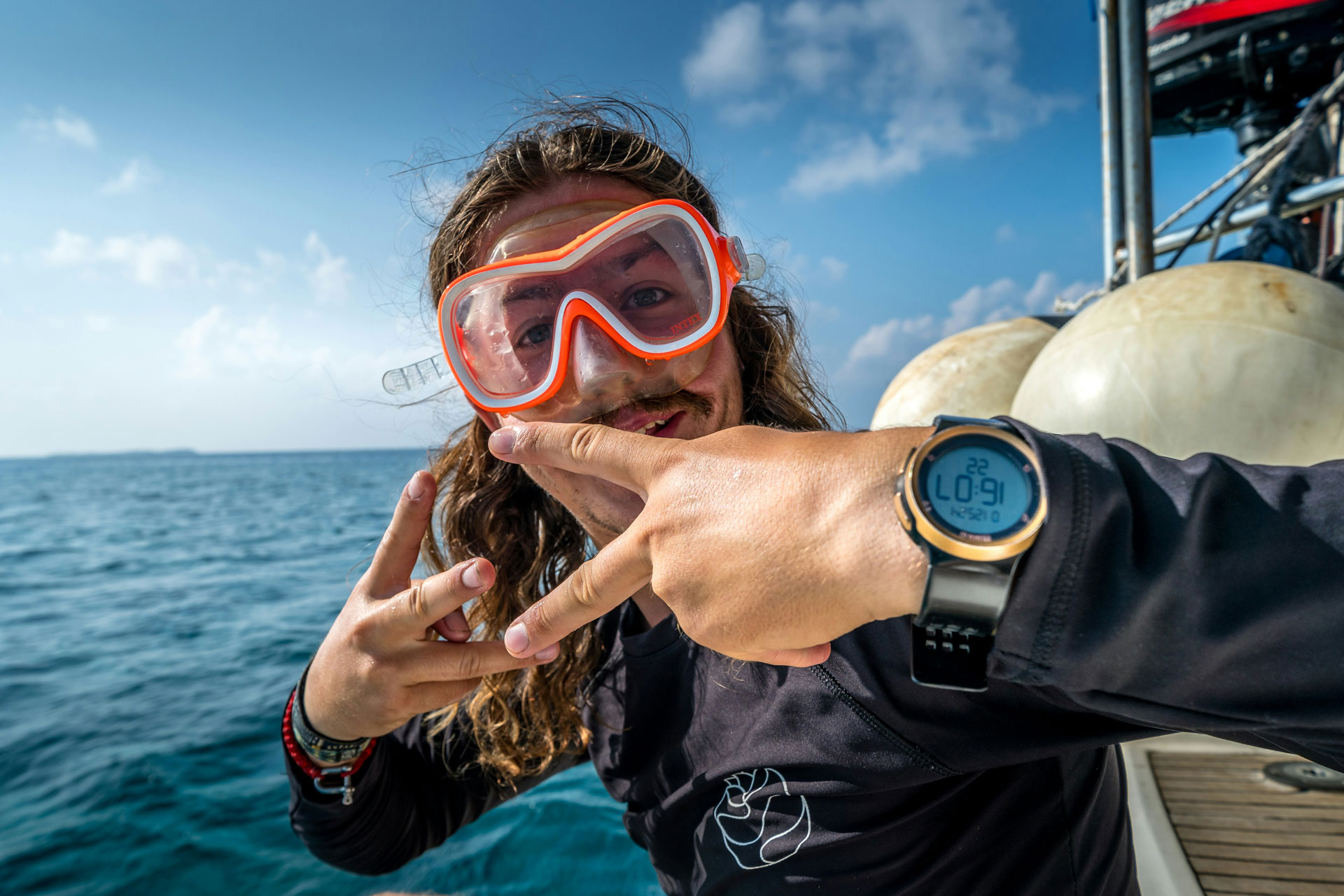
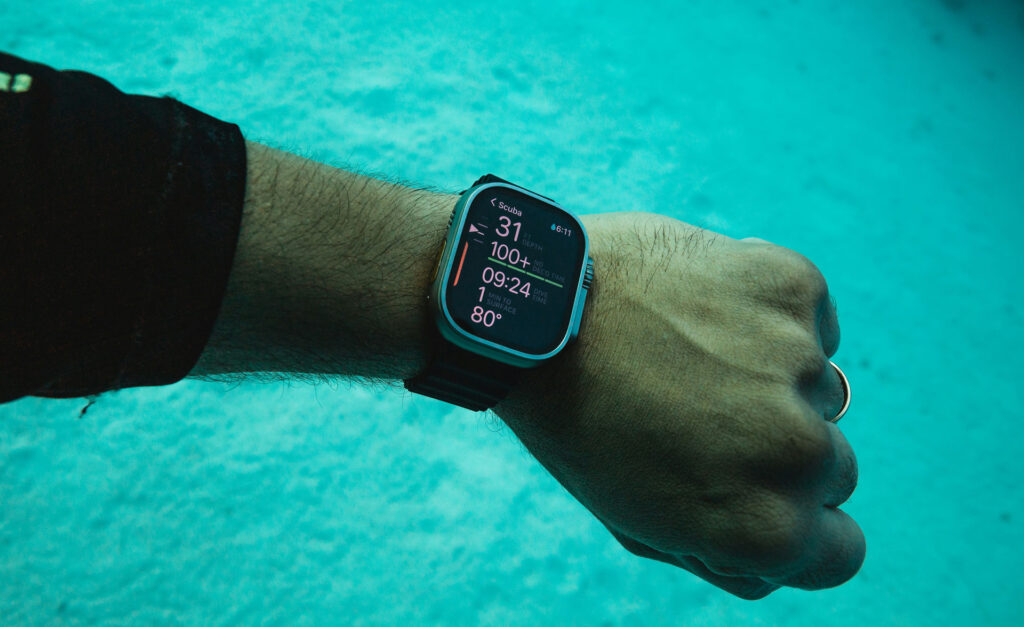
Most modern dive computers display the remaining NDL prominently during the dive. Depending on the manufacturer, it may appear as:
- NDL
- No Deco
- No Stop
- Remaining no-stop time
Before diving with a new or unfamiliar computer, learn where this information appears and what its alarms mean.
Do not wait until you are underwater to work out how to read it.
Why Does Your NDL Change During the Dive?
Your NDL is not a fixed number.
It changes continuously according to your depth and the amount of nitrogen your dive computer estimates that your body has absorbed.
When you descend deeper, the available time usually decreases more quickly. When you move into shallower water, nitrogen absorption slows and your remaining NDL may begin to increase.
This is why even a small change in depth can significantly affect the time shown on your computer.
However, moving shallower should be part of a controlled dive plan—not a last-minute attempt to keep the NDL timer from reaching zero.
Why Is the NDL Shorter on Deep Dives?
The deeper you dive, the greater the pressure.
At greater pressure, your body absorbs nitrogen more rapidly. As a result, your no-decompression time becomes shorter.
A diver at 30 metres will generally reach their NDL much sooner than a diver at 15 metres, even if both entered the water at the same time.
Depth also increases air consumption, which means your available air and your NDL may both decrease faster than expected.
What Happens When Your NDL Approaches Zero?
Your dive computer will normally provide a visual or audible warning as you approach your no-decompression limit.
Do not ignore it.
Begin moving gradually to a shallower depth while maintaining control of your buoyancy and staying with your buddy. Your NDL may increase as you move shallower, but the dive should still be managed conservatively.
The objective is not to reach zero and react at the last possible moment.
Plan the dive so that you maintain enough time, air and flexibility to deal with unexpected problems.
Common Mistake
Some divers treat their NDL like a countdown challenge.
They remain at depth until only one or two minutes remain and then begin ascending.
This leaves very little room for a delayed ascent, difficulty controlling buoyancy, a buddy problem or an unexpected change in conditions.
Your computer displays a limit—not a target.
What If You Accidentally Exceed Your NDL?
If your NDL reaches zero, your dive computer may enter decompression mode and display a decompression ceiling or required stops.
Stay calm and follow the instructions displayed by your own computer. Begin a controlled ascent, remain below the indicated ceiling and complete any required stops while carefully monitoring your remaining air.
Do not make a rapid ascent and do not ignore the computer’s instructions.
After the dive, follow the manufacturer’s guidance and do not make another dive if the computer advises against it. If a required decompression stop was missed, or if you experience possible symptoms of decompression sickness, breathe emergency oxygen when available and contact DAN or local emergency medical services.
Planned decompression diving should only be conducted with the appropriate technical-diving training.
Is an NDL the Same as a Safety Stop?
No.
An NDL tells you whether mandatory decompression stops are required.
A safety stop is an additional precaution commonly performed during a no-decompression dive—usually at approximately five metres for around three minutes, whenever conditions allow.
Remaining within your NDL does not mean you should ascend quickly or ignore a planned safety stop.
Why Can Two Dive Computers Show Different NDLs?
Two computers can display different no-decompression times even when the divers are swimming together.
This may happen because they:
- Use different decompression algorithms.
- Have different conservatism settings.
- Recorded slightly different depths.
- Have different recent dive histories.
- Are set for different breathing gases.
Each diver should follow their own computer and use the more conservative limit when planning the dive as a team.
Never share one dive computer between two divers.
A no-decompression limit is based on a mathematical model. It is not a guarantee against decompression sickness, so good divers maintain a reasonable margin instead of deliberately allowing the timer to reach zero.
Do Repetitive Dives Affect Your NDL?
Yes.
After surfacing, your body still contains additional nitrogen from the previous dive. Your dive computer tracks this estimated residual nitrogen during the surface interval.
As a result, a second or third dive may have a shorter NDL than the first—even if the dives are made to the same depth.
Longer surface intervals generally allow more nitrogen to leave the body and can provide more no-decompression time on the next dive.
Does Nitrox Increase Your NDL?
Nitrox contains a lower percentage of nitrogen than normal air. At the same depth, this can reduce nitrogen exposure and provide a longer no-decompression limit.
However, Nitrox introduces additional oxygen-exposure limits. The cylinder must be analysed, and the correct oxygen percentage must be entered into the dive computer before the dive.
Never use Nitrox with a computer that is still incorrectly set for another breathing mixture.
How Can You Manage Your NDL Safely?
Check your computer regularly rather than waiting for an alarm.
Remain within the depth and time limits of the dive plan, maintain an appropriate margin and communicate with your buddy when it is time to move shallower.
Your ascent decision should consider more than the NDL alone. Remaining air, current, distance from the exit, your buddy’s status and changing conditions are equally important.
A long NDL does not mean you have enough air to remain underwater.
Final Thoughts
Your no-decompression limit is one of the most important numbers displayed by your dive computer.
It estimates how long you can remain at your current depth without accumulating a mandatory decompression obligation.
But it should never be treated as a target.
Monitor it regularly, maintain a reasonable margin and begin moving shallower before the number becomes critical.
A dive computer provides information.
Safe diving still depends on how you use it.