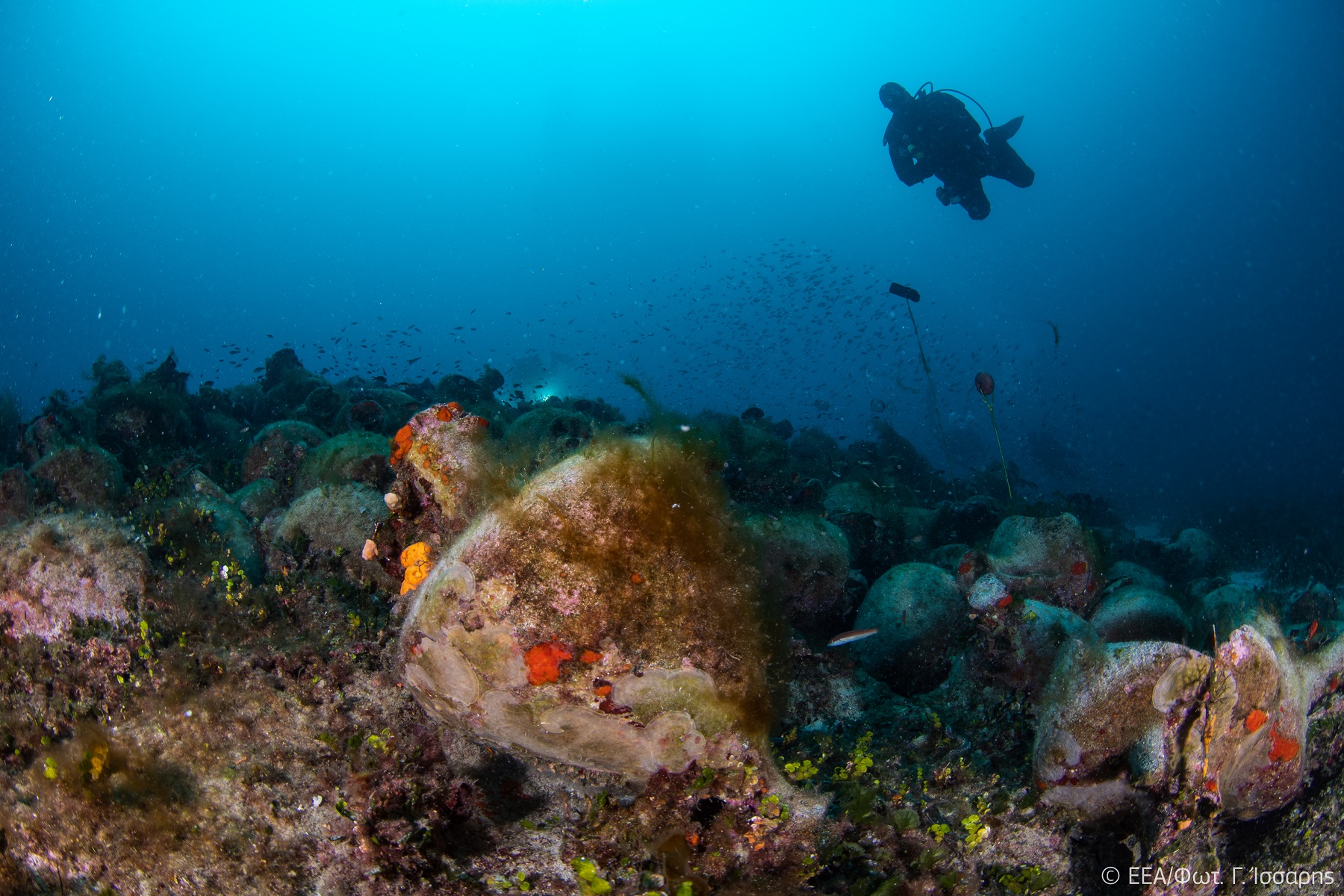
Every wreck has a story.
Some tell us about trade, war, migration or shipbuilding. Others are silent graves. Some are ancient, covered in amphorae and sediment. Others are made of steel, broken machinery and memories from more recent conflicts.
But all underwater cultural heritage sites have one thing in common: once they are disturbed, they can never be put back exactly as they were.
For divers, this matters deeply.
Because we are often among the first people to see these places up close.
Quick Answer
Underwater cultural heritage includes shipwrecks, submerged settlements, ancient ports, aircraft wrecks, artefacts and other traces of human history found underwater.
UNESCO marks 21 August as the International Day for Underwater Cultural Heritage, a global day created to raise awareness and strengthen cooperation for the protection of humanity’s submerged cultural legacy in oceans, seas, rivers and lakes.
Under the UNESCO 2001 Convention, the formal definition applies to traces of human existence with cultural, historical or archaeological character that have been underwater for at least 100 years.
What Is Underwater Cultural Heritage?
Underwater cultural heritage is not limited to ancient shipwrecks.
It can include submerged cities, prehistoric landscapes, ancient harbours, cargoes, anchors, aircraft, warships, fishing vessels, harbour structures and everyday objects that ended up beneath the water.
The sea is often described as the largest museum in the world. But unlike a museum on land, this one has no walls, no glass cases and often no guards.
That makes underwater heritage both fascinating and vulnerable.
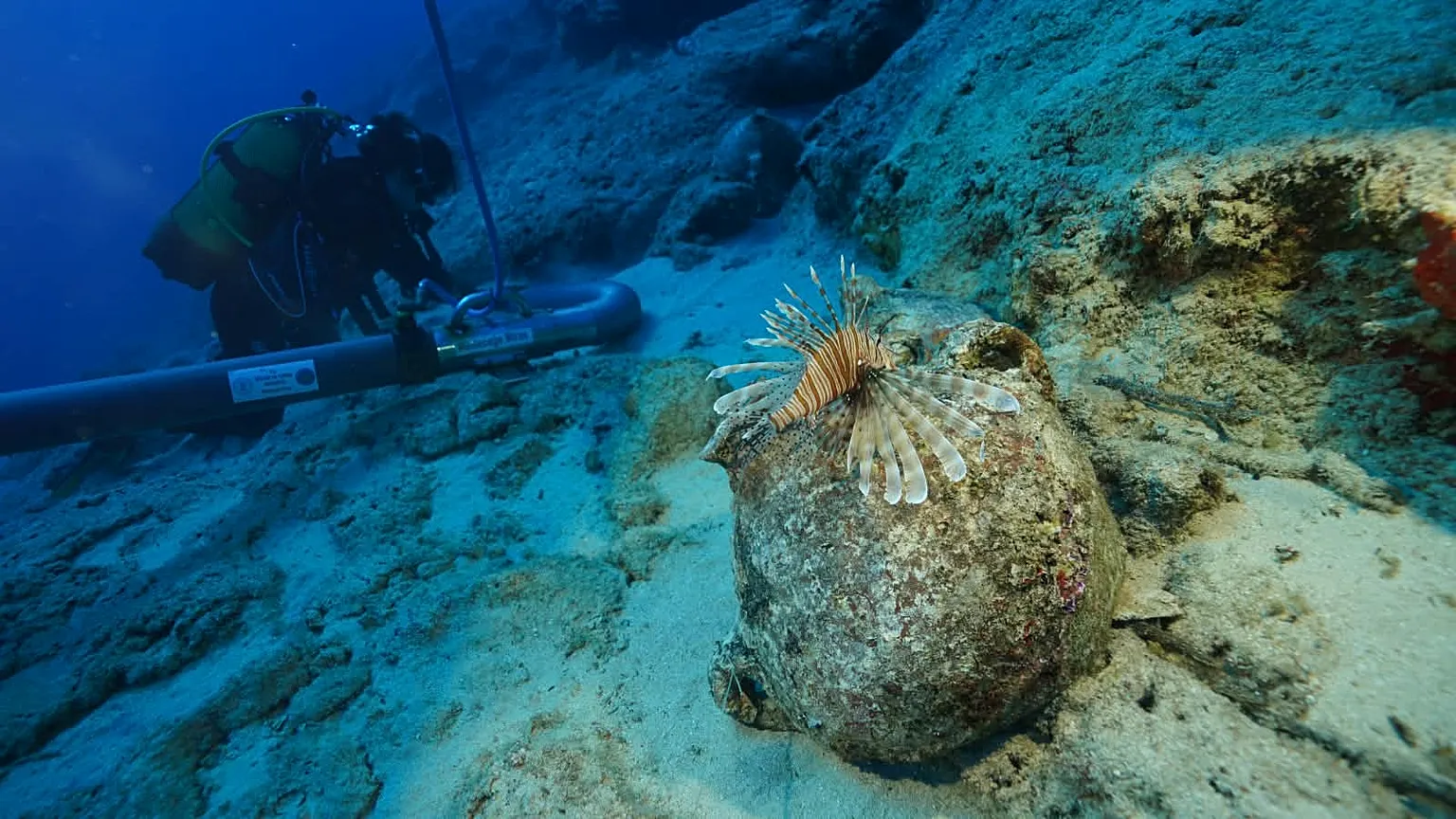
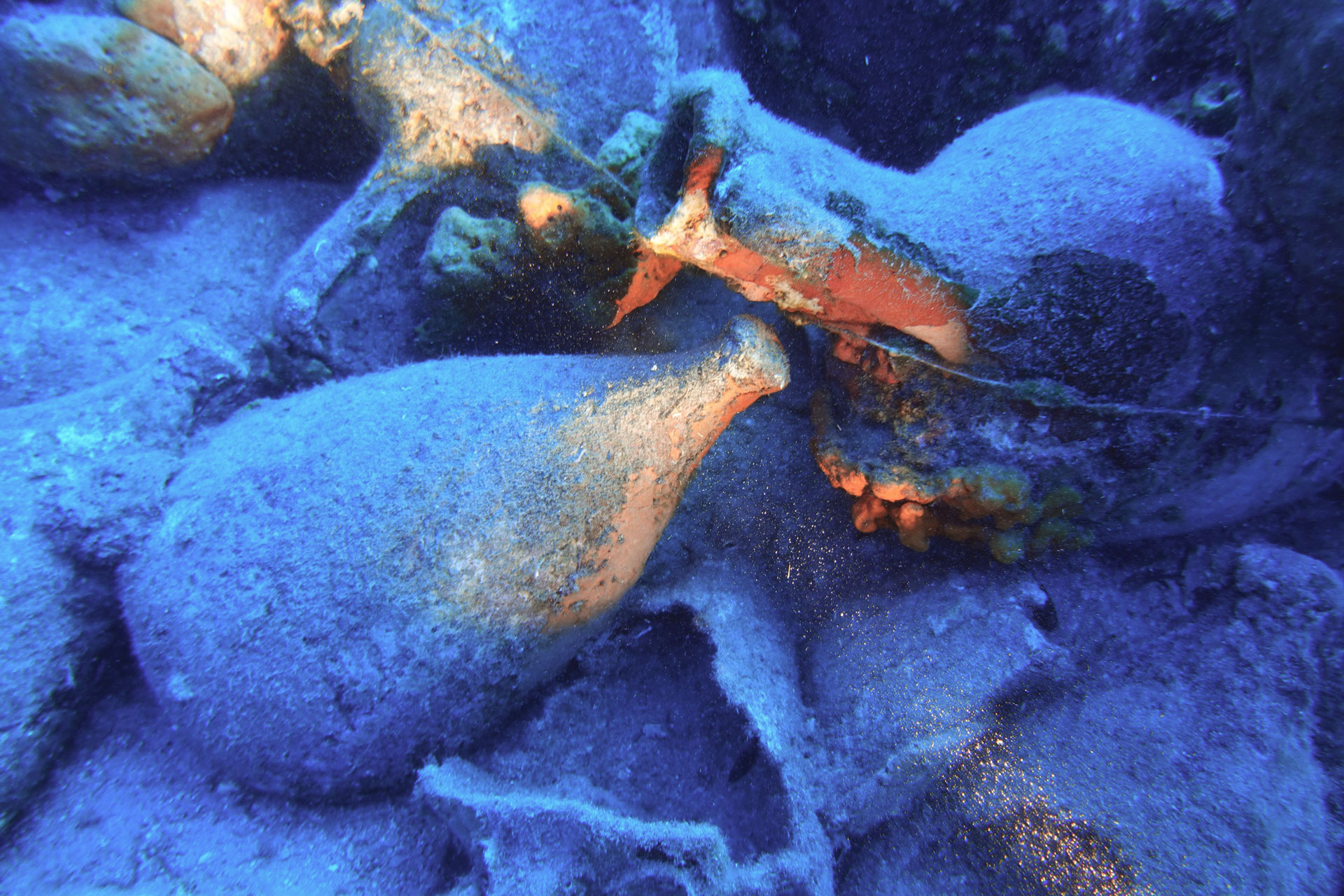
A diver may see an amphora, a cannon, a ceramic fragment, a propeller, a helmet or a piece of cargo and think it is just an object.
But to an archaeologist, it may be evidence.
Its position, depth, orientation and relationship to other objects can reveal how a ship sank, where it came from, what it carried and how people lived, traded or travelled.
Remove the object, and part of the story disappears.
Key Facts
Date: 21 August
Official name: International Day for Underwater Cultural Heritage
Proclaimed by: UNESCO General Conference in 2025
First international celebration: 2026
What it protects: Shipwrecks, submerged ruins, ancient ports, aircraft wrecks, artefacts and underwater archaeological sites
Main principle: Preserve underwater heritage for the benefit of humanity
Why Shipwrecks Are More Than Dive Sites
For many divers, wrecks are among the most exciting places to explore.
They attract marine life. They create dramatic underwater landscapes. They offer history, mystery and atmosphere in a way few other dive sites can.
But a wreck is not just scenery.
It may be a time capsule.
It may be a workplace frozen by disaster.
It may be a war grave.
It may be the only surviving evidence of a forgotten route, a lost cargo or a community connected to the sea.
This is why the way we dive these sites matters.
Good buoyancy, careful finning, respect for fragile structures and a strict “look but do not take” mindset are not just good diving habits. They are acts of preservation.
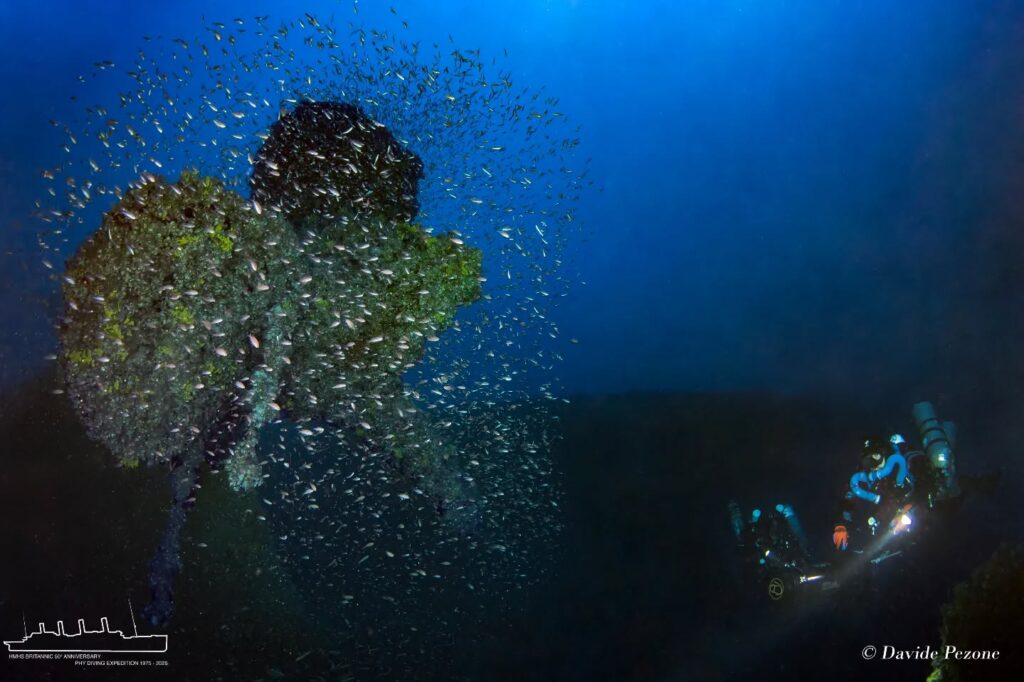
HMHS Britannic, the largest ship lost during the First World War, rests off the island of Kea at a depth of about 120 metres. Sunk in 1916 after striking a mine, Titanic’s younger sister became one of the most iconic historic wrecks in the world. Its story entered a new chapter in 1975, when Jacques-Yves Cousteau located and explored the wreck, bringing the lost giant back into the history of underwater exploration.
The Problem With “Just One Small Object”
One of the biggest threats to underwater heritage is the idea that taking one small object does not matter.
One plate.
One bottle.
One ceramic fragment.
One piece of brass.
One souvenir from a wreck.
The problem is that if every visitor takes “just one small object”, the site slowly disappears.
Even worse, removing an artefact destroys context. Underwater archaeology is not only about the object itself. It is about where it was found, how it relates to the rest of the site and what it can tell us when studied properly.
A bottle on a wreck is not just a bottle.
An amphora is not just an amphora.
A small object can be part of a much larger historical puzzle.
Once removed without documentation, that information may be lost forever.
Ancient Wrecks, War Wrecks and the 100-Year Rule
A common misunderstanding is that underwater cultural heritage only means ancient shipwrecks.
It does not.
The UNESCO 2001 Convention uses a 100-year threshold, which means many ancient and First World War wrecks clearly fall within its formal definition. Many Second World War wrecks are historically important too, although most are only now approaching that 100-year mark.
That distinction matters legally, but it should not change the way divers behave.
A Second World War aircraft wreck does not become meaningful only when it turns 100 years old.
A steel wreck from the 1940s can carry memory, loss, engineering, military history and human stories. In many cases, it may also be connected to people who died there.
So the diver’s rule should be simple:
If it tells a human story, treat it with respect.
Greece and the Underwater Museum Idea
Greece is one of the best places in the world to understand why underwater cultural heritage matters.
Its seas contain traces of ancient trade, classical shipwrecks, Roman cargoes, Byzantine routes, Ottoman-era remains, modern wrecks and aircraft from the world wars.
The Peristera shipwreck near Alonissos is a strong example of how underwater heritage can be protected while still becoming accessible to divers.
Greece’s first underwater museum in Alonissos allows visitors to experience a major ancient wreck site through a controlled and respectful diving framework.
The Antikythera wreck is another landmark. Often described as one of the most important ancient shipwreck discoveries in the world, it reminds us how much history can survive beneath the sea — and how much can be lost if these places are disturbed.
These sites show that protection and access do not have to be enemies.
When managed properly, underwater heritage can educate, inspire and support sustainable diving tourism without turning history into a souvenir shop.
How Divers Can Help Protect Underwater Heritage
Divers have a special responsibility because they can reach places most people will never see.
That responsibility does not require complicated rules.
It starts with basic behaviour.
Do not remove objects.
Do not move artefacts for a better photo.
Do not enter fragile wrecks without proper training and permission.
Do not tie lines or anchors to archaeological remains.
Control your buoyancy.
Watch your fins.
Report suspicious activity or newly discovered objects to the relevant authorities.
Share the story, not the souvenir.
Photography, mapping, documentation and responsible storytelling can help protect underwater heritage.
Taking objects does the opposite.
Look, Photograph, Respect
The best wreck divers are not the ones who take something home.
They are the ones who leave the site exactly as they found it.
Underwater cultural heritage belongs to all of us, but that does not mean we can treat it as ours to collect.
It belongs to history.
It belongs to the sea.
It belongs to future generations who deserve to see, study and understand it.
Every amphora left in place, every wreck respected, every artefact untouched is a small act of protection.
A wreck is not a souvenir shop.
It is a time capsule.
Sometimes it is a grave.
Always, it is a story.
And the diver’s role is not to take that story away.
It is to protect it.