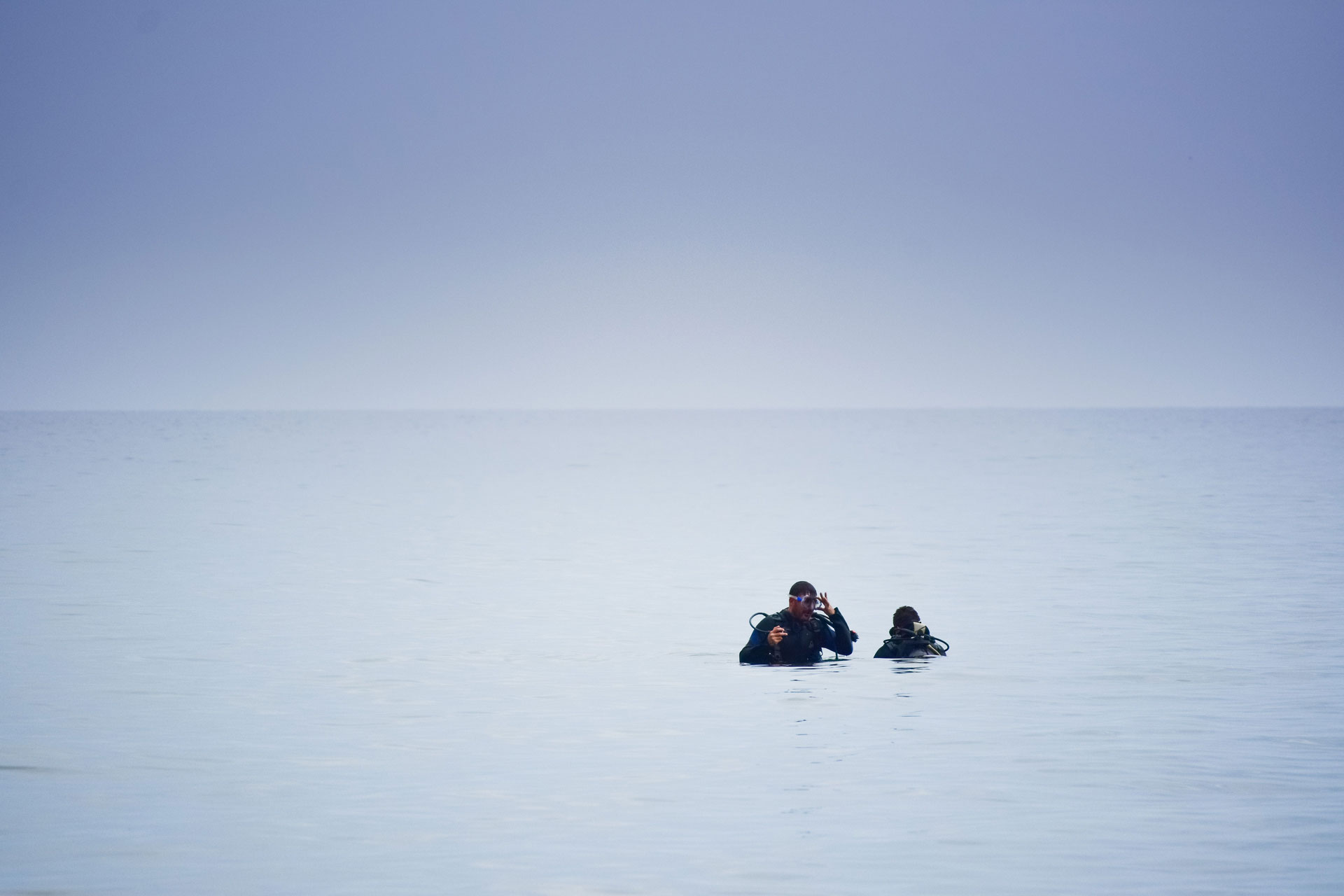
Learning how to start scuba diving is not simply a matter of choosing a certification agency and paying for a course. Your first instructor will influence how you approach buoyancy, equipment, safety and decision-making for years to come. The logo on your certification card matters far less than the quality of the training behind it.
Quick Answer
To start scuba diving, enrol in a recognised entry-level course such as Open Water Diver through a reputable dive centre. Before booking, speak directly with the instructor, ask about class size and course structure, and make sure the training places safety and genuine skill development ahead of speed or convenience.
What Is the First Scuba Diving Certification?
For most people, the first complete recreational scuba certification is an Open Water Diver course or its equivalent.
The course normally combines three elements:
- Theory covering equipment, pressure, buoyancy and dive planning.
- Confined-water training in a pool or calm, shallow environment.
- Open-water dives where skills are practised under an instructor’s supervision.
After successfully completing the course, you can dive within the limits of your certification, experience and local conditions, normally with another certified diver.
A certification is the beginning of your development—not proof that you are already an experienced diver.
Do You Need to Be an Excellent Swimmer?
You do not need to be a competitive swimmer, but you should feel reasonably comfortable in the water. Entry-level courses include a swimming and water-survival assessment, although the exact requirements may differ between training agencies.
You will also complete a medical questionnaire. Certain answers may require clearance from a doctor before beginning in-water training. Be honest: the questionnaire exists to identify conditions that could affect your safety underwater.
If you are nervous in the water, tell your instructor before the course begins. A good instructor will not embarrass you or push you beyond your comfort level. Instead, they will give you time to develop confidence gradually.
Choose the Instructor, Not Only the Agency
PADI, SSI, CMAS, SDI and other recognised organisations all establish training standards and issue internationally accepted certifications. Choosing a reputable agency is important, but the organisation does not personally teach you—the instructor does.
Two courses carrying the same agency logo can feel completely different. One instructor may work patiently with a small group and continue practising until every student is comfortable. Another may focus mainly on completing the required exercises as quickly as possible.
The strongest instructor is not necessarily the one with the most impressive collection of certification cards. Look for someone who communicates clearly, remains calm, demonstrates good diving habits and takes student concerns seriously.
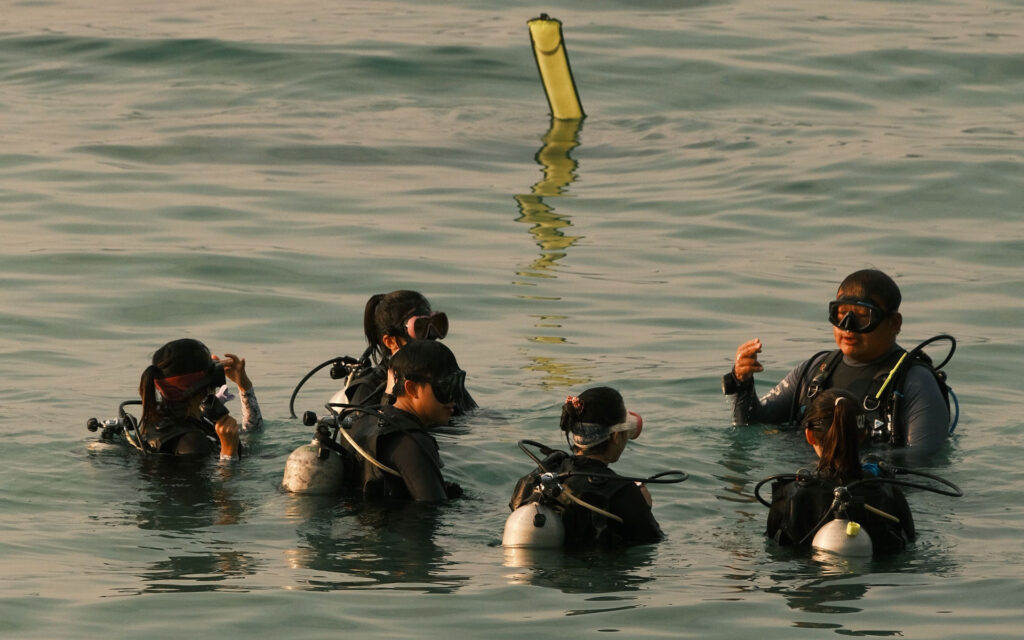
A good instructor gives every student the time and attention needed to develop confidence underwater.
Good training is not measured by how quickly you complete the course.
It is measured by whether you can perform the essential skills calmly, understand your limits and make safe decisions without depending entirely on the instructor.
Questions to Ask Before Booking
Speak to the dive centre before paying for the course. A short conversation can reveal a great deal about its approach to training.
Ask who will teach you, how many students will be in the group and how much time is normally spent in confined water. Find out whether extra practice is available if you struggle with a skill and whether completing the course by a particular date is guaranteed.
That final question is especially revealing. Certification should only be awarded after the required knowledge and skills have been demonstrated. A responsible instructor cannot promise that every student will qualify within an exact number of days regardless of performance.
You should also ask what the advertised price includes. Learning materials, equipment rental, certification fees and open-water dives may be bundled together or charged separately.
Signs of a Good Scuba Instructor
A good instructor explains not only how to perform a skill, but also why it matters. They encourage questions and do not make students feel uncomfortable for needing another demonstration.
They pay attention to proper equipment fit, controlled breathing, buoyancy and safe ascent procedures. Skills are not rushed, and students are never pressured to descend when they cannot equalise or continue when they feel unwell.
Most importantly, a good instructor leads by example. They follow the same safety practices they expect from their students and are willing to change or cancel a dive when conditions are unsuitable.
Warning Signs to Avoid
Be cautious if a course appears to prioritise the lowest price or fastest possible certification above everything else.
Other warning signs include overcrowded classes, unclear answers about who will conduct the training, poorly maintained equipment and pressure to continue despite pain, anxiety or unsafe conditions.
Statements such as “everyone passes” or “we can finish no matter what” should not be reassuring. They may suggest that receiving the certification card is being treated as more important than becoming a capable beginner diver.
Should Price Decide Which Course You Choose?
Scuba training is not the best place to choose solely by price. An unusually inexpensive course may involve larger groups, fewer opportunities for practice or additional charges that appear later.
This does not mean that the most expensive course is automatically the best. Compare what is included, speak with the instructor and look at the overall quality of the dive centre.
A slightly higher price can be worthwhile if it provides smaller groups, well-maintained equipment and enough time to master essential skills without unnecessary pressure.
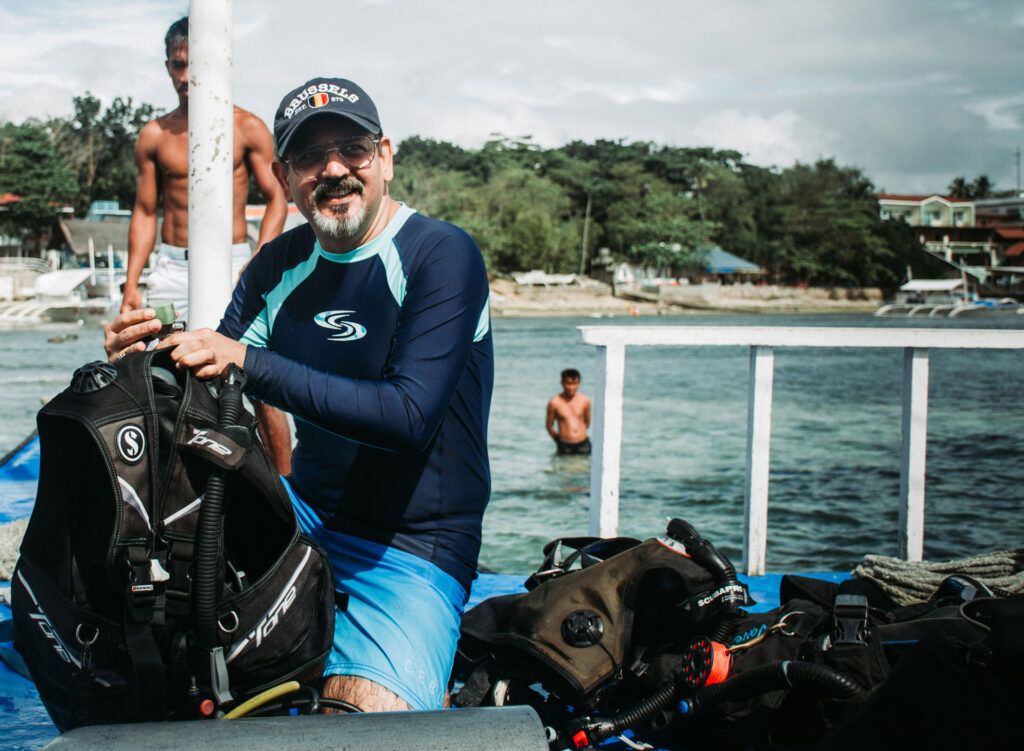
Quality training builds safe habits that remain with a diver long after the course has ended.
Do You Need to Buy Equipment Immediately?
Most dive centres provide the main scuba equipment during beginner training. You therefore do not need to purchase a complete setup before you know whether you will continue diving.
A well-fitting mask is often the most useful first purchase because comfort and fit are highly personal. Fins, a wetsuit and a dive computer can follow as you gain experience and understand what suits your diving.
Avoid buying expensive equipment simply because it is offered as part of a package. Your preferences may change considerably after your first few dives.
What Happens After Certification?
Finishing an Open Water course gives you the foundation to continue learning through experience. Choose straightforward dives, stay within your training limits and dive regularly enough to maintain your skills.
Concentrate on buoyancy, breathing, awareness and communication with your buddy. There is no need to rush immediately into deeper diving, wreck penetration or underwater photography.
Additional courses can be valuable, but collecting certifications is not a substitute for time in the water. A thoughtful instructor or experienced mentor can help you decide which training genuinely matches your interests and current ability.
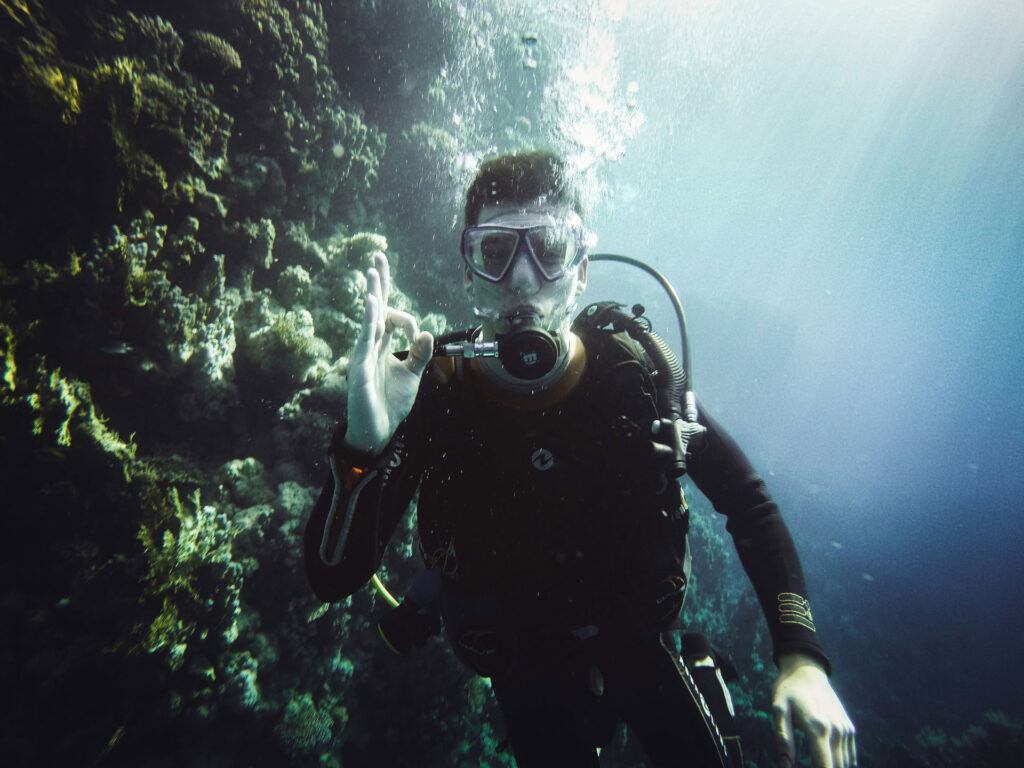
Your first dives are not about going deep—they are about learning to feel calm, comfortable and in control.
Your First Course Shapes the Diver You Become
Understanding how to start scuba diving means looking beyond the certification card. A recognised training agency provides the standards and educational framework, but the instructor turns those standards into real habits underwater.
Choose someone who gives you time, welcomes questions and treats safety as more than a checklist. The goal is not simply to become certified. It is to leave the course feeling calm, capable and prepared to continue learning.